|
||||
|
||||
 |

June 10 - July 1, 2026
| China Travelogue 3 |
|
After Connie and I got engaged, I assumed I'd be visiting China pretty frequently. However, the last time I went was in 2017. Connie has been a few more times. She took Zack a couple times while I was working years back. And, more recently, she took Matt a couple years ago. But this is our first family trip in nine years. So what happened? Well, to start off, the COVID lockdowns. China was the first country to do a full travel ban if I remember right and it was also one of the last to open up. Then Matt was born, and there were a couple of years Connie's parents had things going on and didn't want us to visit so yeah... I assume we'll be coming here more often in the future now that all that's cleared up...but I also thought that nine years ago, so we'll see.
Anyway, this summer Connie was determined to finally do a family China trip. Our initial plan of first spending some time in Korea and Japan with my family did fell apart, but that didn't change things. Unfortunately, it did mean I had to fly back to Virginia at the end of my Japan tour, where I had less than a week to try and recover and prep for this trip. I know I'm pretty good at getting over jet lag, but it was still exhausting, especially since I can't sleep on planes. Would have been a lot nicer if I could have stayed in Japan for few days longer and then met Connie and the kids in China but she really wanted help with the kids. Can't entirely blame her. While he's starting to improve a bit, Matt's at the age where he doesn't like sitting still for long periods of time so lengthy flights are tough. Zack is fine, and can even be helpful, but he also gets curious and distracted at times, which can be a problem. But yeah, the days between my return to the US and the flight to China were hectic and tiring as I scrambled to get things ready. Didn't help that our flight was at around 5 AM (so we had to leave for the airport at 2:30) so I got very little sleep going into it. As for the flight itself, it was long. They don't really have direct flights to China from the DC area anymore (they used to until the Russia - Ukraine war disrupted the routes) so we had to change planes in Texas. That was ok in and of itself, but did significantly up the travel time. Matt did a lot better than on our Hawaii flights last winter but he was still a challenge and, with having to manage an active three year old, I couldn't really lose myself in a video game or movie like I do on my Japan flights. I had to settle for reading a bit here and there and resting when I could. There were also some fairly long bumpy stretches (though not nearly as bad as my return flight from Japan). All in all, while it certainly could have been a lot worse, the flight was pretty miserable for me.
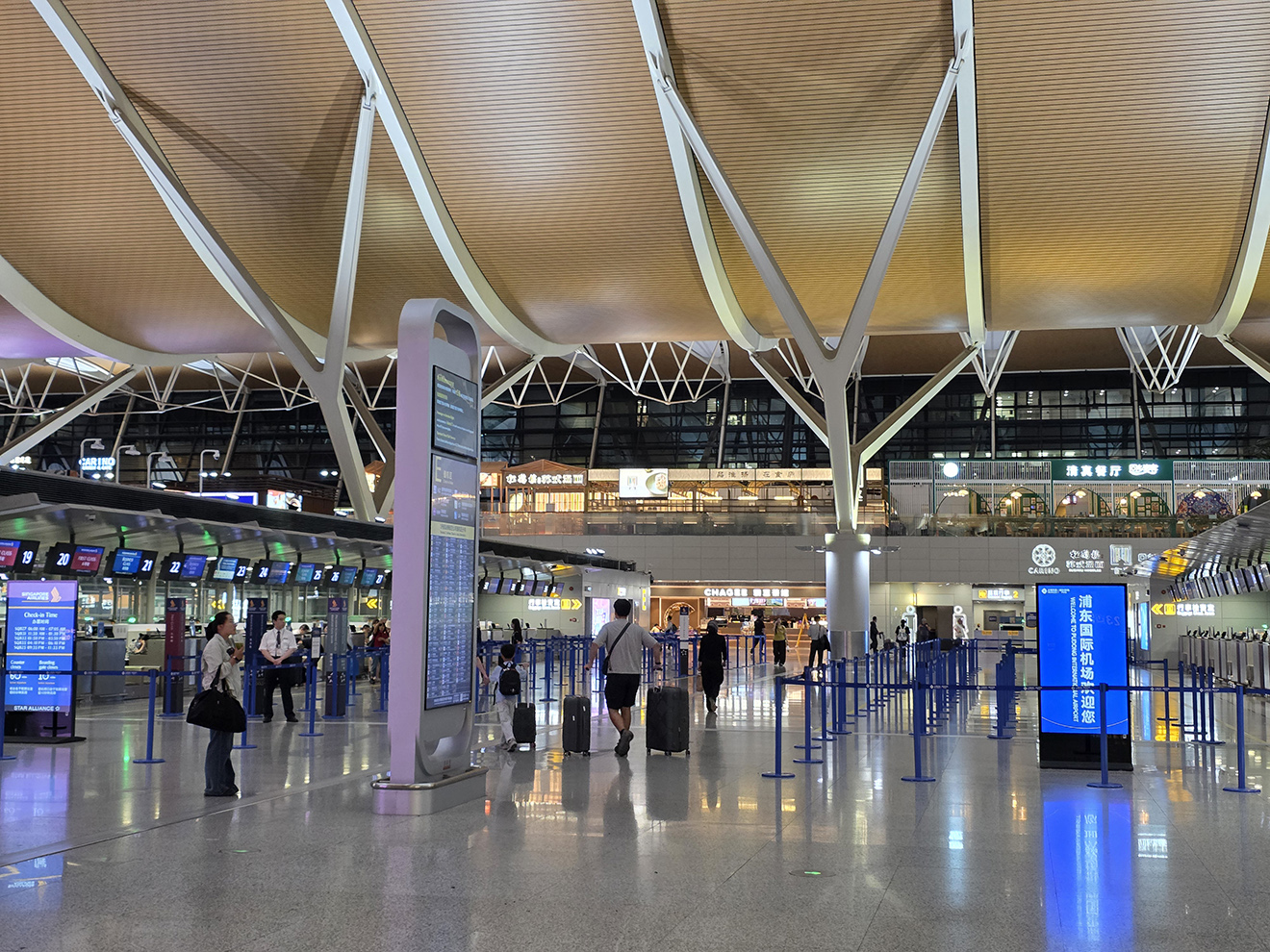
Fortunately, we did make it to Shanghai on schedule and customs and such were fairly smooth. While we actually didn't arrive that late in the day, to keep things simple we had booked a hotel in Shanghai Pudong Airport itself. If you read my old China travelogues, you may remember that I stayed in a hotel there once before. Well, that hotel is still there but this time we stayed in Aerotel, which is newer and nicer. The check-in area just outside the hotel entrance also has a few restaurants and such. Nothing on Haneda, but it's fairly nice. So we checked in, got dinner, and then I had to push Matt around in the stroller for a while since, unlike the rest of us, he wasn't ready to sleep. Eventually though I was able to get some rest.
Random China Comment: Visas
US citizens still require a visa to visit China. And getting one still requires either visiting an embassy in-person or using an intermediary service. On the plus side, the 10 year visas they introduced a while back are now the norm and they finally got around to simplifying the paperwork so you no longer need to submit a complete travel itinerary, letter of invitation, and such. Which makes the whole process a lot quicker and simpler than it used to be.
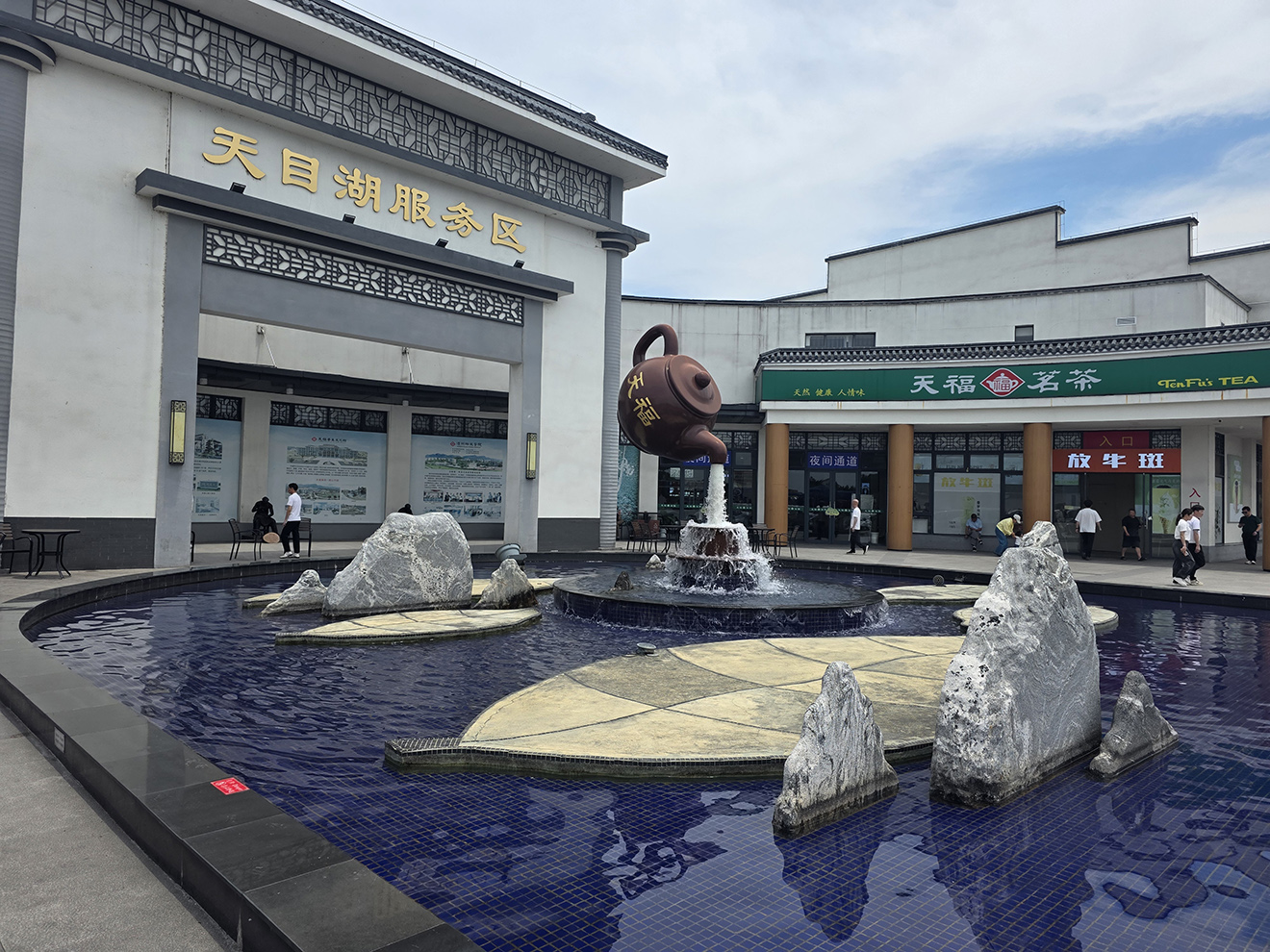
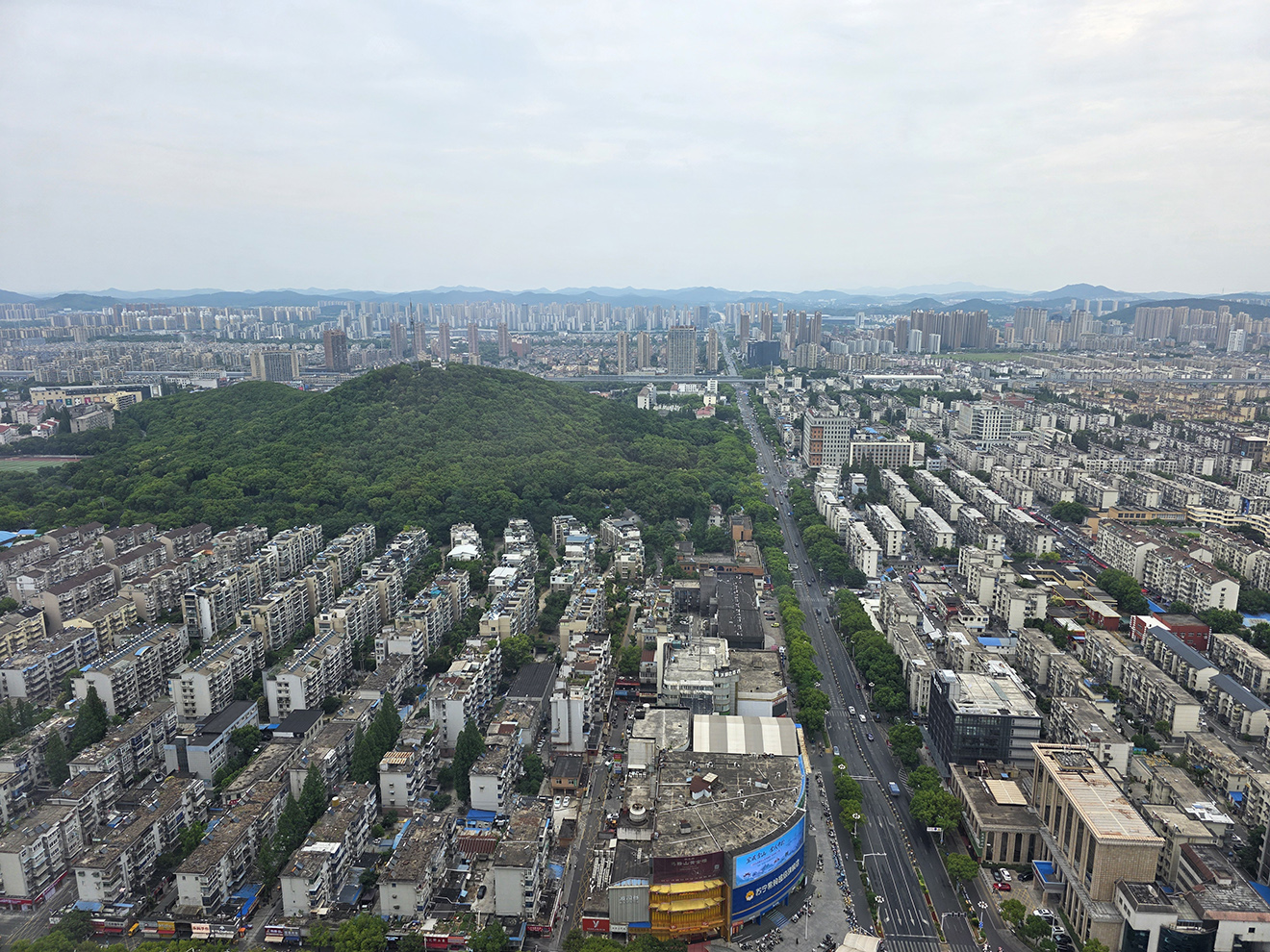
Anyway, we finally made it to our hotel in Maanshan. Unlike previous China trips, I went for pretty high end hotels due to the kids and everything. We're staying at the Golden Eagle Summit and it's very nice. Not exactly cheap, but quite a lot less than what a similar room would cost me in most parts of the US. And we get a nice view of the city. I also really appreciate that they give us tons of bottled water (an entire case, refilled as needed) since the tap water here still isn't safe to drink.
Connie's parents were there to meet us and we grabbed a quick lunch together at the mall next to the hotel then we took a bit of time to rest before in out room before heading to their condo to catch up and eat dinner. It was nice to see them again (they last visited when Matt was born), though we still have a lot of issues communicating due to the language barrier.
Random China Comment: Booking Hotels
In the past, if you wanted any sort of decent selection, you had to use Chinese sites to book hotels in China such as CTrip and Agoda. I used both and, while they worked, I wasn't entirely happy with either one (see my previous travelogues). It's quite possible that they've improved a lot over the years but, fortunately, I didn't have to find out. Trip.com now features a pretty extensive selection of Chinese hotels, even in places like Maanshan that get hardly any international visitors. It also looks to be your best non-Chinese source for information about things to do, advance tickets to attractions, and even trains (more on that in a future post). If you're planning a China trip, it really should be your go-to travel site/app.
Random China Comment: The Great Firewall
An important thing to keep in mind when visiting China is that they block a lot of web sites and apps. Pretty much every non-Chinese social media and messaging site and app is blocked, as is absolutely everything Google related. Fortunately, a lot of international data plans circumvent that so I can still access everything on my cell phone, at least so long as I stay off wi-fi. It depends on your provider though (I have Verizon). And that only applies to my phone so I can't access any of the blocked stuff on my laptop (well, there are ways around it, but they're not foolproof and, even when working perfectly, often reduce your speed quite a bit). So if you have any critical sites or apps you need to use while traveling in China, it's best to check ahead of time and have a plan for how to access them if they're blocked.
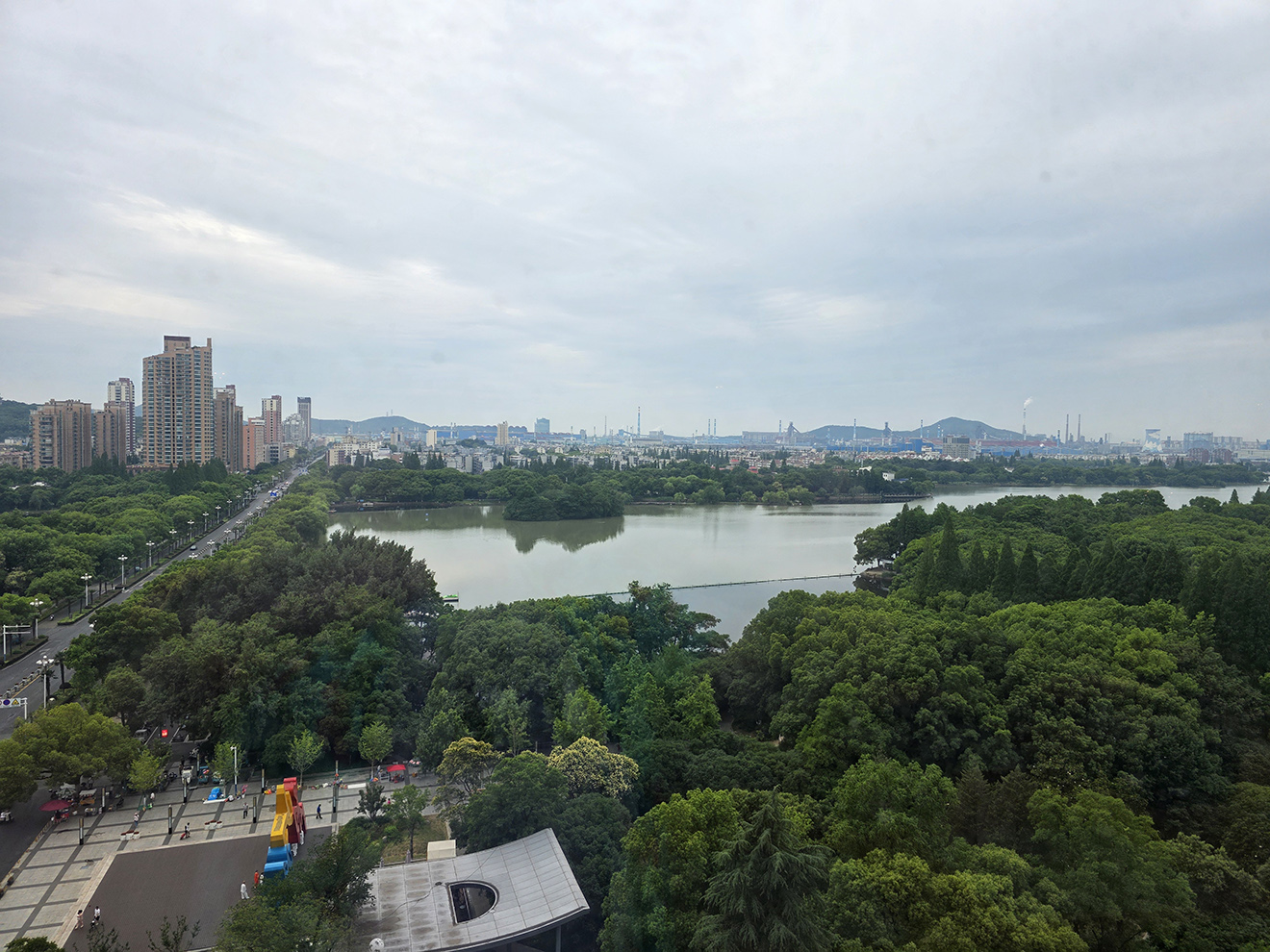
As in Japan, Chinese parks tend to be large green spaces with walking trails and such. It's fairly pretty and a nice place for a stroll. I also saw and heard a surprising number of birds, which have struck me as conspicuously absent in many parts of China that I visited in the past. Unlike in Japan, Chinese parks also tend to feature a number of elderly people practicing tai chi and the like. In addition to tai chi, Zack and I encountered multiple groups doing various types of dance, calisthenics, and even singing and playing instruments. It certainly adds to the atmosphere, but there were some parts of the park where multiple such groups were in close proximity to each other, all with completely different music blaring, making it more chaotic than anything else. Aside from the walking trails, the park featured some exercise equipment and a decent playground. There were various attractions as well, and we eventually ended up stumbling across a small amusement park. It was a little old and run down, but Zack enjoyed it quite a bit.
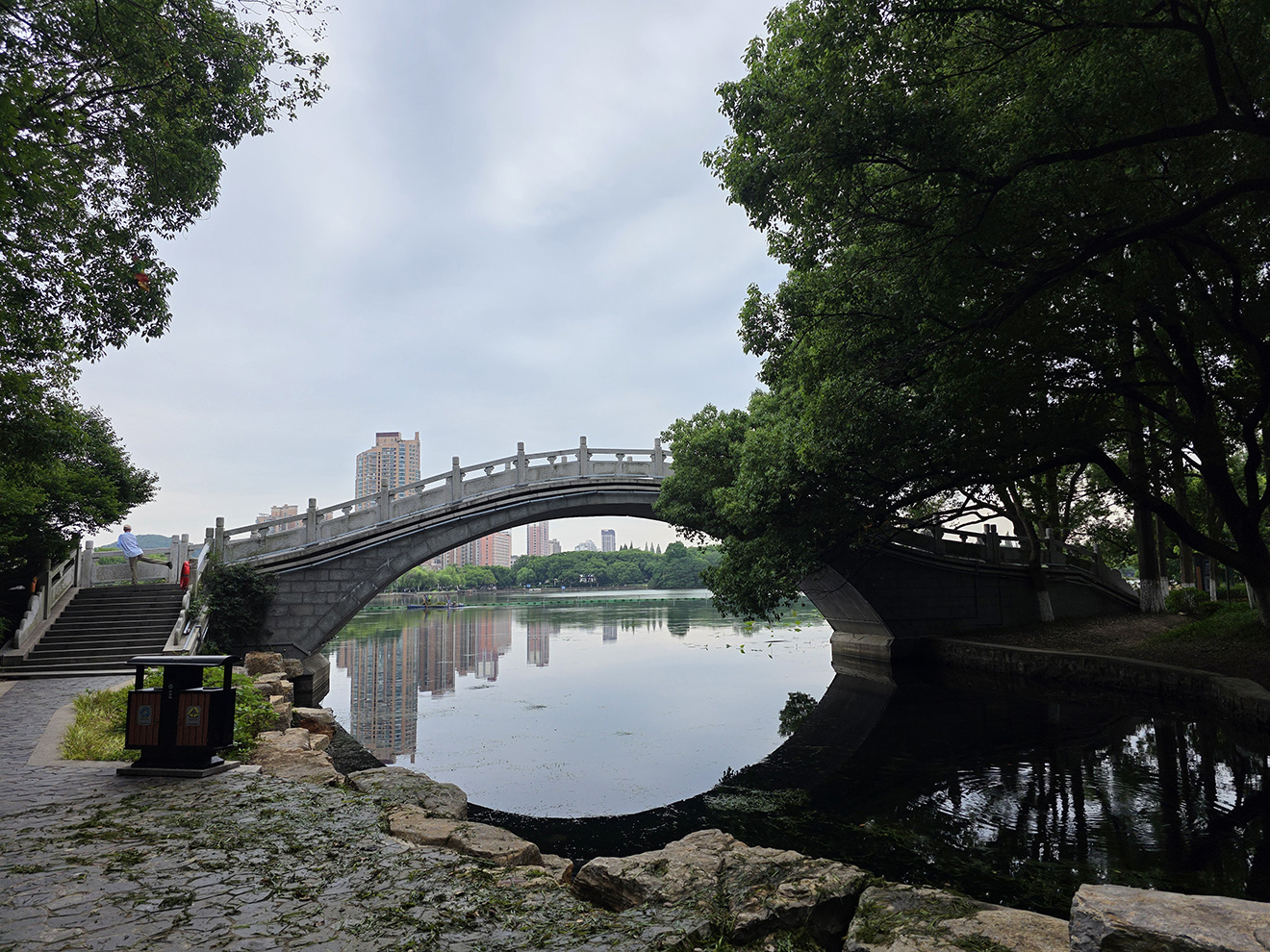
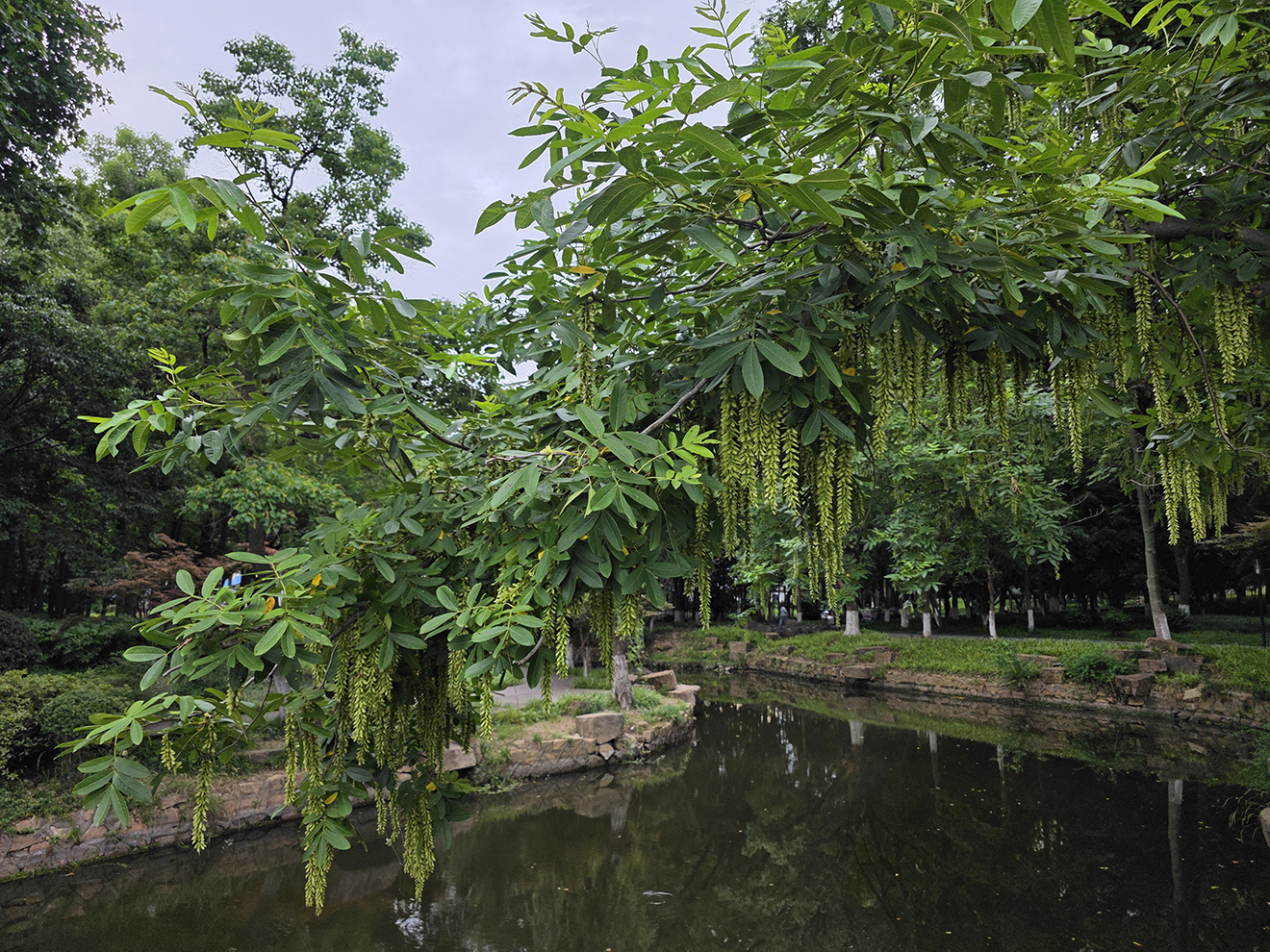
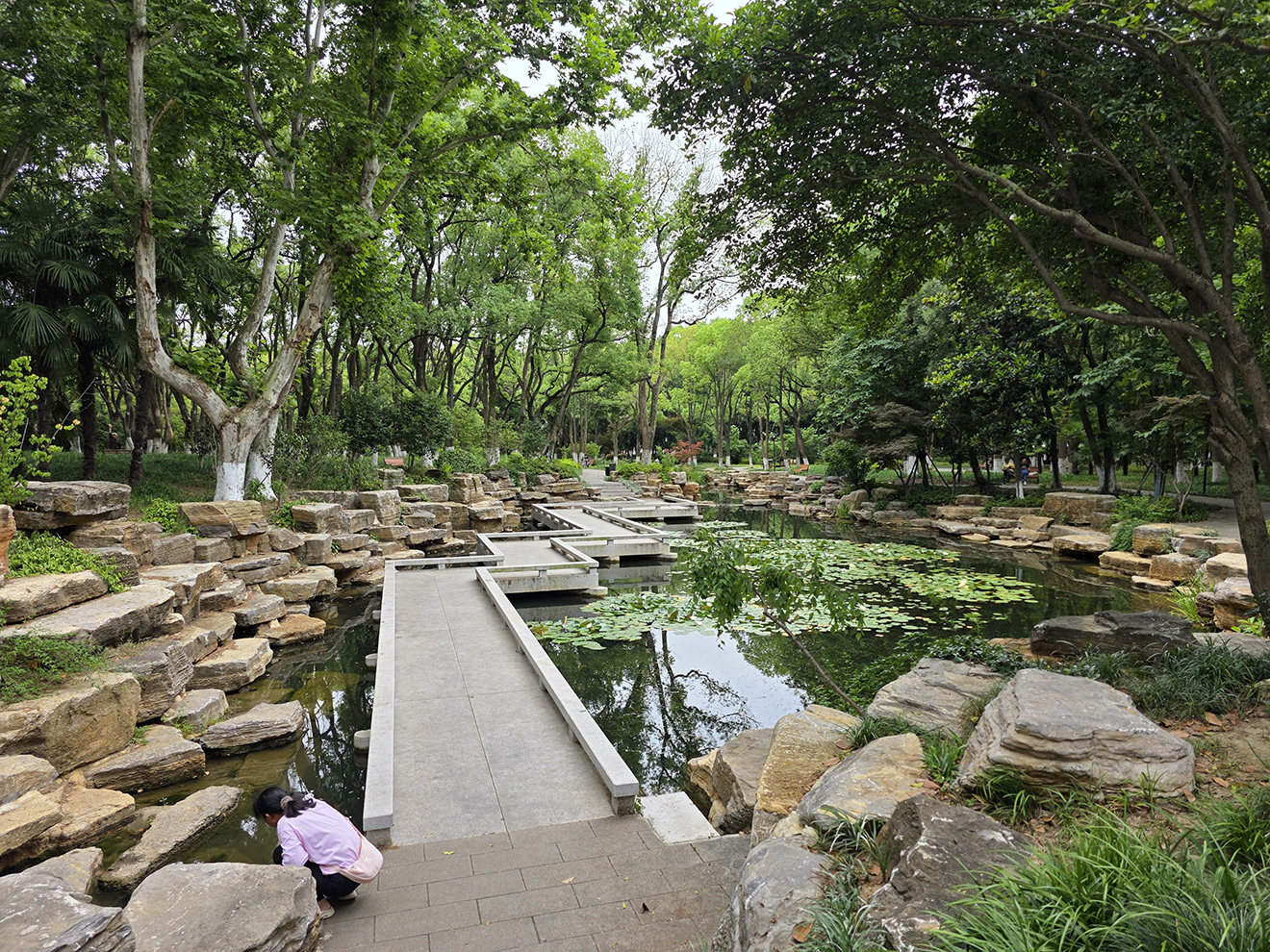
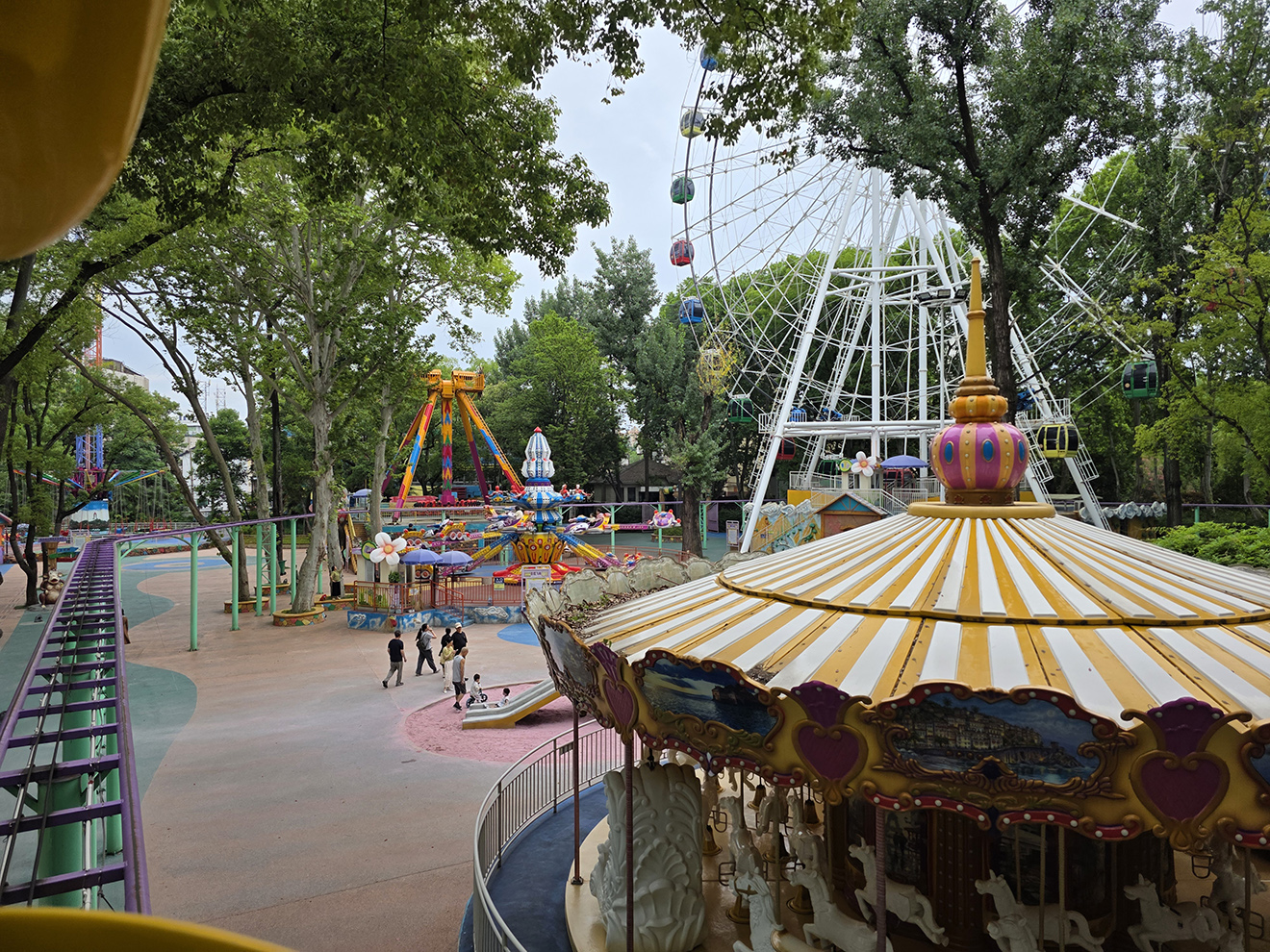
After a few hours, we headed to Connie's parents' place for lunch and then hung around there for the rest of the day.
Random China Comment: Taxis and Ride Sharing
In the past, when visiting places like Shanghai and Nanjing, I primarily relied on the metro/subway to get around. For cities without one, or for more far-flung locations, taxis are the best best. And, while they cost more than metro ticket, they are (by American and European standards) extremely cheap. That said, I did occasionally have some issues with them in the past. For example, not being able to find one when I needed it, or drivers refusing to take me to a certain location or trying to scam me with overly high fares. Fortunately, that problem has mostly been solved thank to Didi. It's an app that can be gotten as a stand alone or plug in for Alipay (which I'll take about in a future post) and is more or less the Chinese equivalent of Uber, though it covers both actual taxis and private ride-share drivers.
I should warn that it's not quite as smooth at Uber. It's a bit laggy at times (though that might be the fault of the Chinese cell network) and occasionally had trouble finding my location (in general, my GPS struggles when indoors here for some reason and needs a minute or two to reorient after stepping outside). But it generally works decently. Just enter your destination (ideally in Chinese, but it's done a passable job identifying the correct location with an English name (at least for train stations, tourist destinations, major hotels and stores, and the like) and choose what kind of car your want. Unfortunately, when I say what kind of car, it mostly refers to taxis and various types of ride-share services rather than the car itself. In many cases, there's no way to specify that you want a larger or more luxurious car (the option does technically exist but only in certain cities). I don't care so much about luxury, but considering how wildly trunk spaces varies here (anywhere from extremely roomy to virtually none), the ability to order a larger car would be extremely useful when dealing with luggage. I will note that, as a broad generalization, the ride-shares tend to have nicer and larger cars and drive a bit more safely than the official taxi drivers.
A couple other things to be aware of. First off, sometimes when getting in, I've been asked to confirm that last four digits of my cellphone number. Though only occasionally, so I'm not sure what the rule is there. But if you're being asked something in Chinese, that's probably it. Also, while no one cares if you wear a seatbelt while in the back seat (and sometimes they'll be blocked off so you can't), I have occasionally had drivers tell me to wear one while in the front seat (though once again, many don't care and some don't even let you).
Anyway, in addition to making it easy to get a car when you need one and ensure that the driver knows the right destination, using Didi also ensures that the driver will take a good route, won't quote you an overly high fare, or the like. So it pretty much solves every problem I had with Chinese taxis in the past. One last thing to be aware of though is that you need to confirm payment shortly after the ride is over. It's fine to wait until after leaving the car. In fact, you often need to wait a minute or two before the app updates. But it needs to be done manually and you can't call for a new car until after you've paid your previous fare.
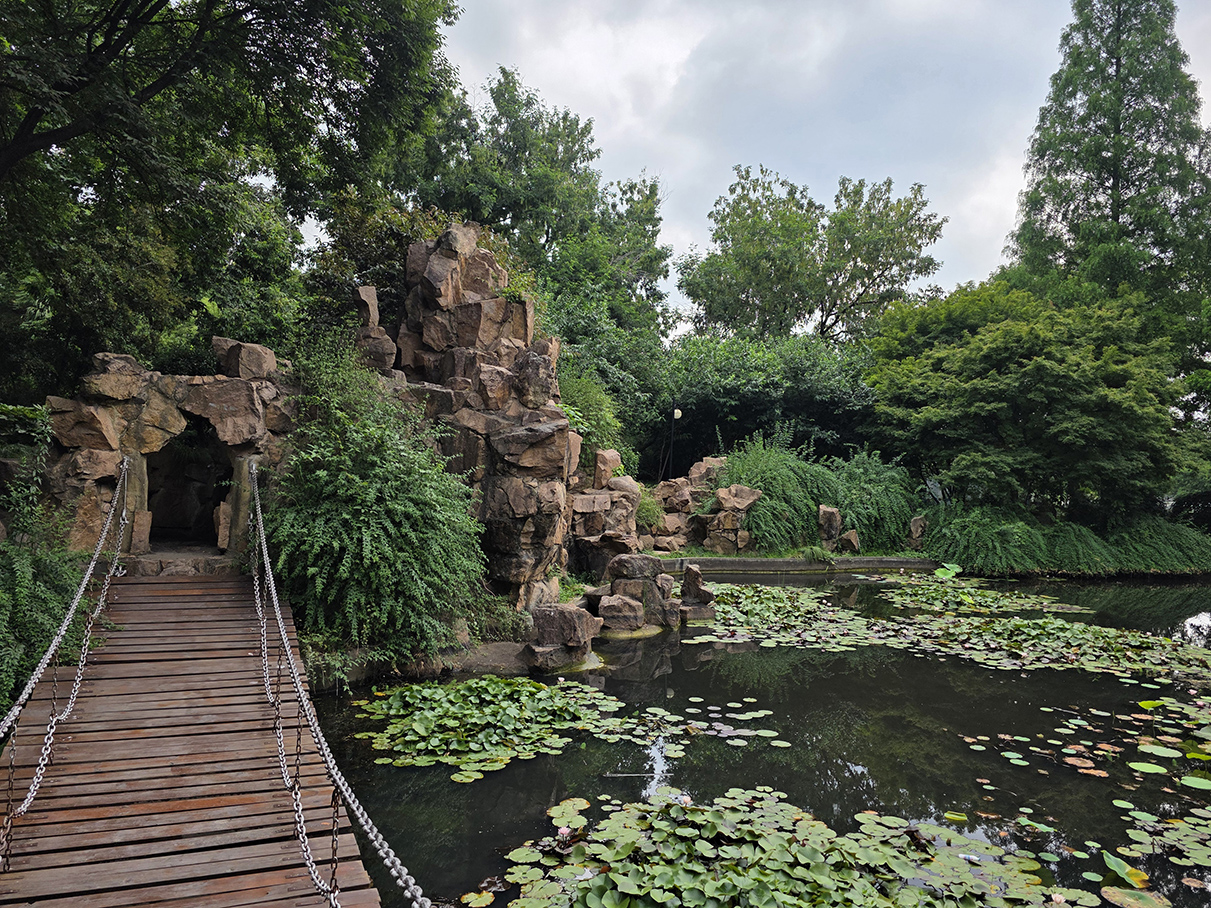
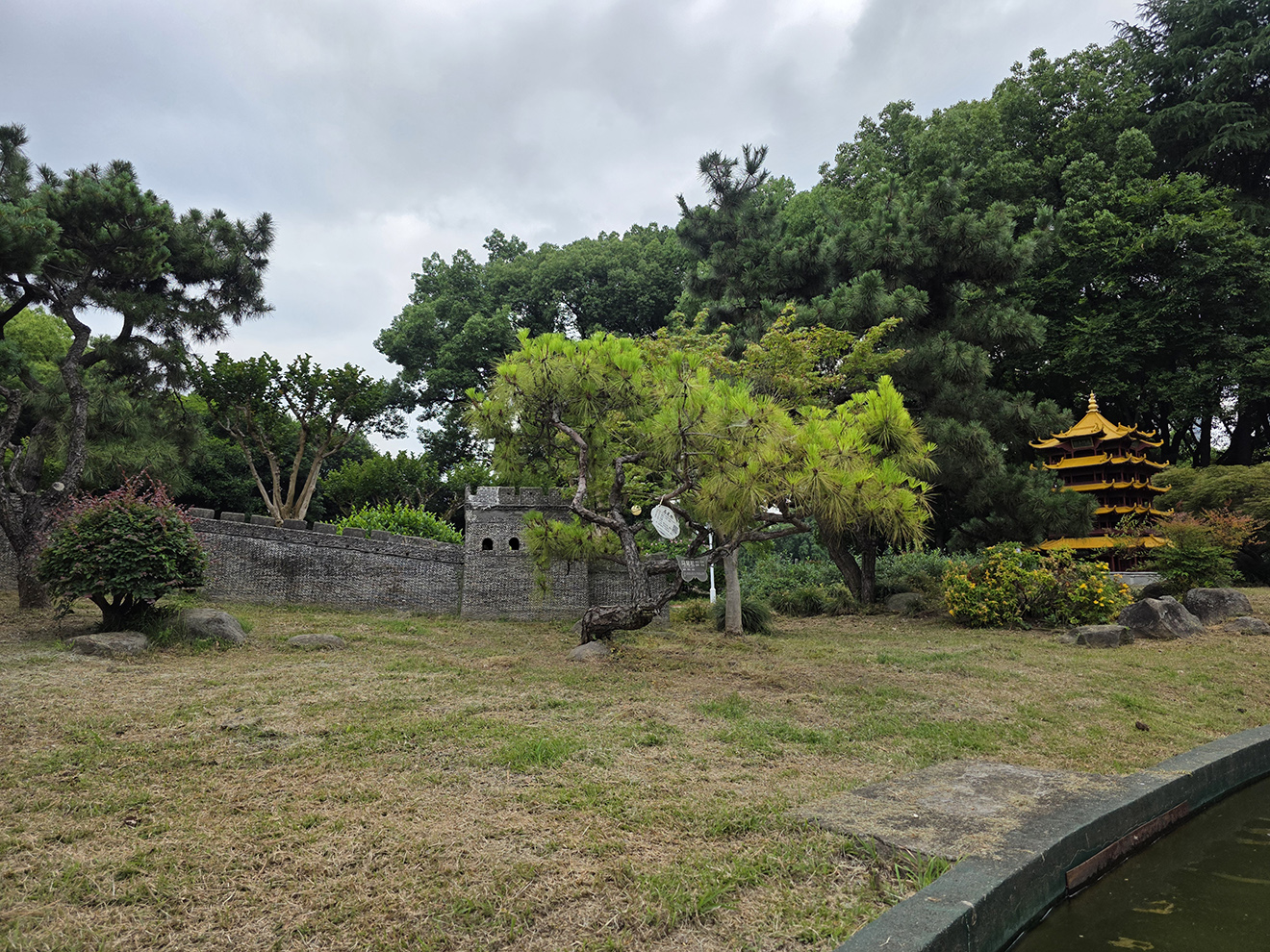
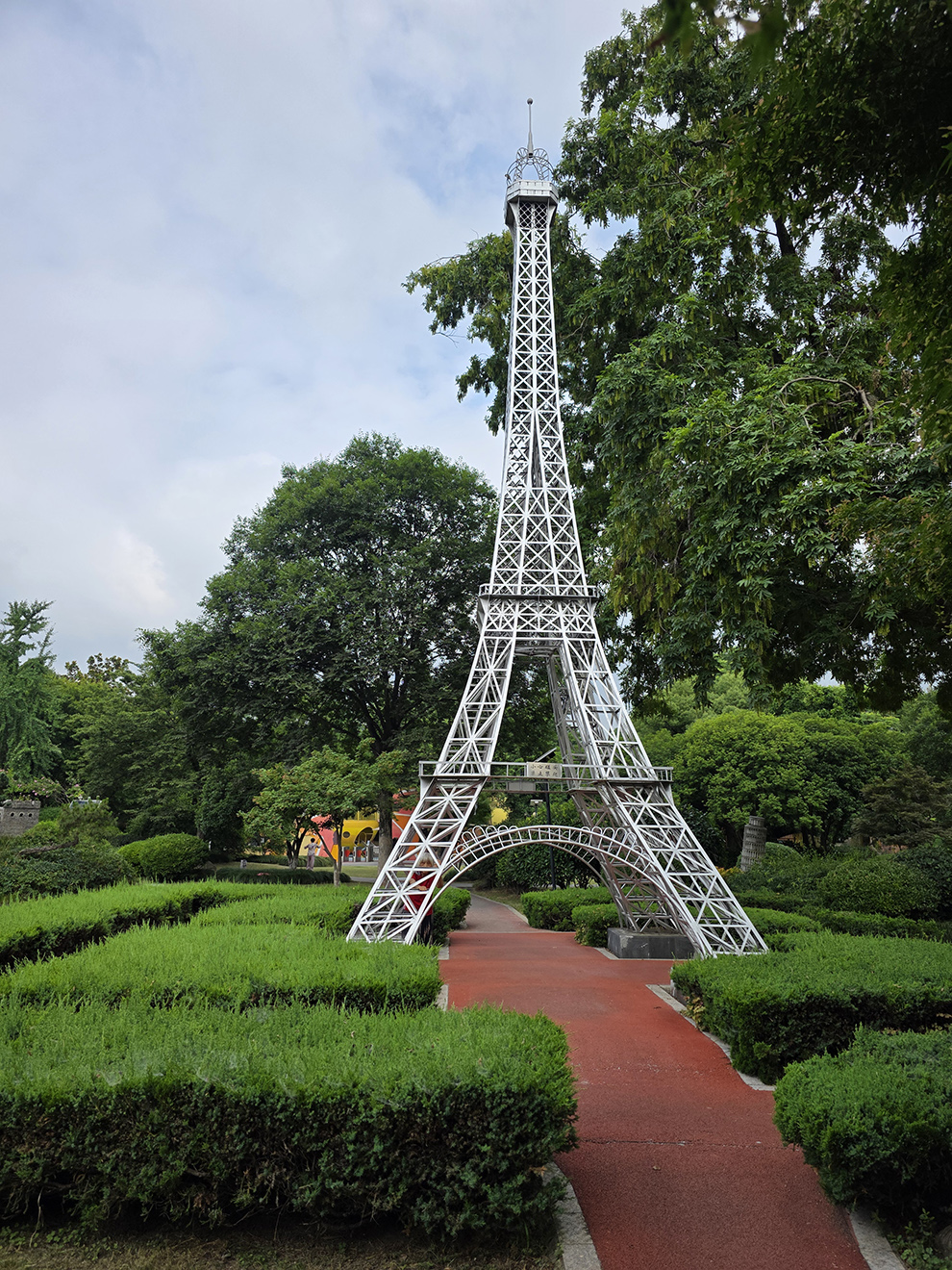
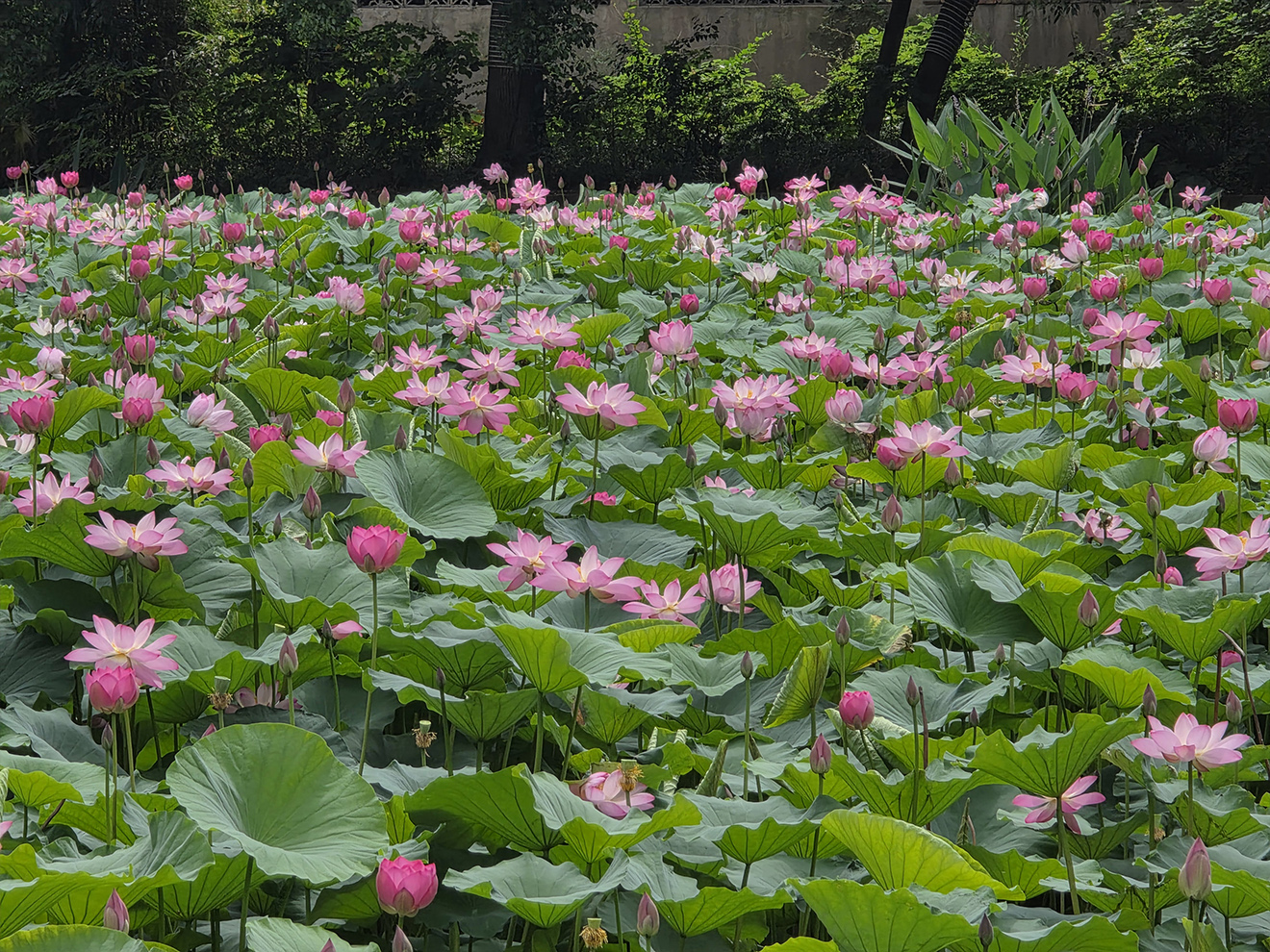
A large part of the south west corner of Yushan Lake Park is taken up by the children's park (as a note, you have to enter it from the north or south end, you can't get in from the sides. It's been around since Connie was young and, aside from a neat little garden, features a number of miniature versions of famous landmarks from China, Europe, and Egypt. There's also a (very slow) boat ride that circles around the area. While the attractions could be maintained a bit better, everything was still in decent condition and it was fun to walk around and teach Zack about the different landmarks. There was also some type of play area but it cost extra and Zack wasn't in the mood so, after we finished looking around, Zack and I continued north through the park. It was pleasant enough but, other than the children's park, there isn't really anything special on the west side of the lake and at the northern part you end up having to walk along the road for a while. Eventually we ended up back at the north east corner where the amusement park is (along with a nice collection of lotus flowers) so I let Zack go on some more rides.
We weren't in a big hurry to get to Connie's parents today, so after finishing up in the park we went to the Golden Eagle Mall (right next to our hotel). Like most Chinese malls, there's a bunch of a fancy restaurants on the upper floors. Which, by US standards, are very reasonably priced. I was able to get some good Chinese dishes (like flower fish) that I don't often see in the US and got Zack to try some things that he normally doesn't eat (I'm hoping this trip will get him eating a larger variety of food).
Since it was pretty hot, and Zack was tired from all the walking, we hung out in the hotel for a bit after that before heading to Connie's parents' place for dinner.
Random China Comment: Maps
Like a significant portion of the US (and the world, for that matter), Google Maps is my main map app back home. I've also used it extensively when traveling in Europe and the US. However, as I mentioned earlier, everything Google related is banned in China due to a disagreement between Google and the Chinese government. My international data plan does bypass the "great firewall" allowing me to use Google Maps on my phone (so long as I avoid wi-fi), but it's got some issues. First off, it does a perfectly fine job of showing a general map of the area (streets, parks, etc) and has no trouble using GPS to show your location. So it's ok for keeping track of where you are and getting walking routes. However, it's of limited use if you're searching for things. It does appear to show major landmarks and the like in the correct places, but it's otherwise rather iffy. First off, quite a lot of things are simply missing, whether you're searching for categories or specific businesses or attractions. Other are marked in the wrong location (i.e., it thinks our hotel is about half a mile west of the actual location, and when looking for a specific restaurant it sent me to a spot around three blocks away). I'm not not if that's mostly due to old information (things probably haven't been updated much since Google was banned) or some glitch with the mapping system. Possible both since, when viewing my movement history the route seems to be shifted a bit despite it showing me the correct location at the time. Also, even when you do find a location in Google Maps, there's quite often little to no information about it so you can't really rely on it for hours, reviews, photos, web sites, or anything like that. Things are somewhat better in areas that get a lot of foreign tourists (who presumably use Google Maps), but it's still much less info than you'll find in most parts of the world. Unsurprisingly, it's also completely useless for finding subway and bus routes (even finding the location of subway stations is kind of a pain). So, while Google Maps is still somewhat useful here, it's very limited and, after getting used to relying on it so heavily on all my other travels, trying to find the information I need elsewhere has been a bit of a challenge.
So what are the alternatives? Well, the Chinese government and Apple get along fairly well and I've been told that Apple Maps works just fine. Though that's only useful if you use an iPhone. For those with Android, you're kind of screwed. There are a couple of Chinese map apps with international versions you can download from the Play Store, but the reviews were so abysmal that I didn't bother (the general consensus was that, if you didn't have a Chinese phone number and couldn't read Chinese, they were of very limited use). Your best option is really just to use Google Maps where you can (fully understanding the limitations), and try and plan our your routes, destinations, and such as much as possible ahead of time using tour books, travel sites, and the like (which is what I used to do in the past pre-Google Maps).
Random China Comment: Pokemon Stop
As a sort of follow-up the the above RCC, I should note that Pokemon Go is mostly broken in China as well. Something with the networks in China screws with its mapping system so, while you can open the app, it can never find your location. That means no pokestops, gyms, and the like and no wild pokemon. You also can't seem to trigger daily eggs (you can hatch regular eggs but it won't always let your incubate new ones), join weekly challenges, or the like. You can earn candy for walking with your buddy, open presents from friends, and compete in the battle league, but that's pretty much it. Nowhere near as big of an issue as the problems with Google Maps, but certainly annoying if you're a regular player.
I thought I remembered Caishiji being a decent drive from Maanshan proper, and Connie's dad said it would take a while to get there, but it was actually only about 15 minutes away. They may have developed it a bit more since last time we went, since I don't remember this fancy entry area. Comparing it now to my photos and memories from before, it looks like in the past we only visited the southern end of what is almost a small island amidst two rivers. The entry point Zack and I used, however, was to the north. They do have a shuttle bus you can ride between most of the more notable spots, but it's not so large that you can't walk so I settled on a route that would hit all the key points on the map and we started off. A big part of Caishiji is the natural beauty. There's pools of water, all sorts of different trees, and various flower gardens (non of which were in bloom when we were there). There's also a number of different old (or in some cases just old style) pavilions and buildings, some of which have been converted into small museums and gallerias. I especially liked the bamboo forest and could have easily spent a while longer there exploring the different paths. While I enjoyed walking through the north and central parts of the Caishiji quite a bit, the most popular and impressive structures are definitely in the south. First up is Yuanmeng Garden (the first spot I remembered from my previous visit). And yes, I know that photo doesn't really look like a "garden" but walls, pavilions, and the like are key parts of any good Chinese garden. Zhexian Garden was especially nice and is one of the better Chinese gardens I've visited. It was also home to family of stray cats, which Zack really enjoyed watching. Right next to it is the Li Bai Memorial Hall (though there's a number of things dedicated to him scattered about the area). A little further on and up the hill a bit is Guanji Temple, a Buddhist temple in the very colorful style I've seen in some parts of China. From there you're supposed to be able to take a cable car up the hill to Santai Pavilion, but it was closed for maintenance (possibly for quite a while, given the look) so we ended up hiking up the hill instead. Followed, of course, by a bunch of stairs to get to the top of the pavilion itself. Not too bad for me (though the heat and humidity made it somewhat strenuous), but a bit of a challenge for Zack. But it did pay off with nice views of the Yangtze River on one side and Maanshan on the other. My original plan was to take the cable car up and down and then follow the trail along the west side of Caishiji, where there's a couple more buildings and a walkway alongside the Yangtze. However, with no cable car, I decided that would be a bit much for Zack so we hiked down the other side of the hill instead, completing the loop and ending up back at the entry gate to Caishiji. I'm a little disappointed, since I had specifically noted that riverside section during my first visit as one I wanted to take a closer look at, but I guess it can wait until the next trip. All in all, we spent around 3 hours making a loop of Caishiji and hit all the major structures except for that riverside bit. Zack did get a little bored after a while but I really enjoyed it the entire time and, if he wasn't around, I probably could have stretched out my visit a couple more hours between the remaining buildings, reading the signs a bit more closely (with the help of Google Translate), and winding my way through more of the garden and forest paths. Caishiji really is very nice. Probably not worth traveling significantly out of your way to visit, but if you're going to be staying in Nanjing for a while, it would probably be worth taking the train over to Maanshan one day to check it out.
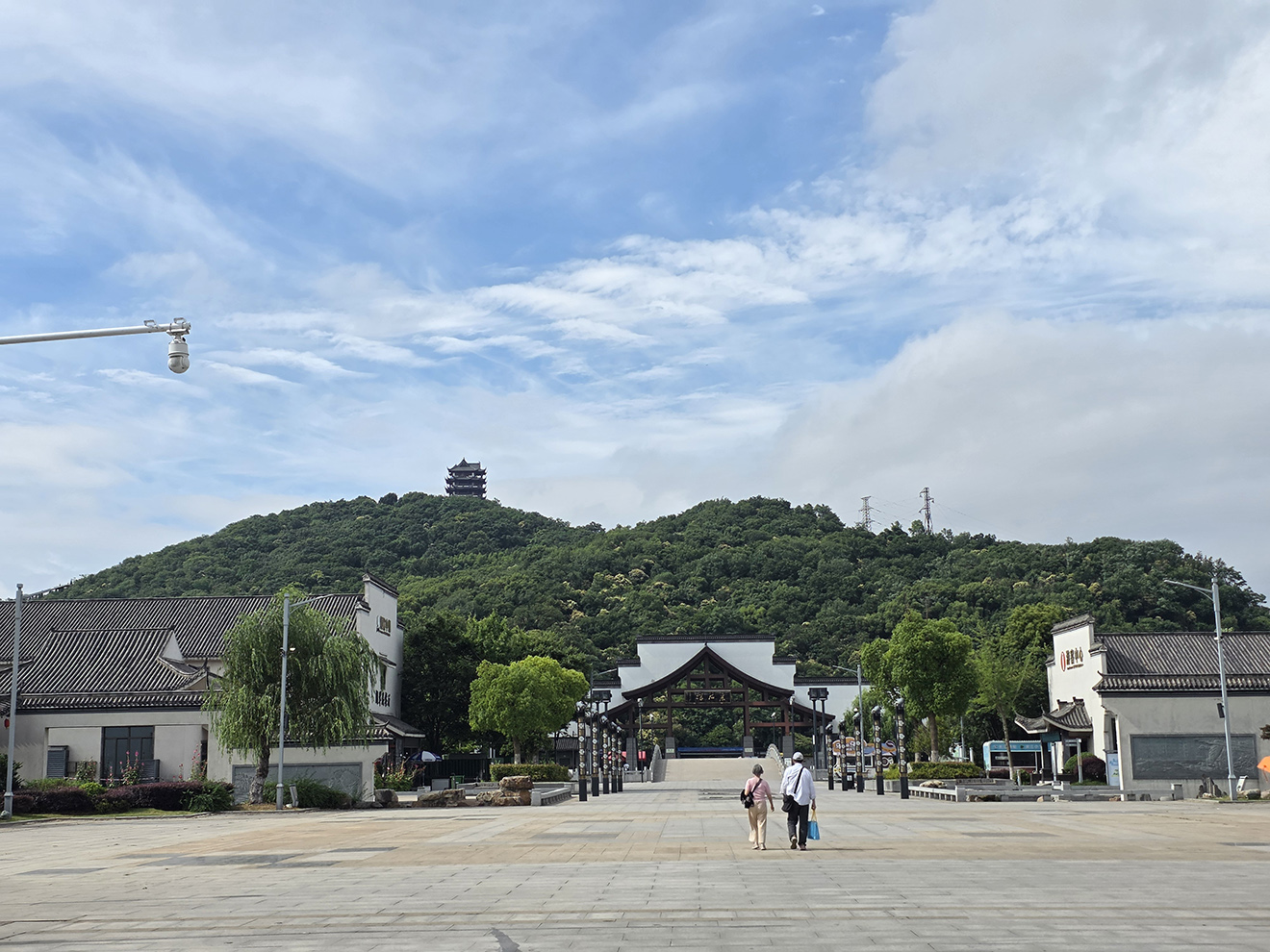
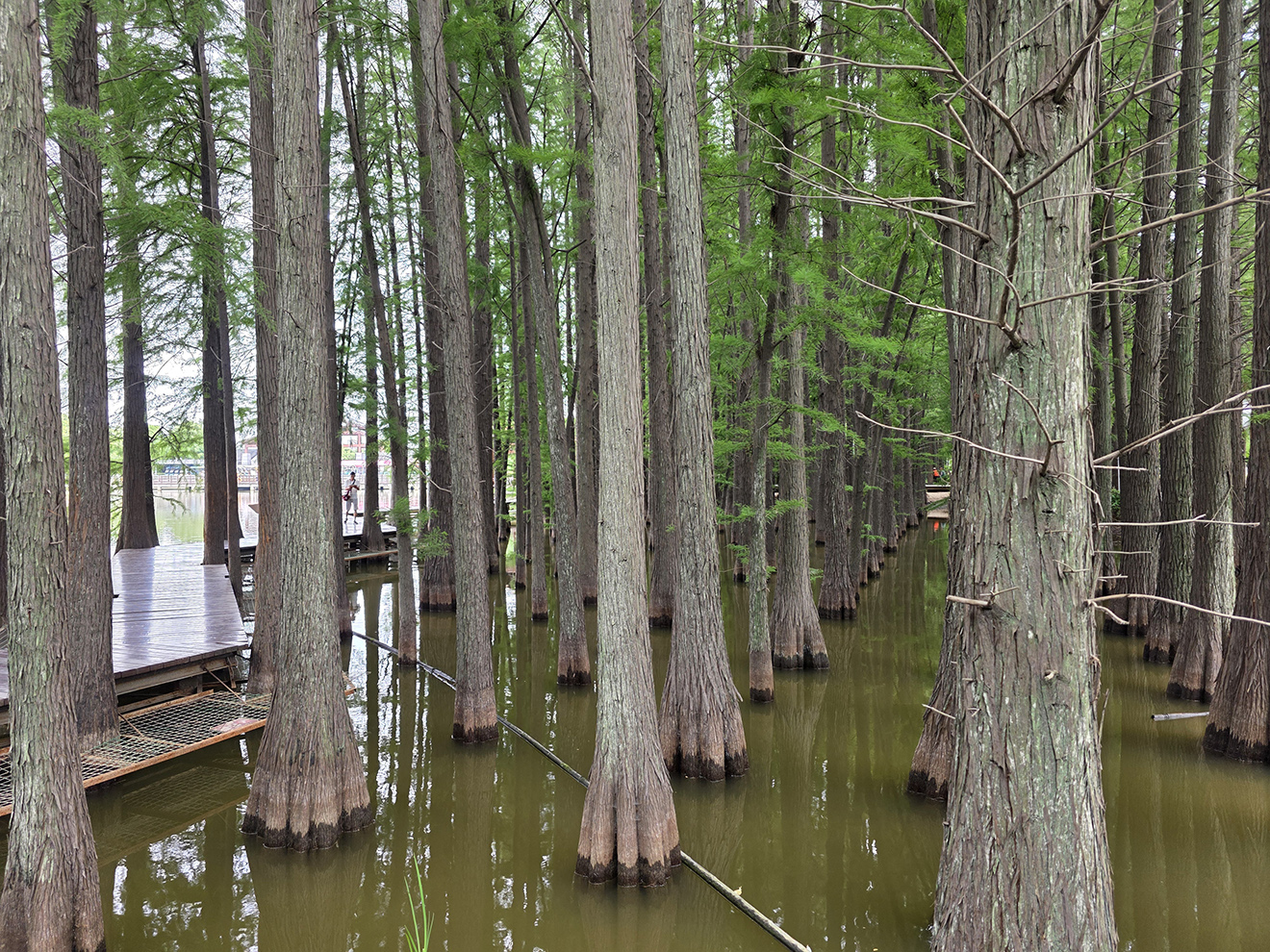
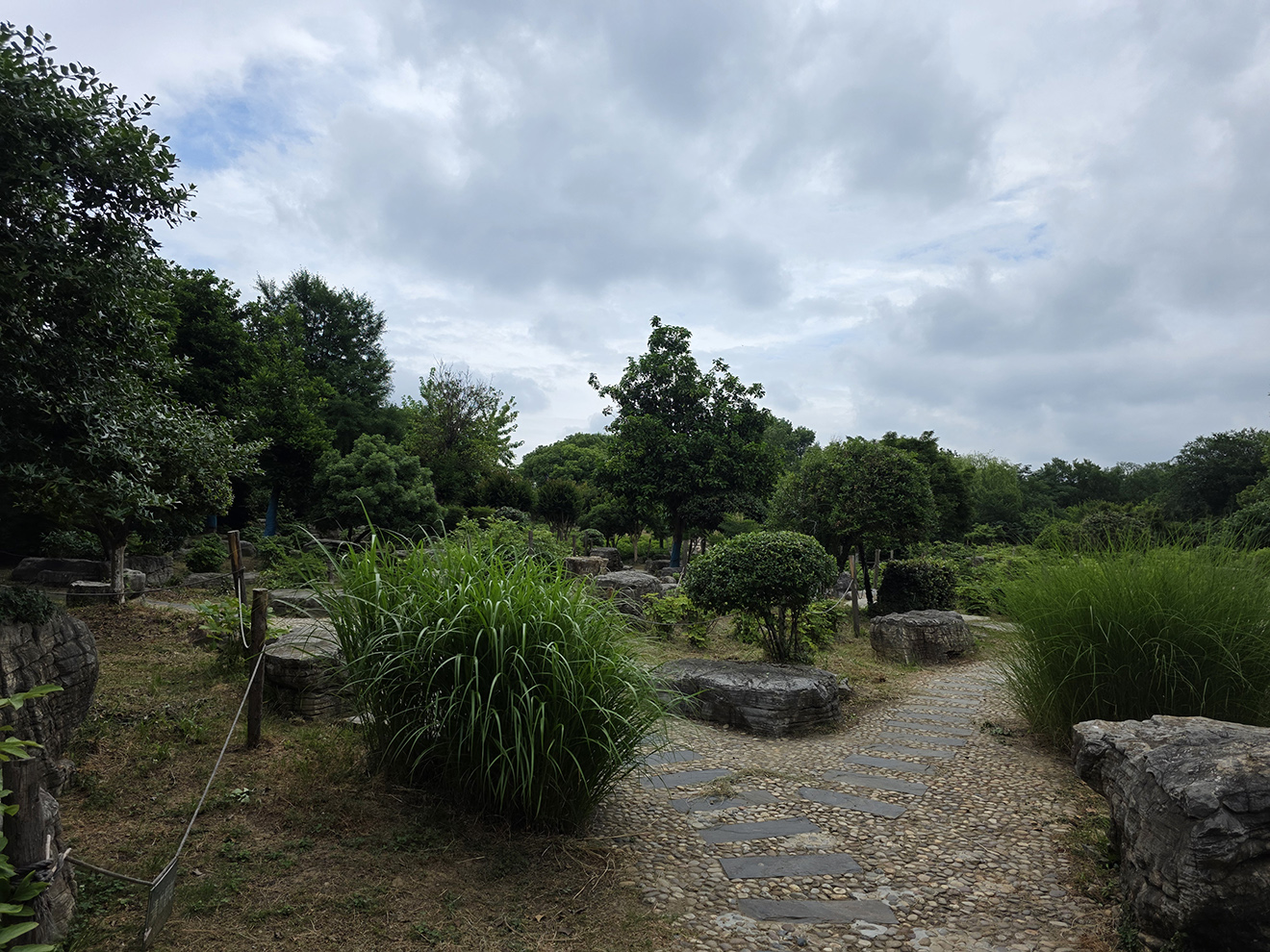
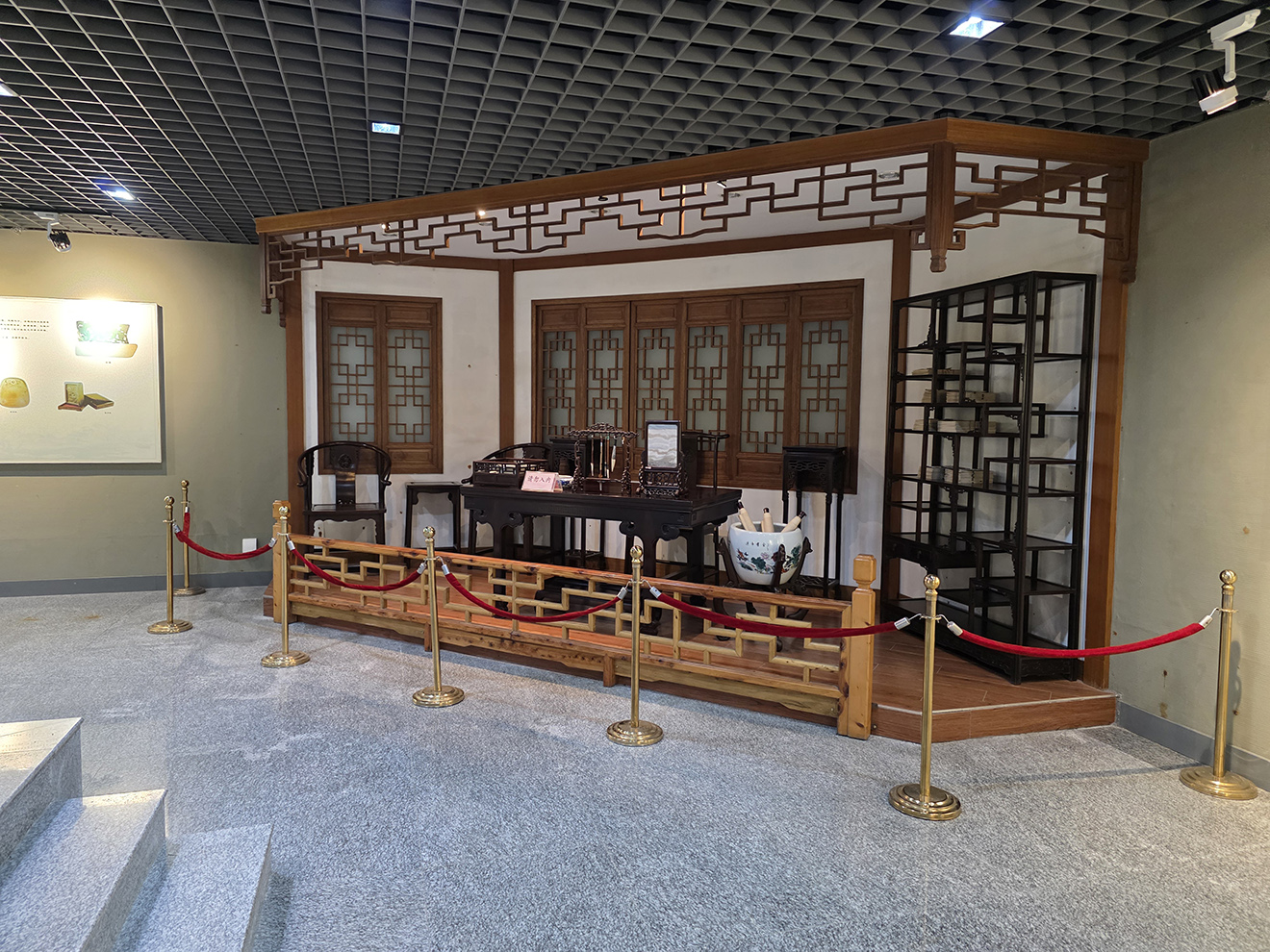
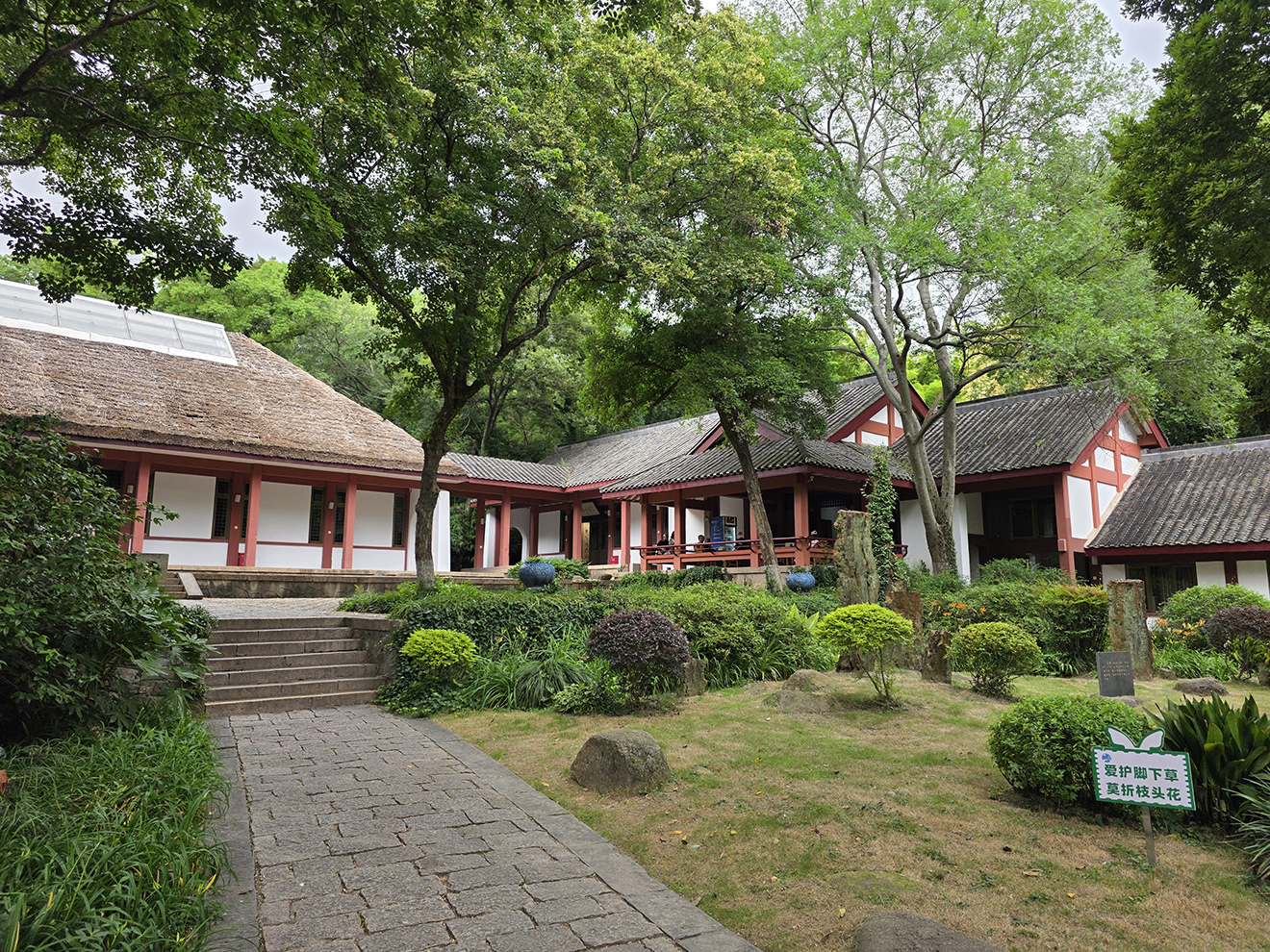
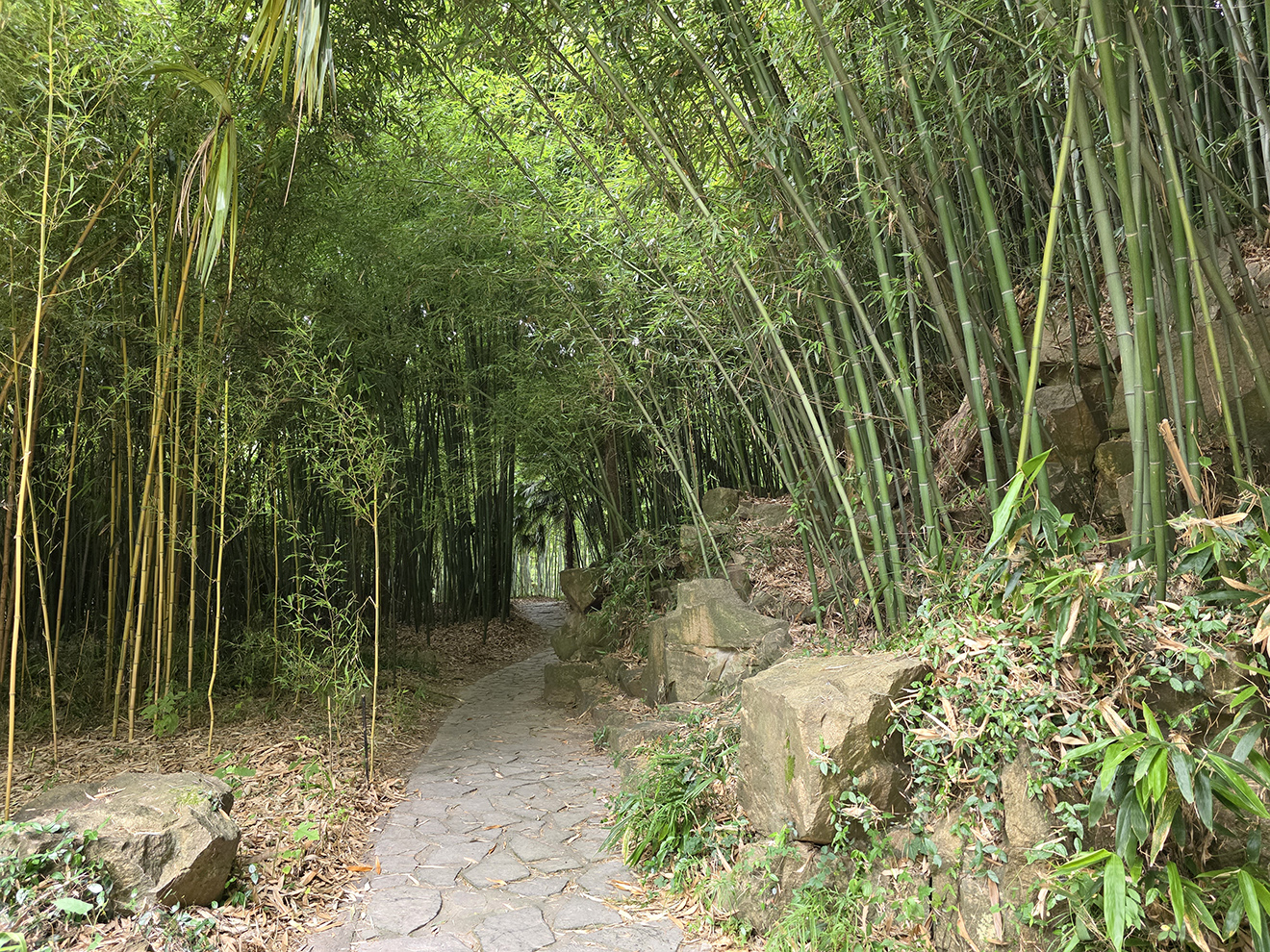
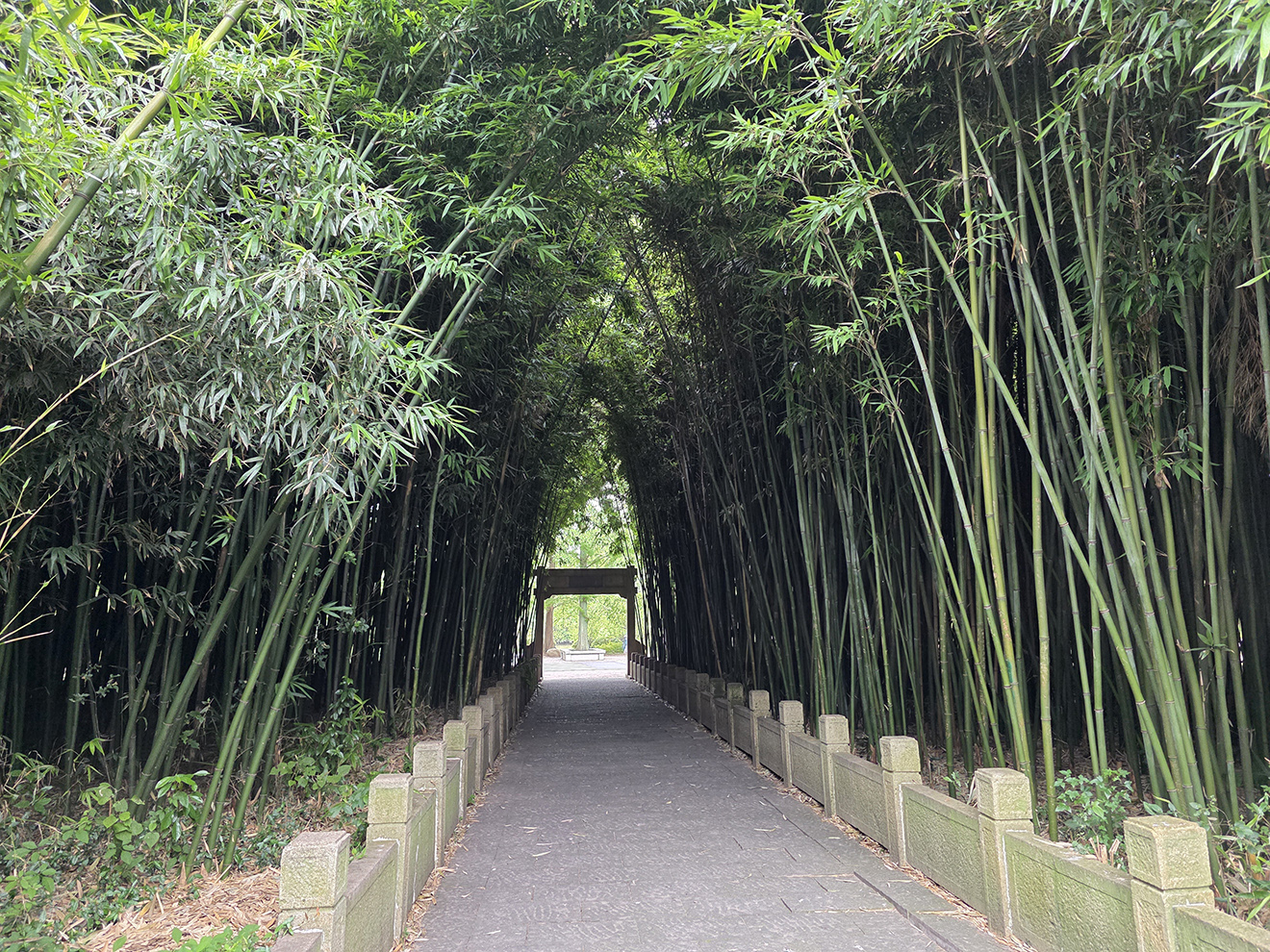
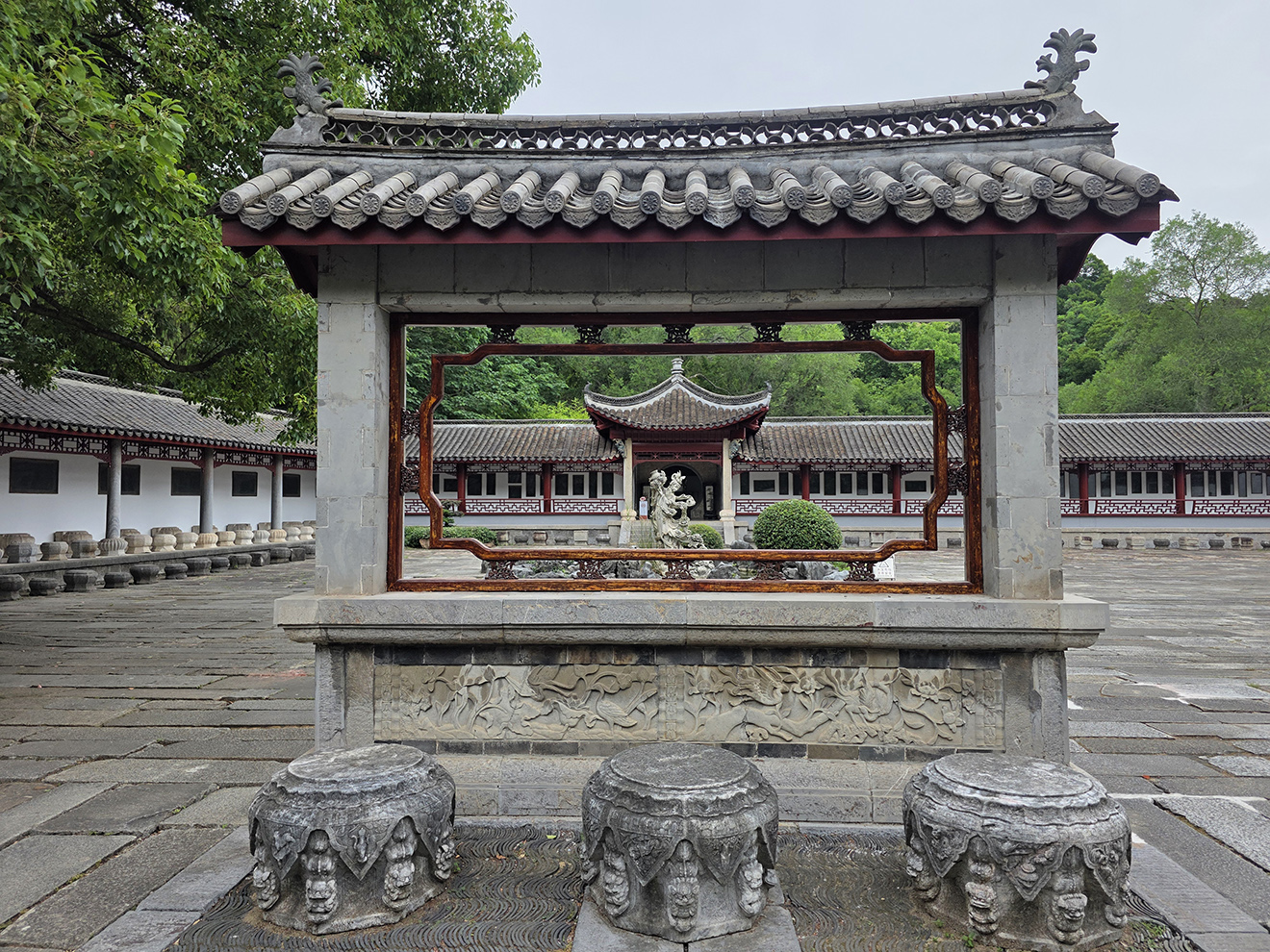
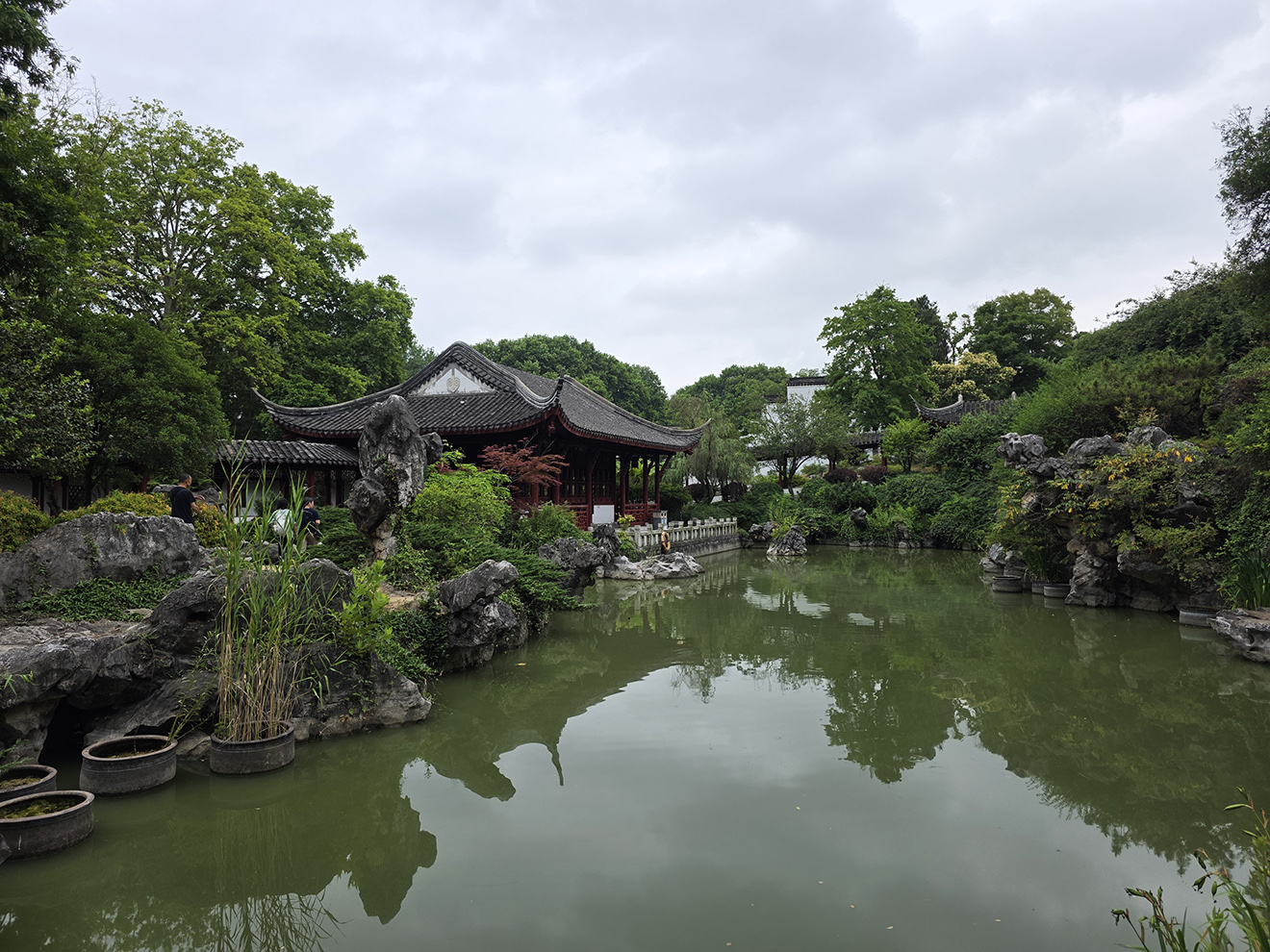
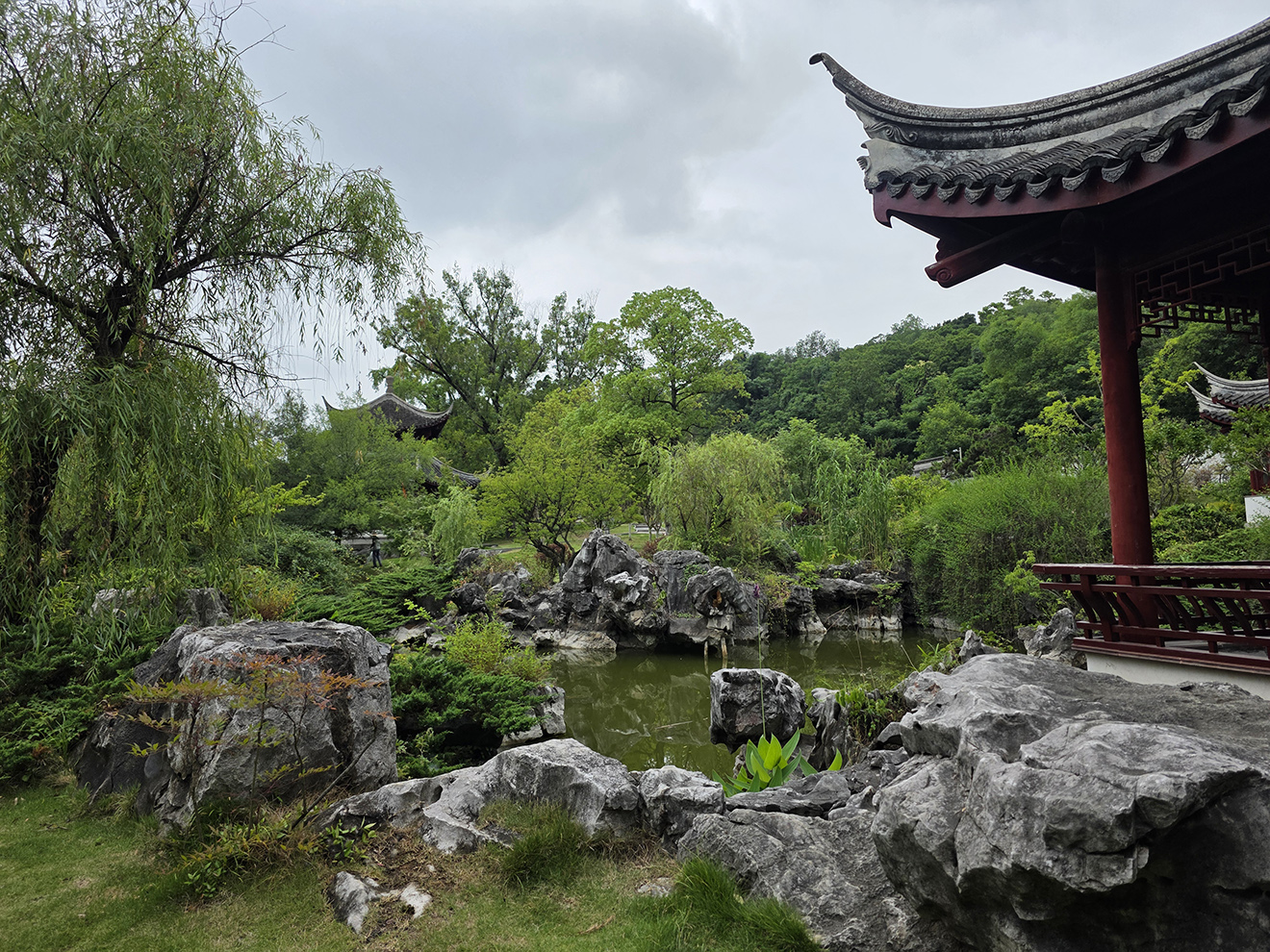
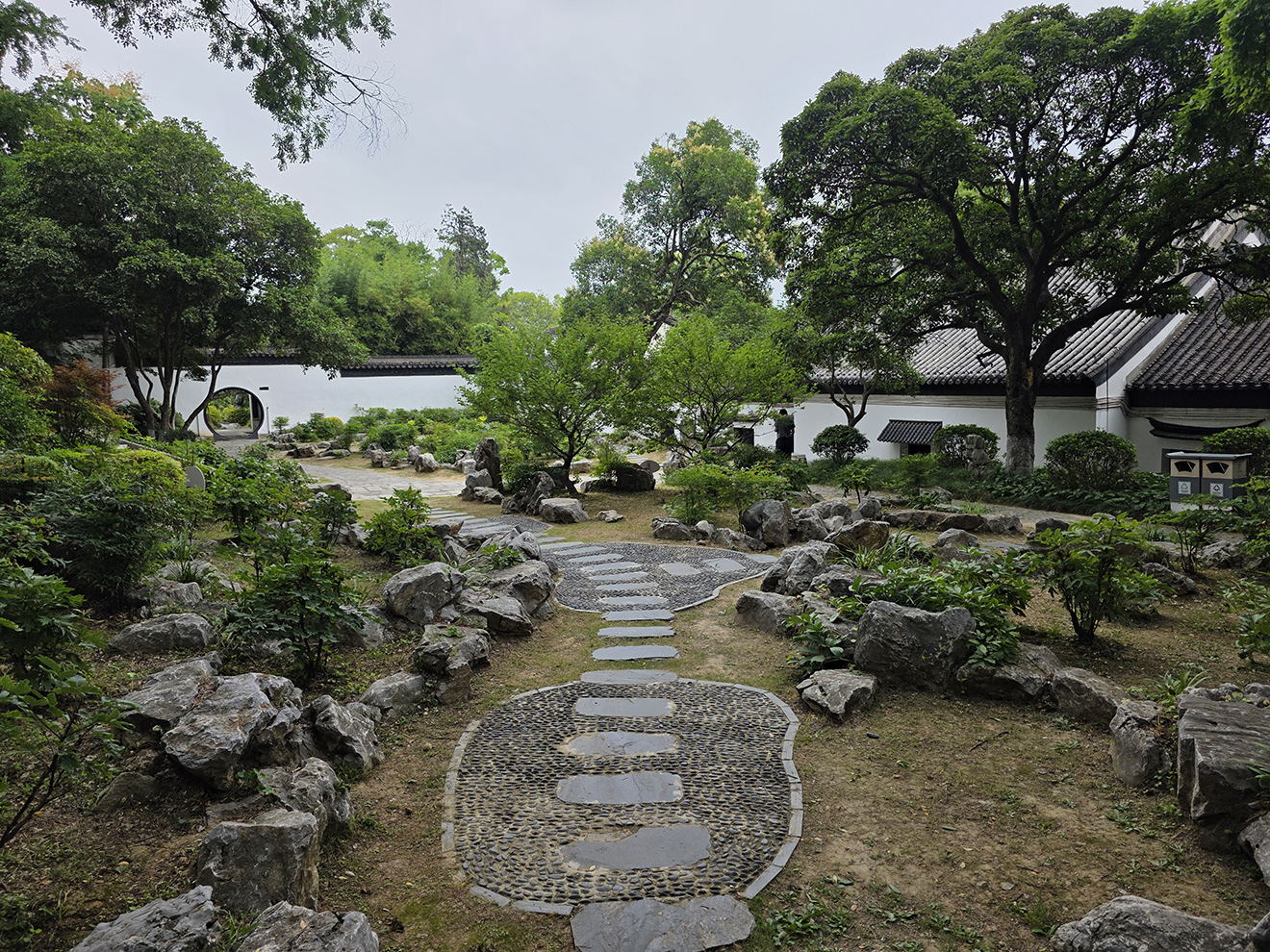
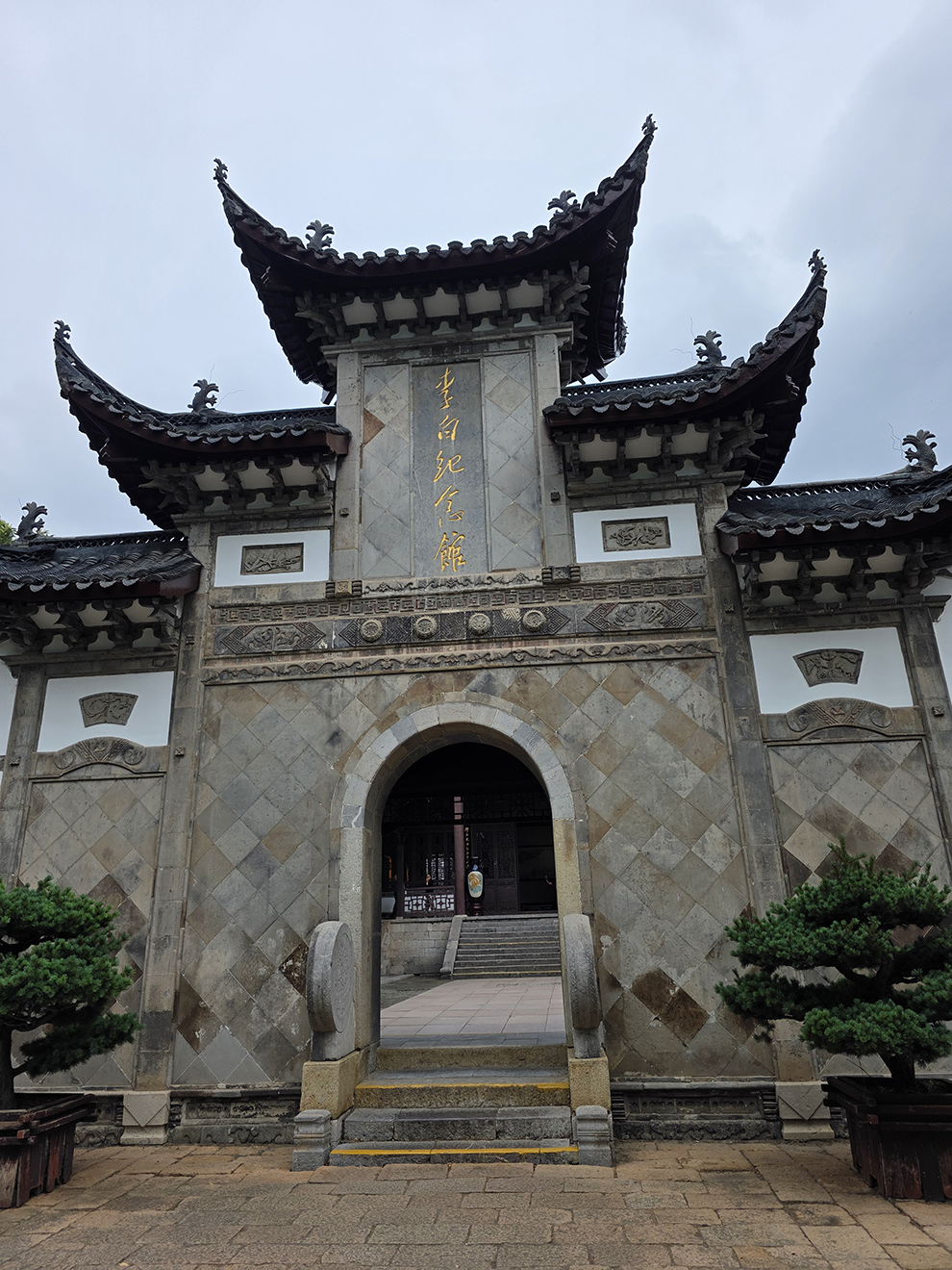
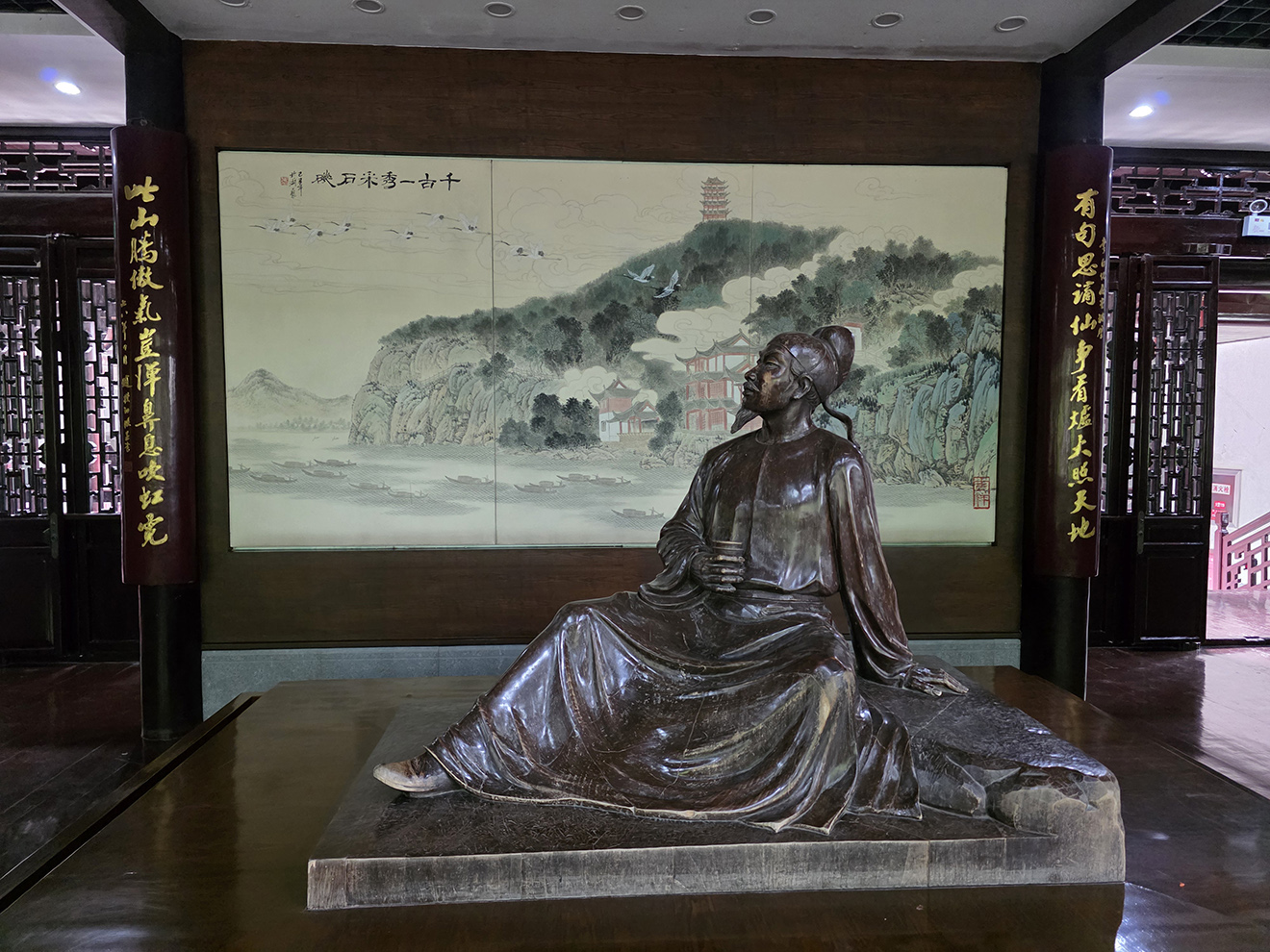
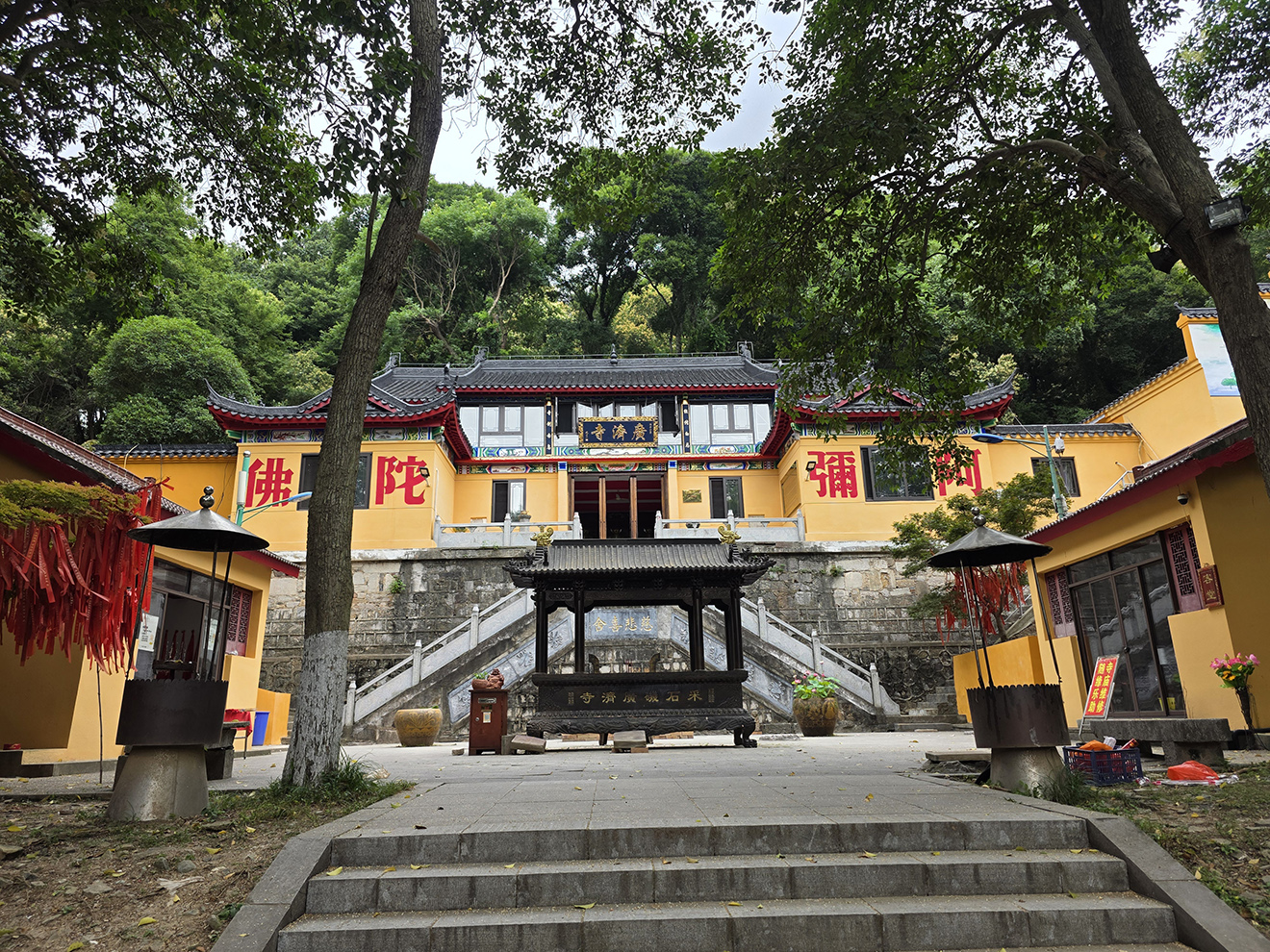
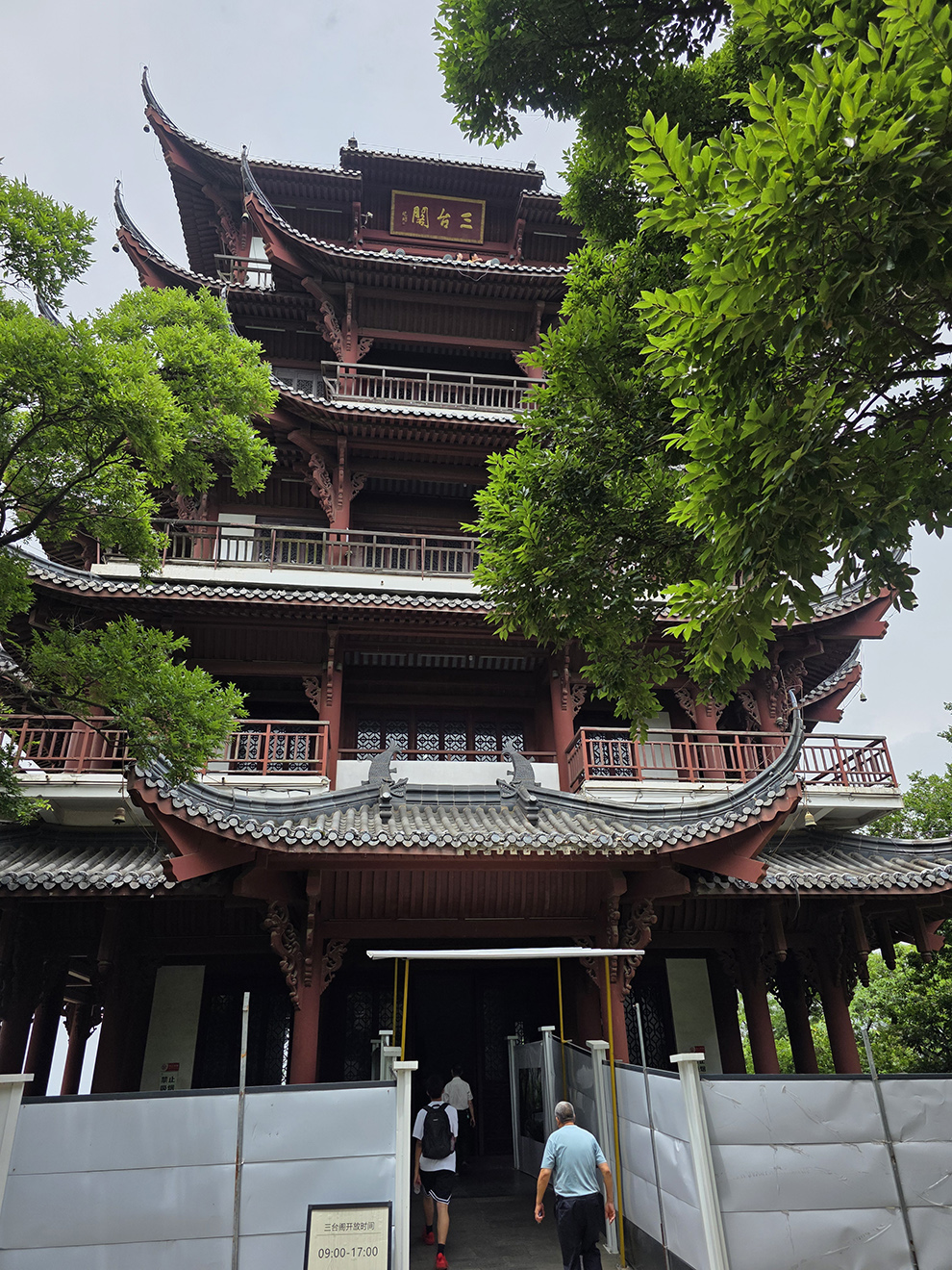
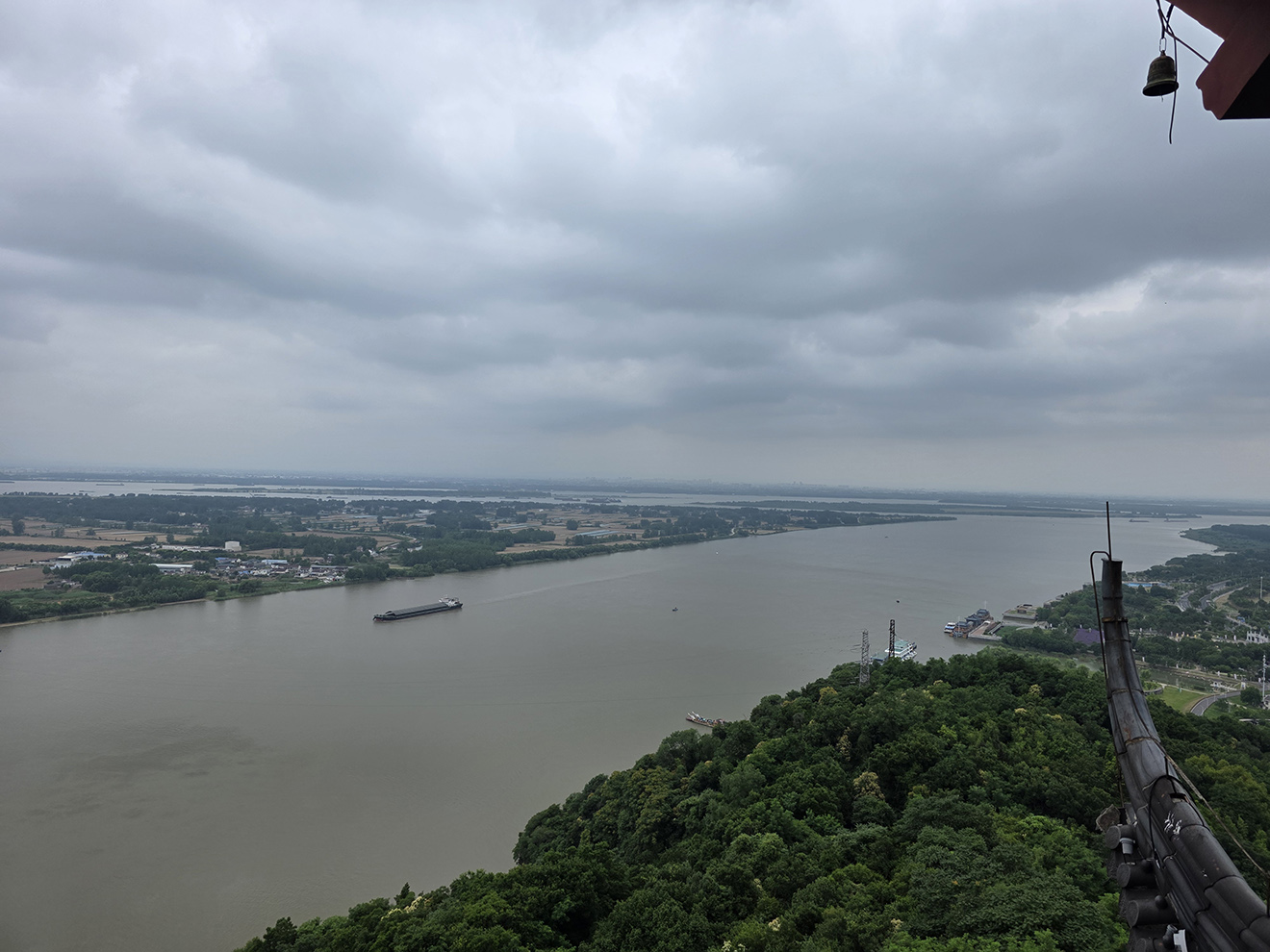
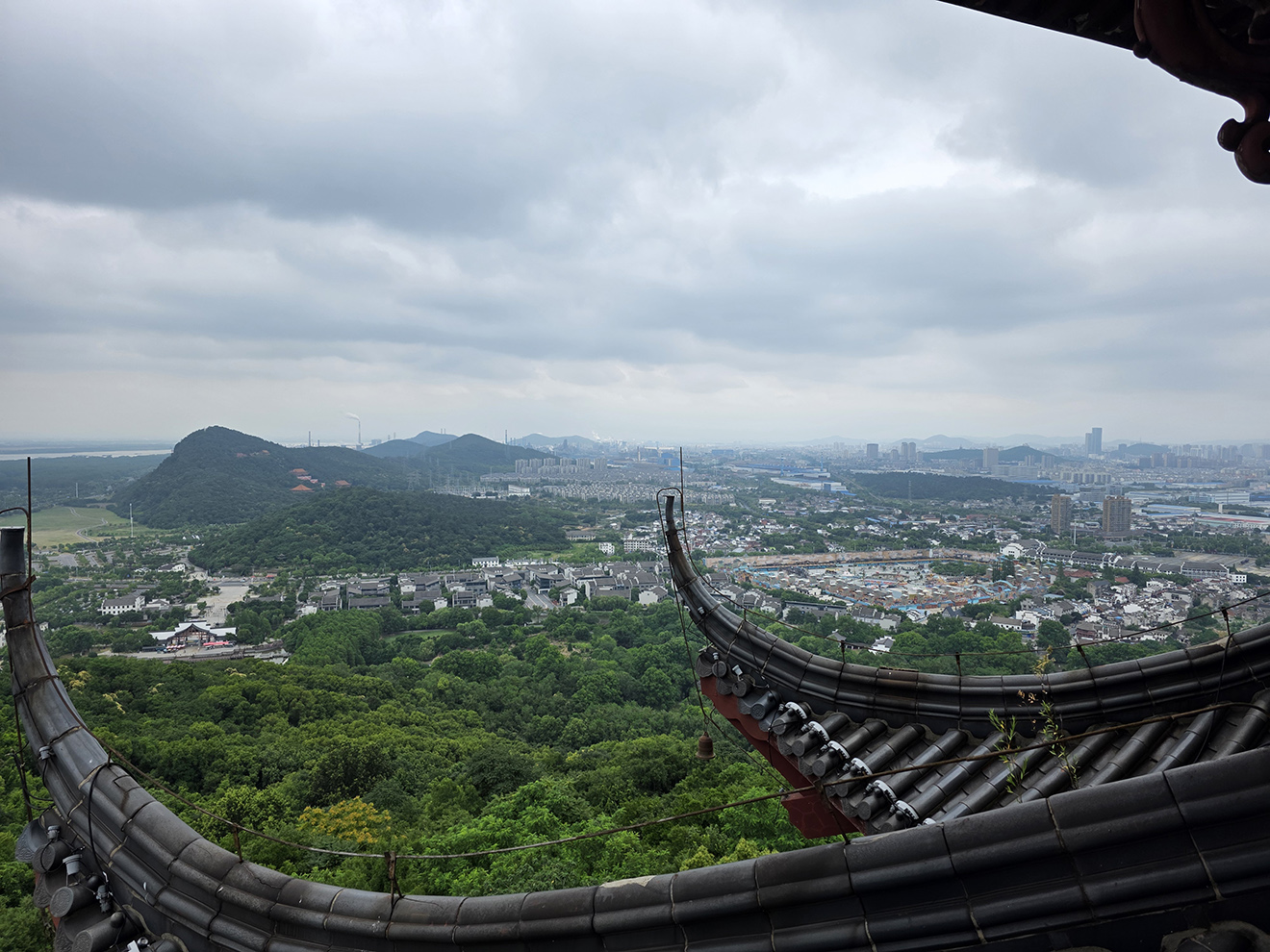
Zack and I made it back to downtown Maanshan in time for a late lunch (he wanted to go back to the same restaurant from the previous day, which I consider a good sign) and once again eventually headed over to Connie's parents' place for dinner.
Random China Comment: Scooters, Scooters, Everywhere
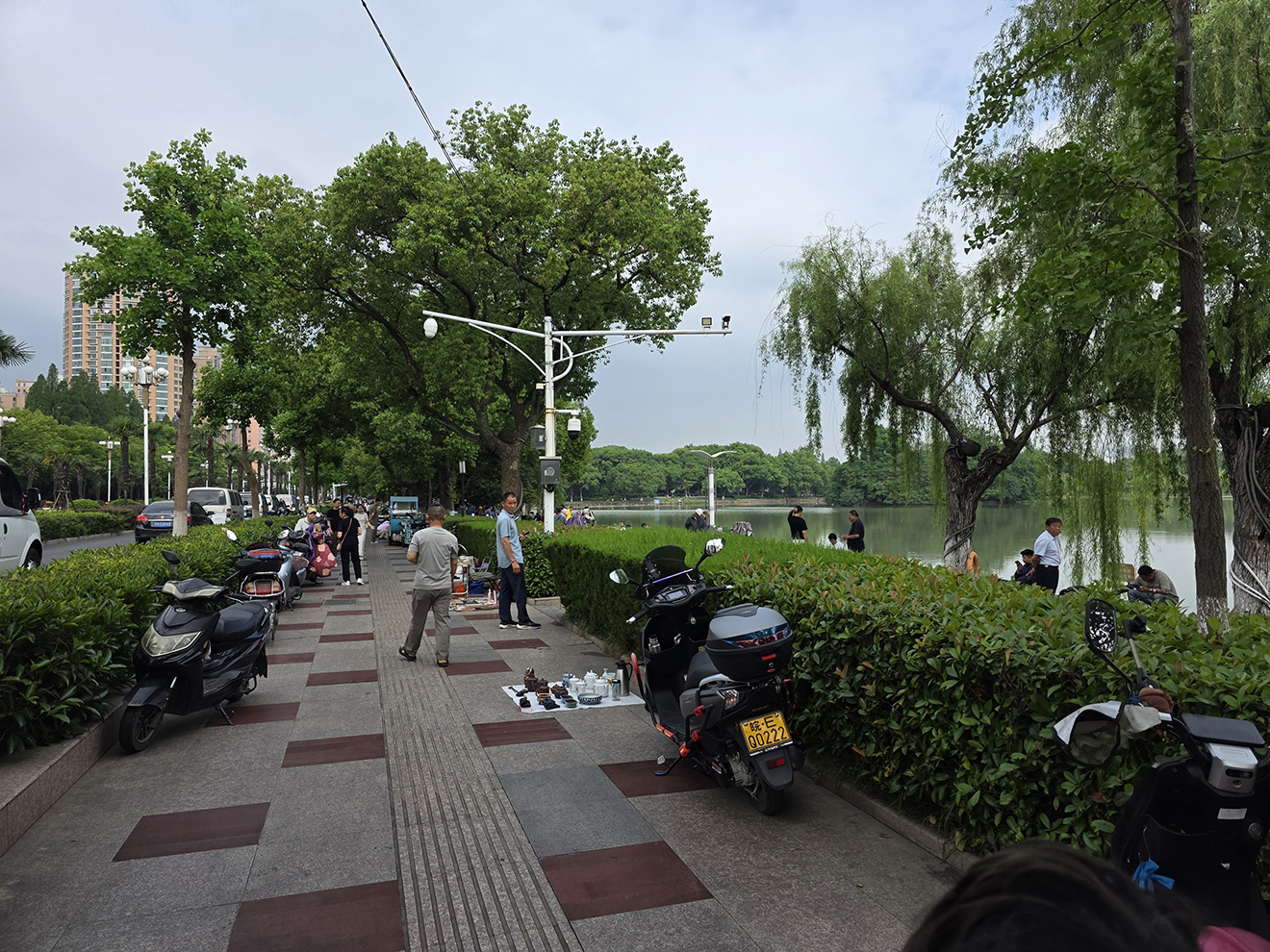
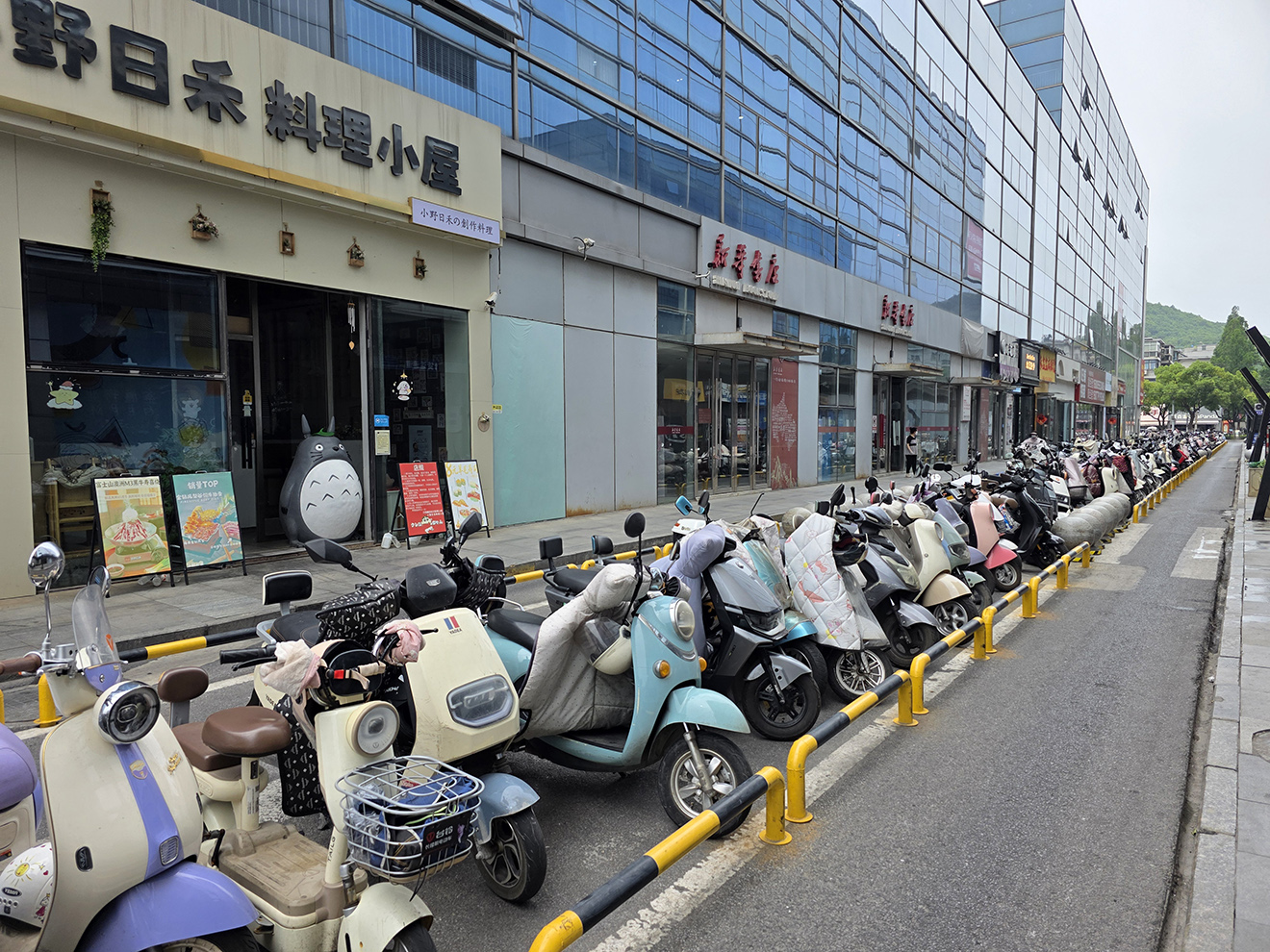
On my previous trips to China, lots of people rode bikes and little mini-car things. Since then, it seems like just about everyone has upgraded to Vespa style electric scooters. They are everywhere (actually, that photo kind of undersells it compared to some areas I've seen). To the point where it's sometimes hard to get to a building because the area infront of it is entirely filled with scooters. People with scooters rarely drive on the actual roads with the cars. Instead, many streets feature special lanes (often separated with a divider) for scooters. However, it's also very common to see them driving on the sidewalks (even when there's an actual scooter lane right there) so you need to keep an eye out and be ready to dodge and weave between them as necessary (as mentioned on previous trips, I feel like it would be very easy to get run over in China if you're not careful). Quite a lot of spots have low barriers or lines of concrete balls specifically to keep scooters out but so long as there's enough of a gap the scooters (and sometimes even smaller cars) will slip through anyway so they don't always work as intended. I should also note that said barriers can be a real pain when you're pushing a stroller and I've frequently had to pick the entire thing up and lift it over. I can only imagine how inconvenient it would be if you were in a wheel chair. Though, without the barriers there would be nothing stopping people from riding their scooters on every single walking path and sidewalk so I guess I can't complain too much...
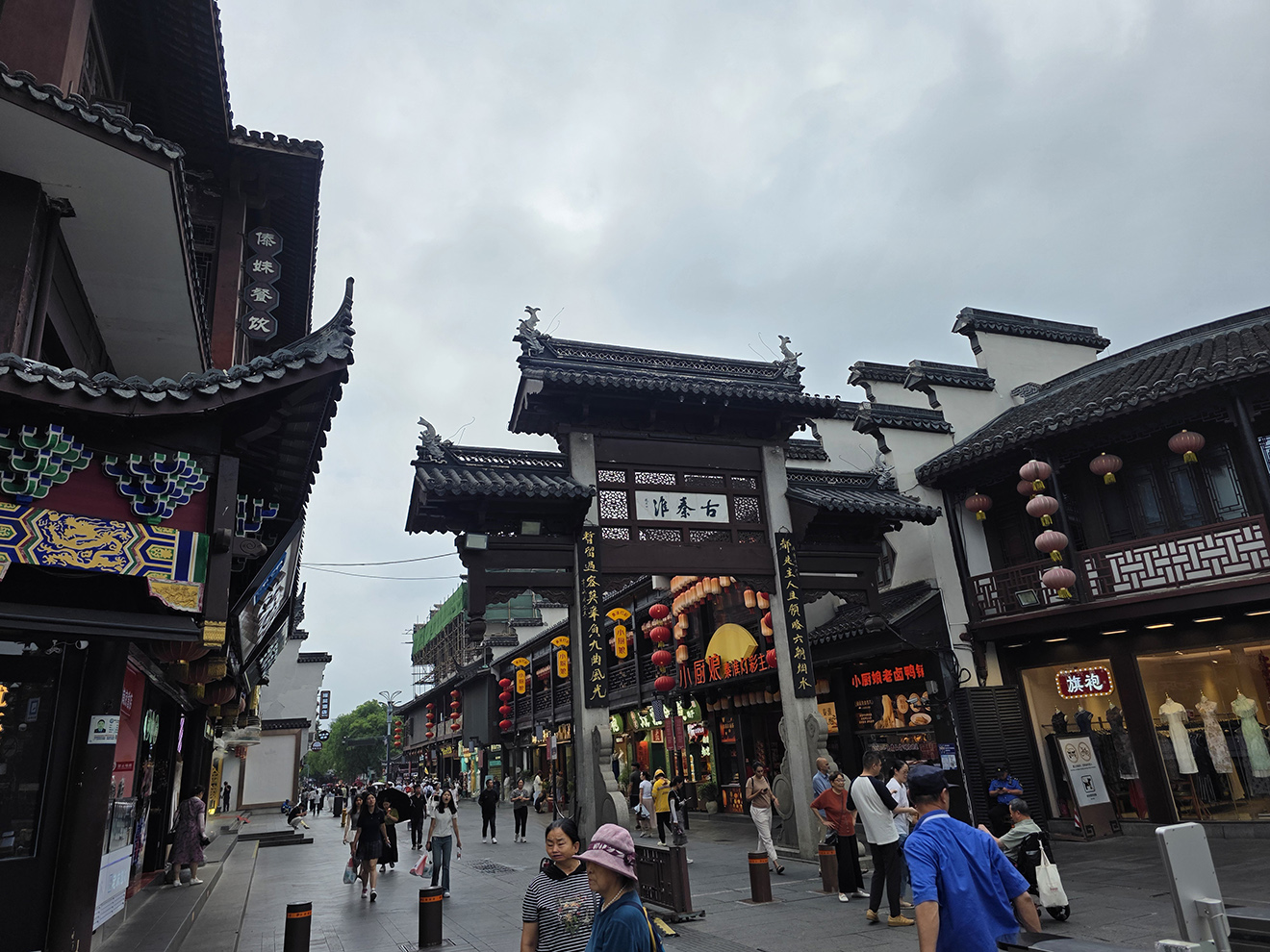
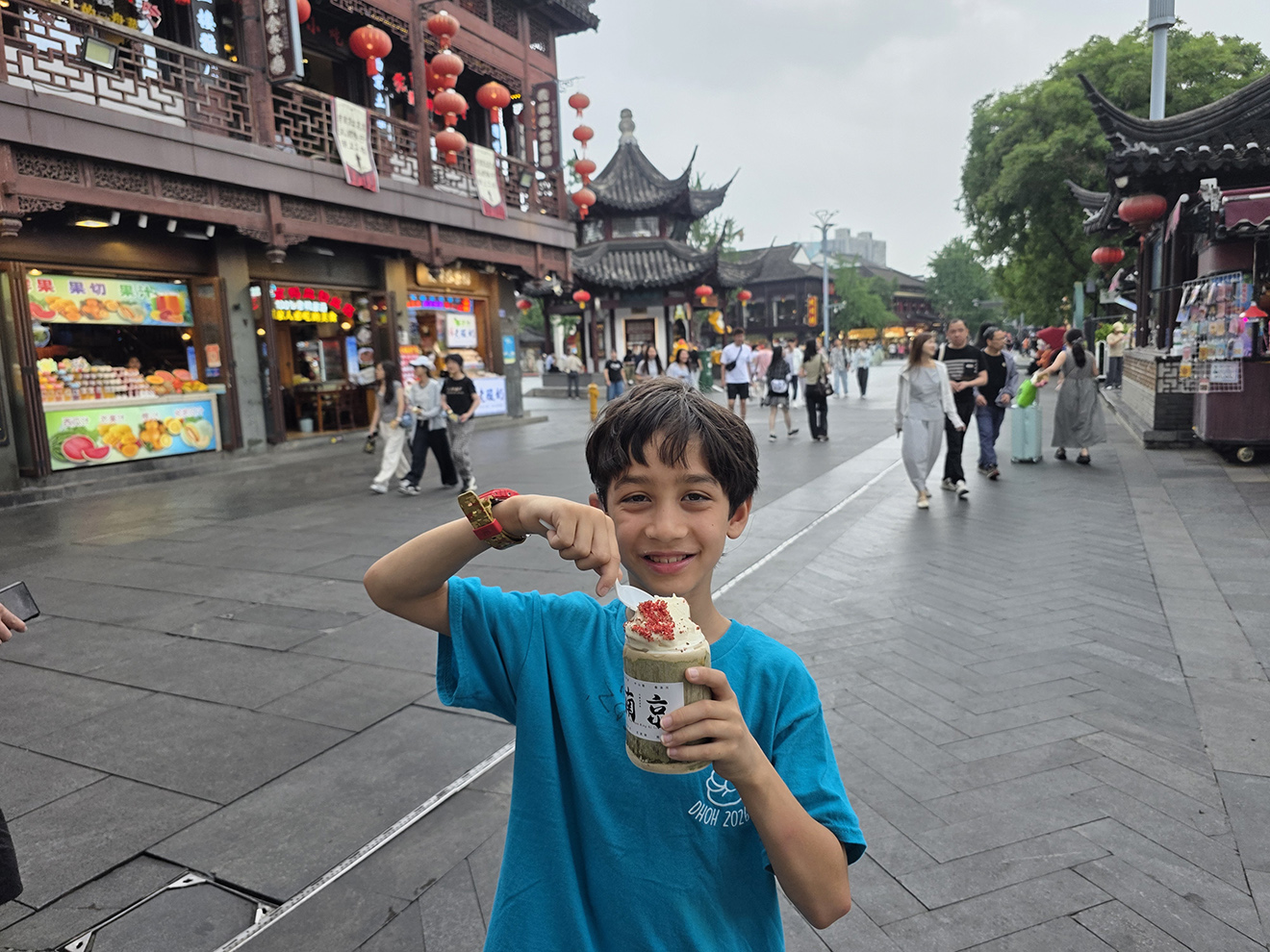
Anyway, our first stop was the Qinhuai River area, which features some fun old fashioned shopping streets. Some of the shops are especially elaborate, and there are a few I would have taken a closer look at just for the decor if it hadn't been for Zack (though he did like that dragon in that last photo). There's a temple and some museums in the area (which I visited in the past) but I thought Zack would have more fun with the boat ride. It's something I did with Connie way back when I first visited Nanjing, though we went in the evening when the sun was going down. While it's still a nice ride during the day, showing some fancy lanterns and old buildings, I can certainly see why it's more popular at night when everything is lit up. After that, we stopped for what seemed to be a specialty of the area, ice cream and milk tea in bamboo. Which is basically just a presentation gimmick, but kinda fun.
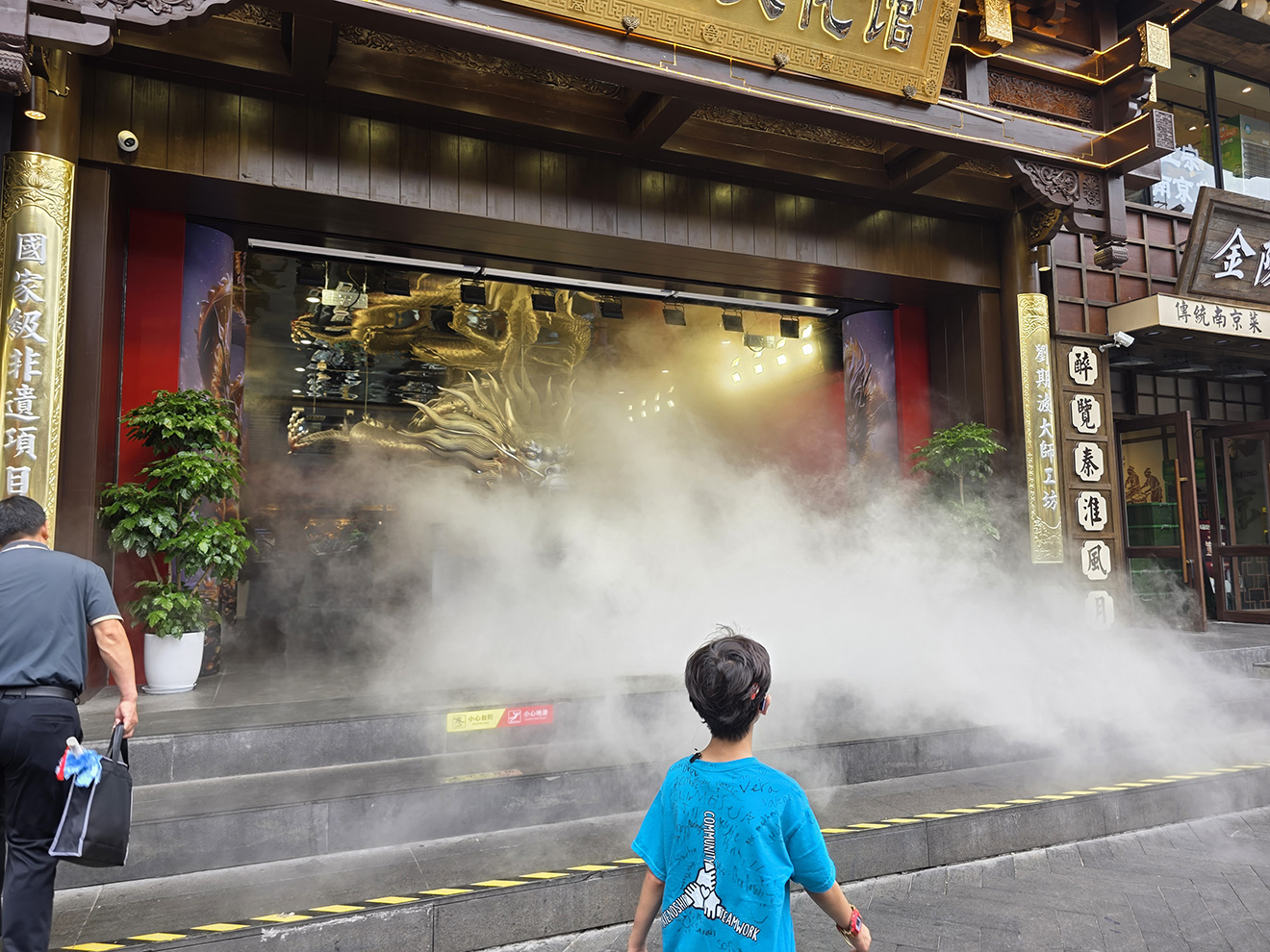
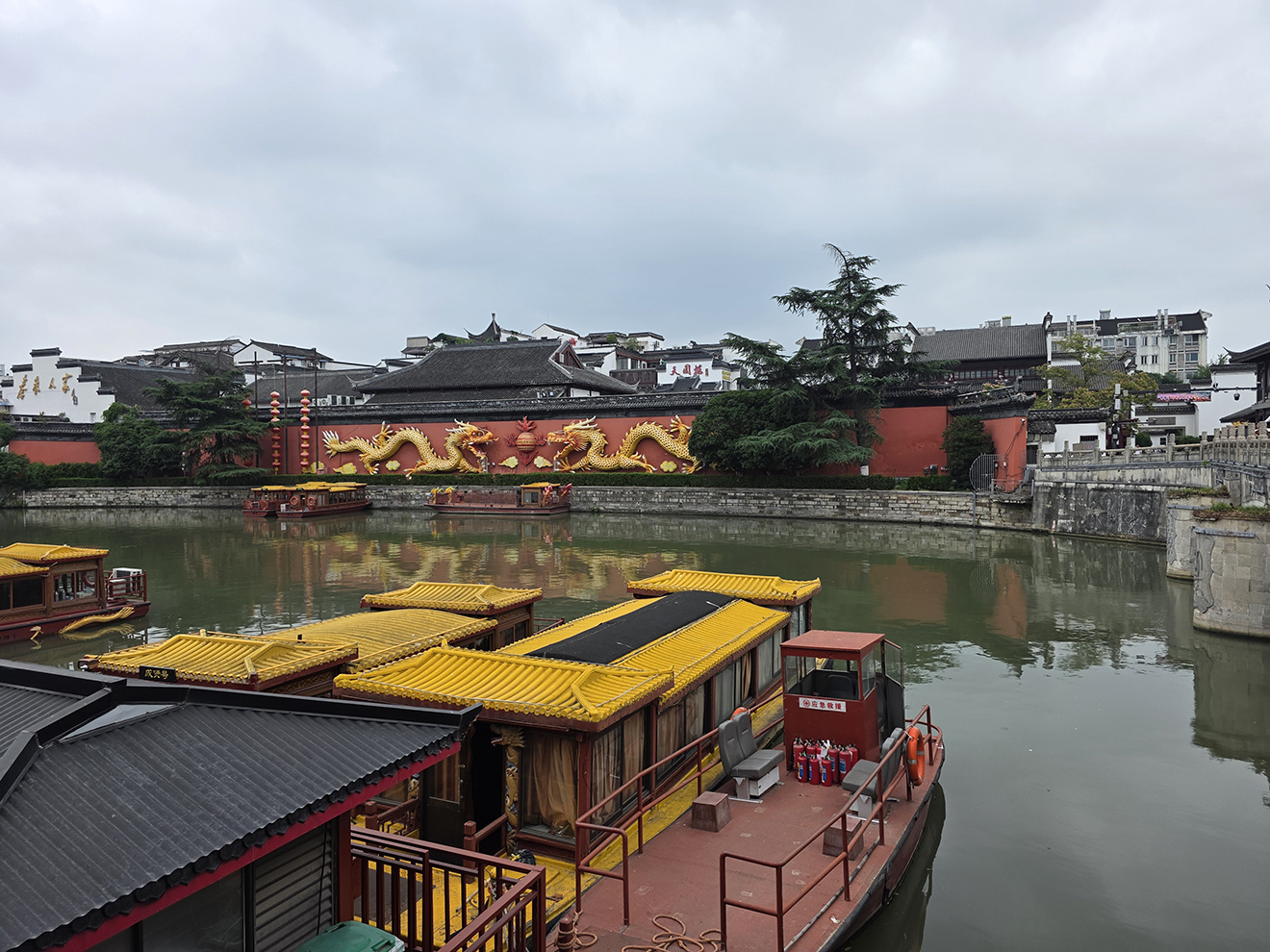
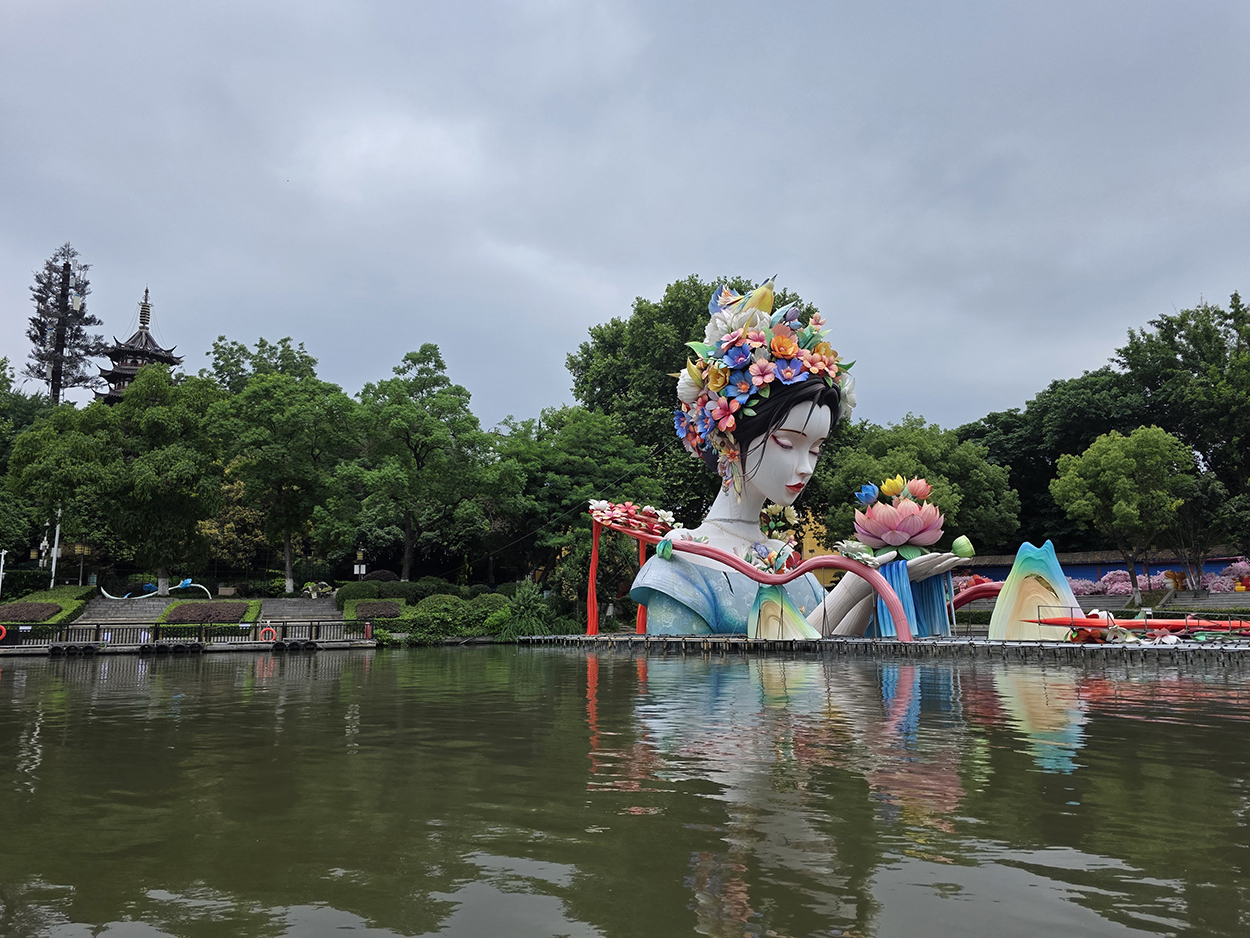
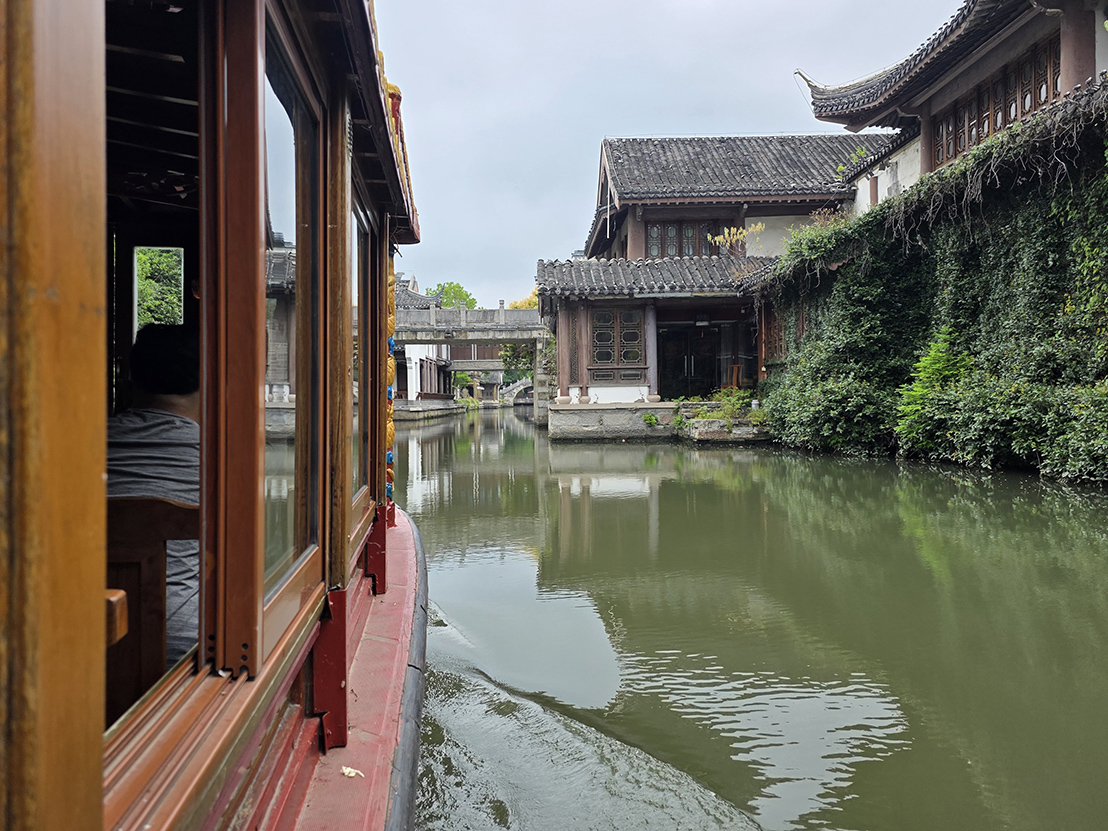
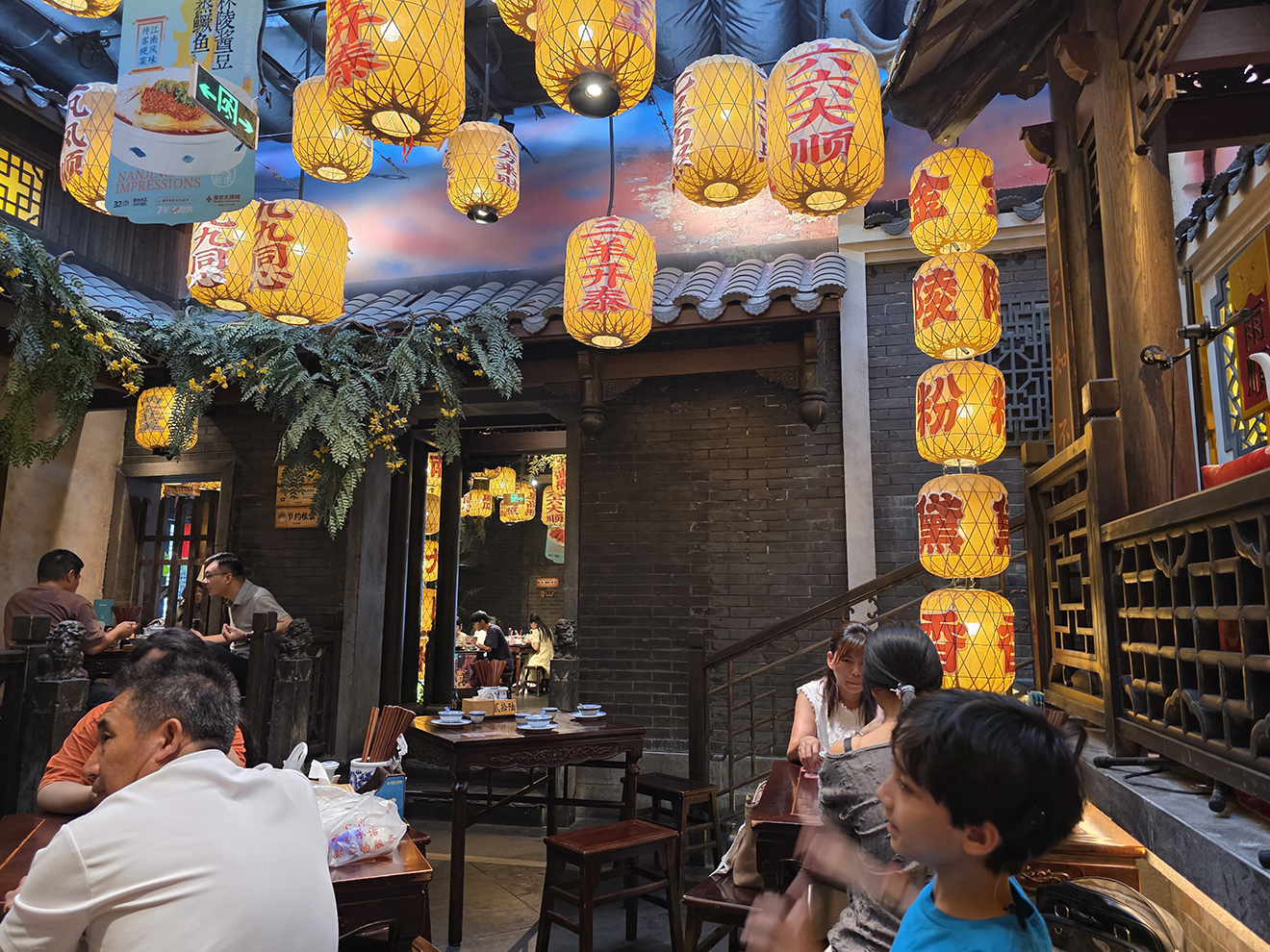
Then it was off to my favorite Chinese restaurant, Nanjing Da Pai Dang (aka Nanjing Impressions), which you might remember me talking about in previous travelogues. There's a number of locations around, a couple of which are fairly close to the Qinhuai River, so I decided to walk rather than get a taxi. That wouldn't have been a problem except for the issues with Google Maps. First off, there's apparently now a knock-off restaurant chain with a similar name and appearance that comes up in searches. It's a bit hard to tell the difference if you can't read Chinese but a quick message to Connie cleared that up. The bigger problem was the unreliability of Google Maps. Zack and I spent 15 minutes or so wandering around the location where the restaurant was supposed to be without any luck. Finally, I tried putting it into Didi (the taxi app). Turns out we were pretty close (close enough not to need a taxi), and I was able to use the suggested taxi route to find the right location a few blocks away. That whole thing was rather frustrating, but Nanjing Da Pai Dang was just as good as I remembered and I got to introduce Zack to some more foods. I did have a bit of trouble with their new phone ordering system (more on that in today's RCC) but in the end a waitress was able to take my order the old fashioned way so it worked out.
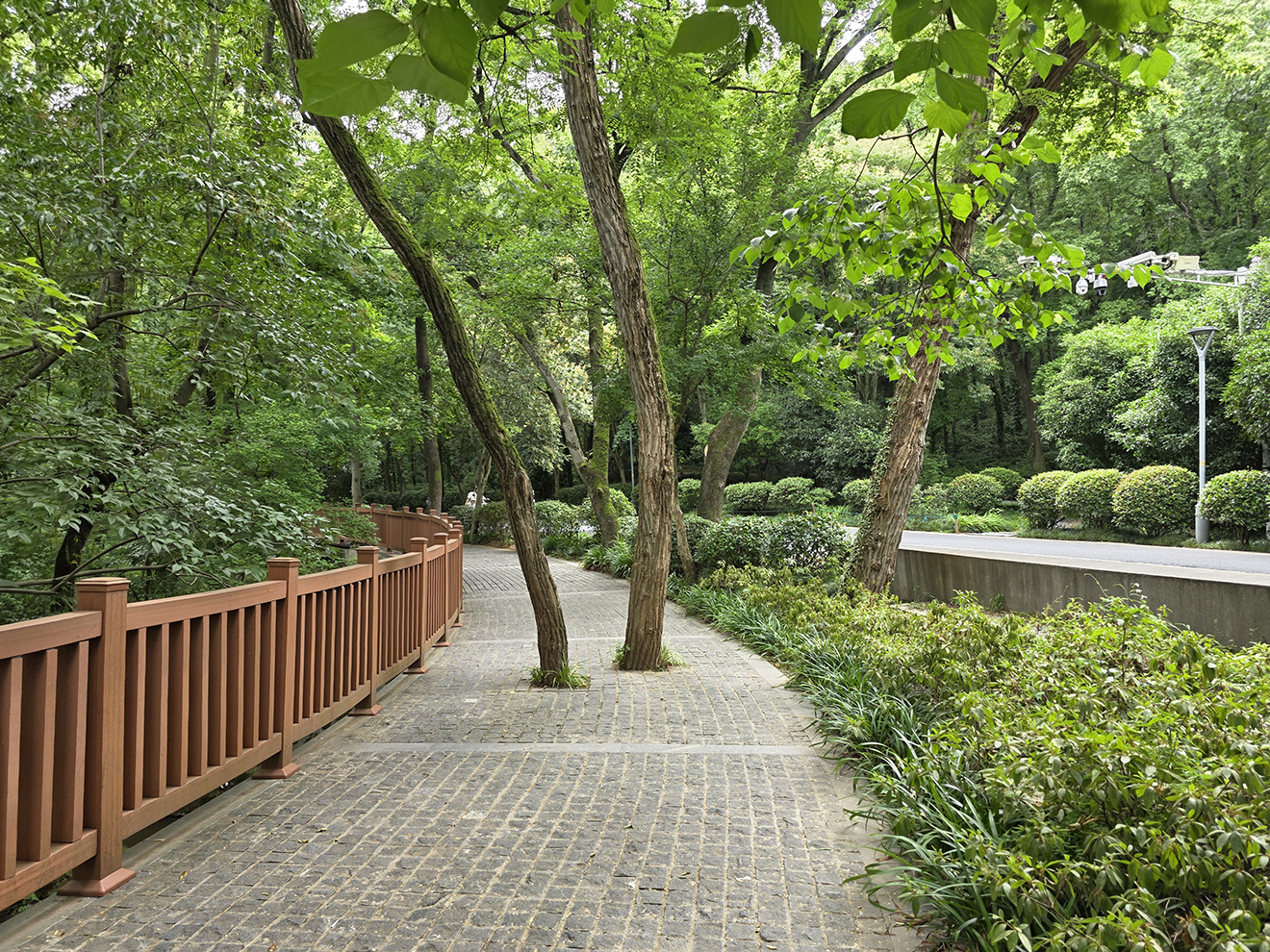
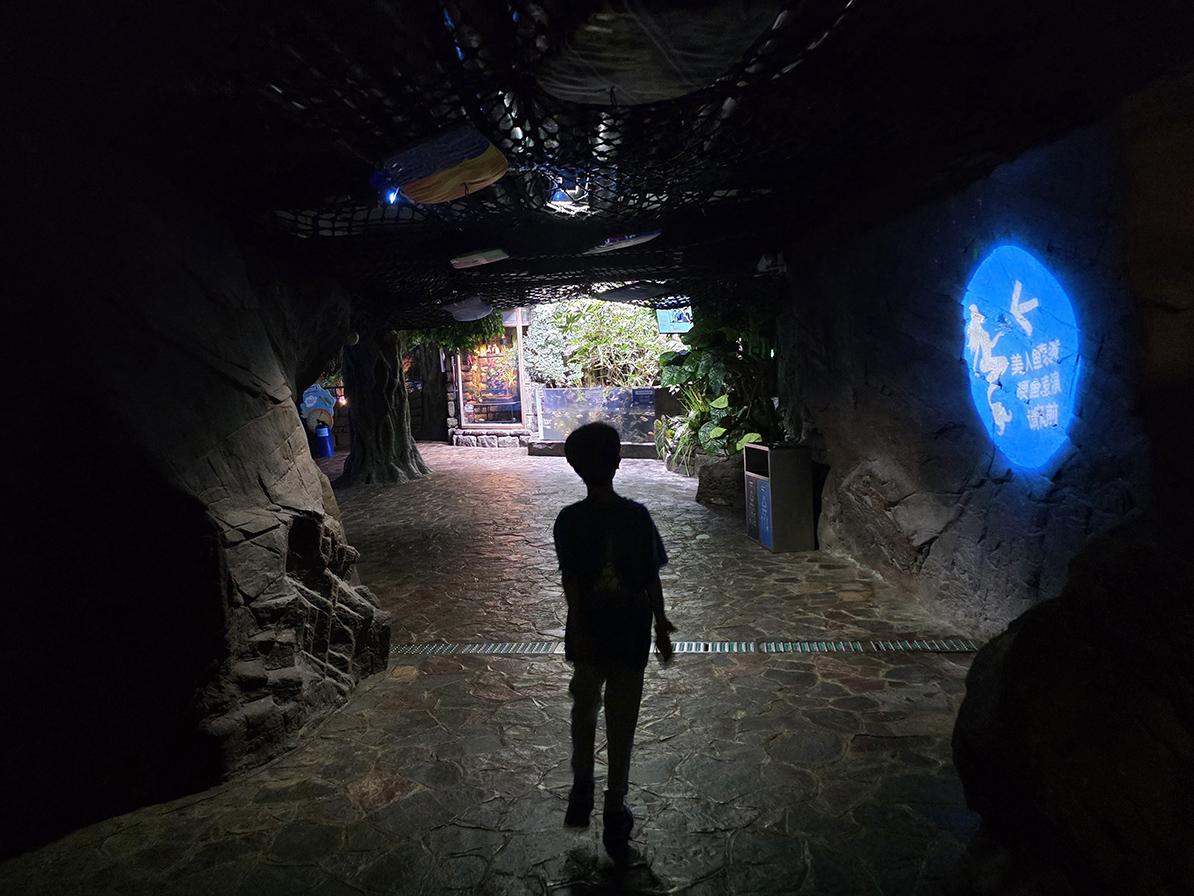
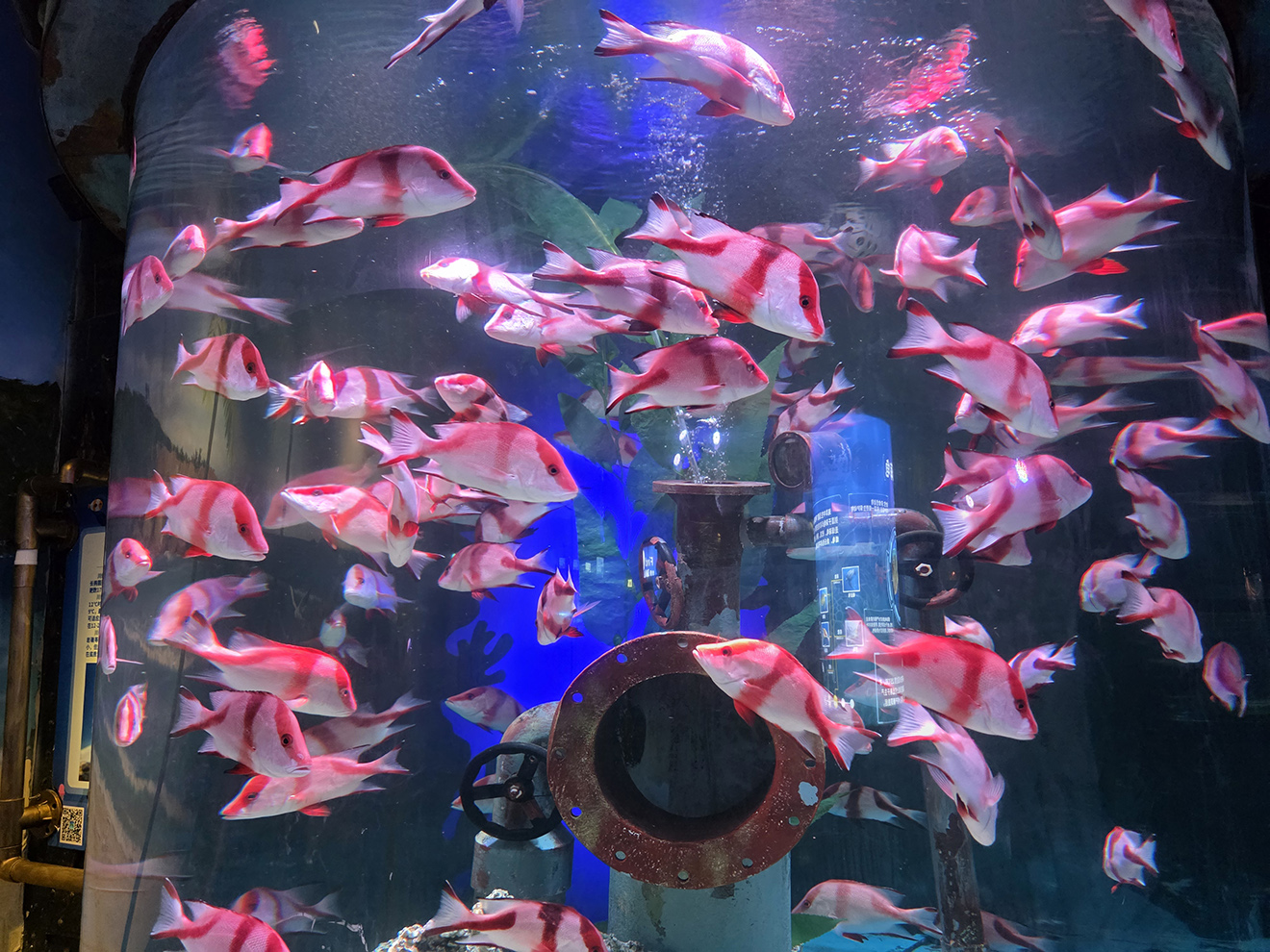
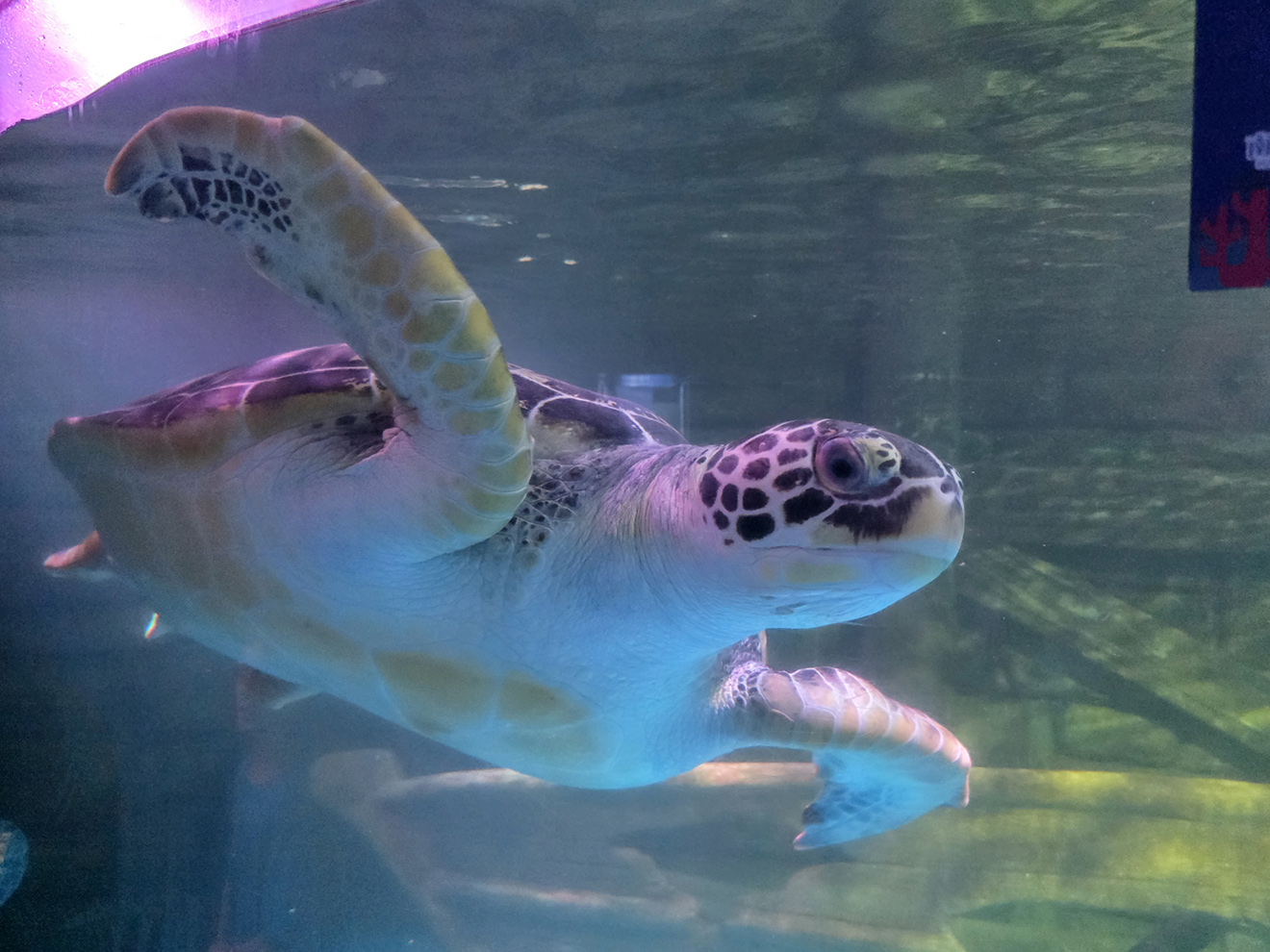
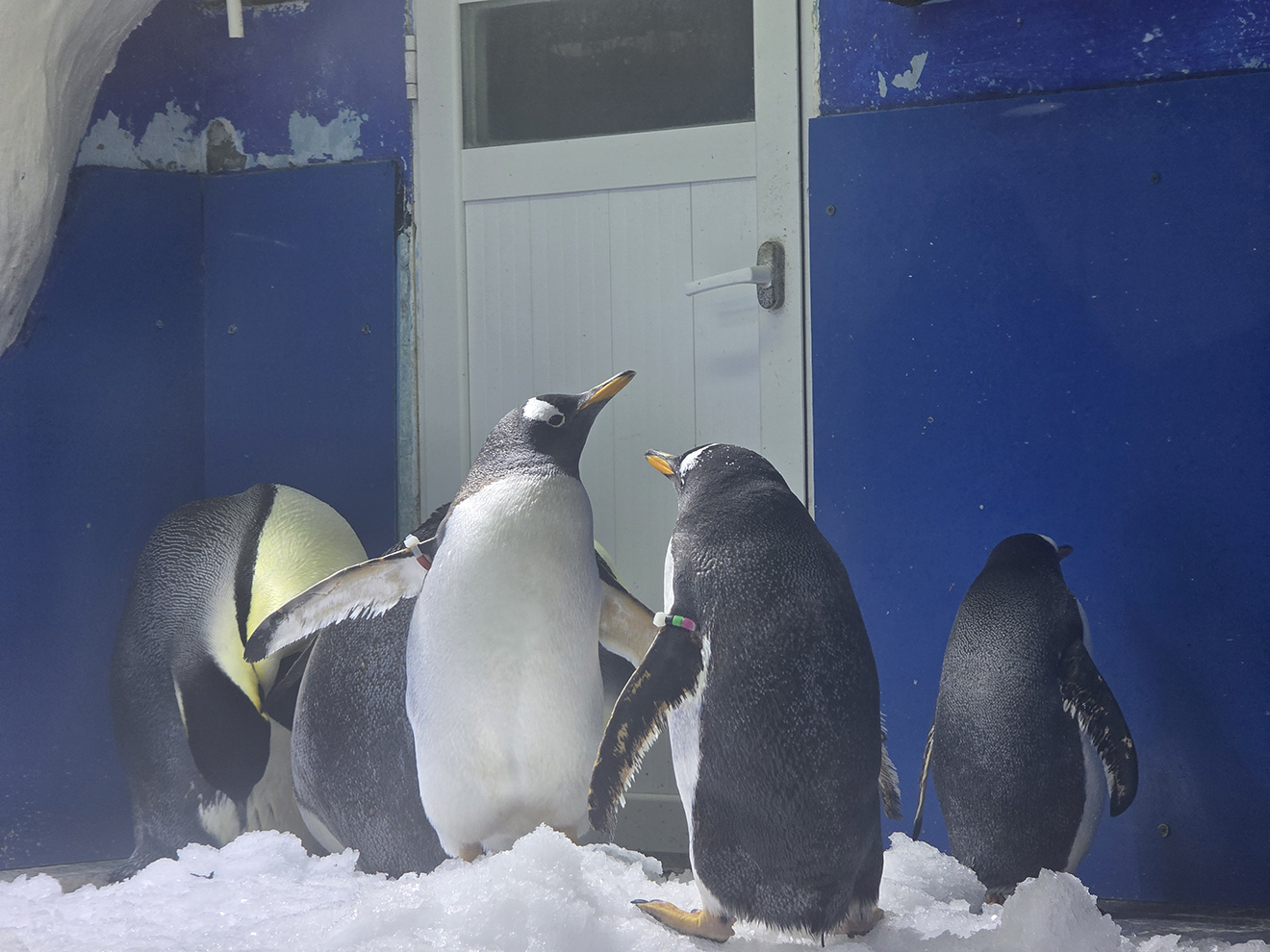
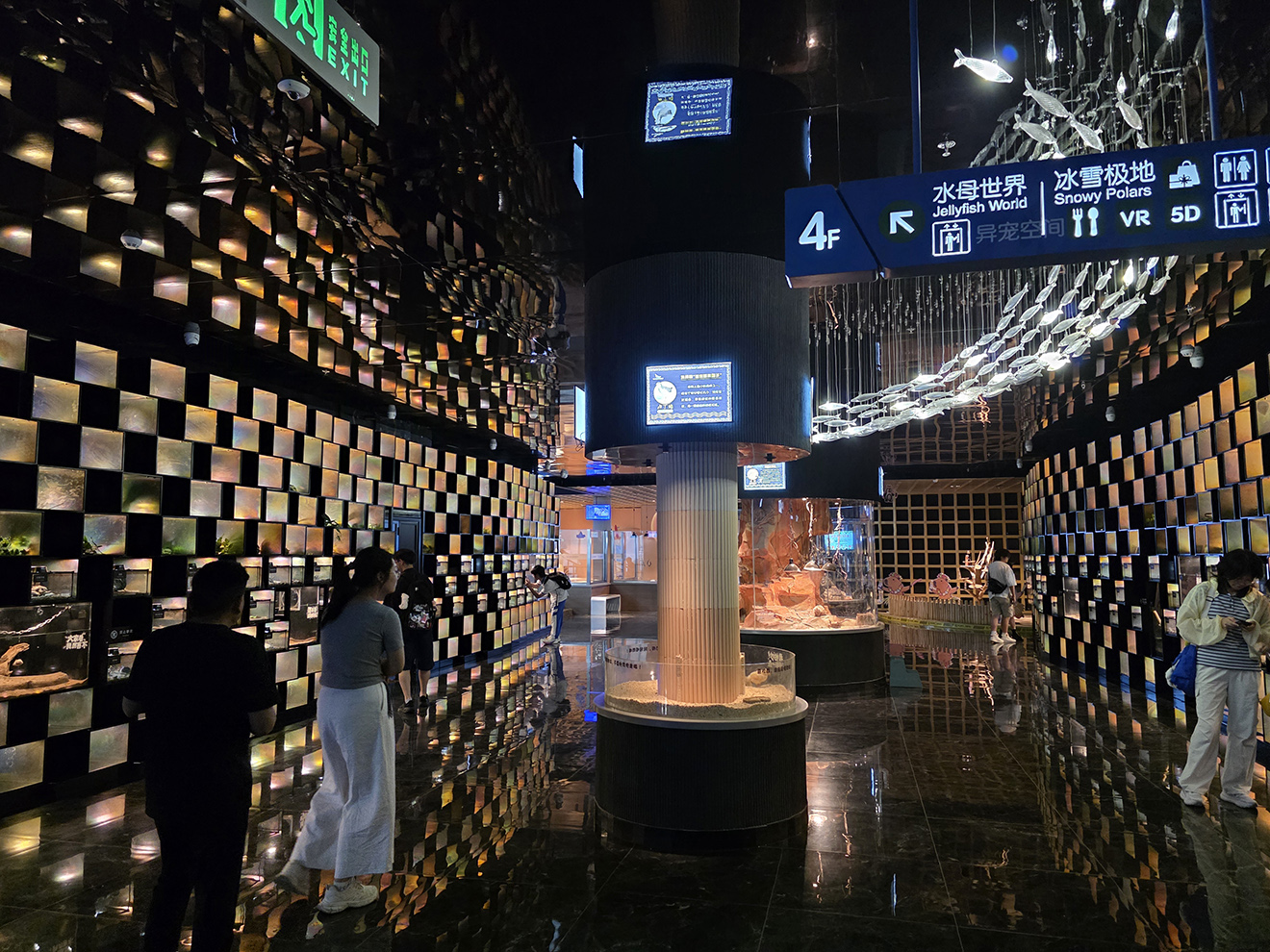
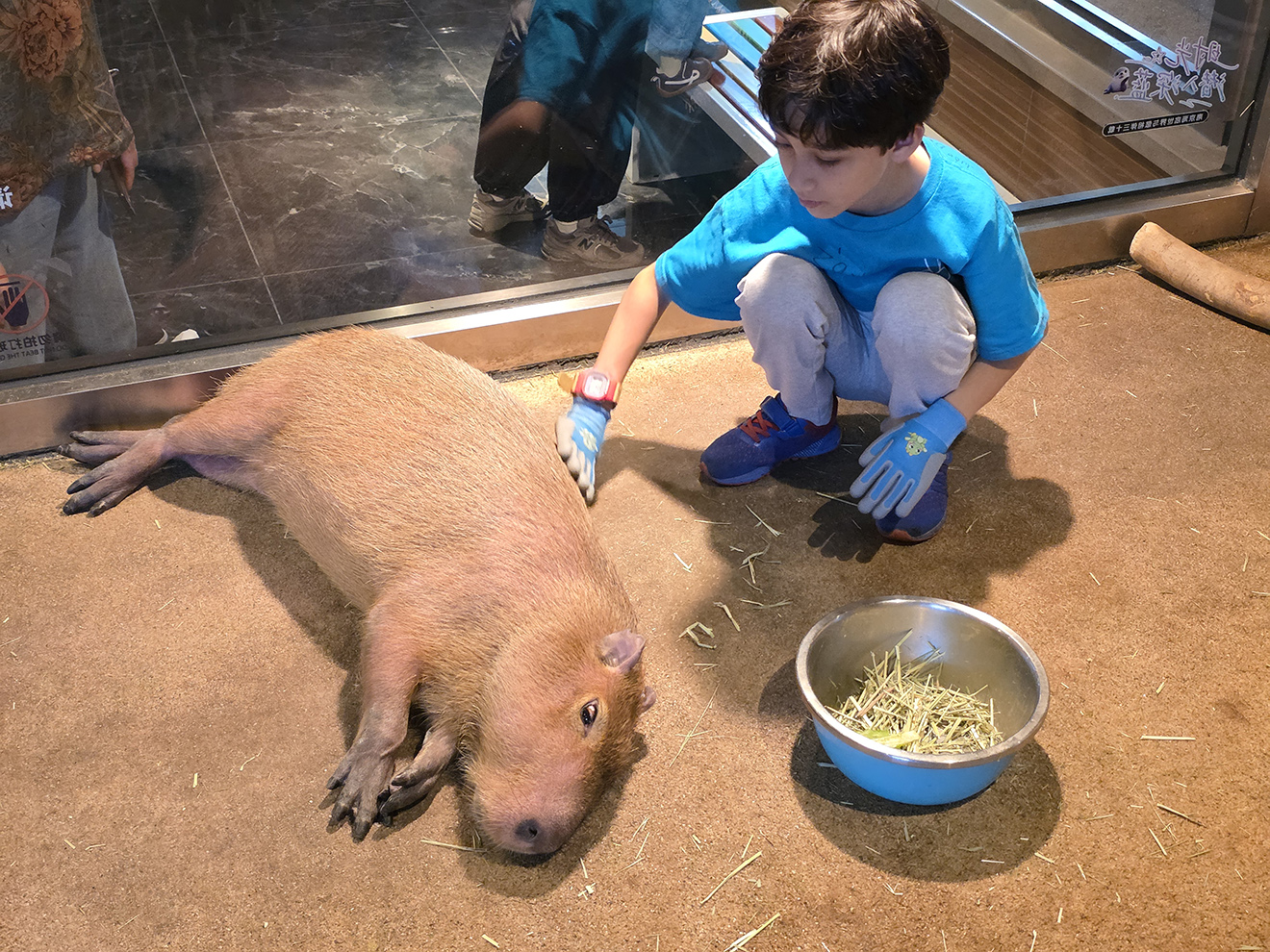
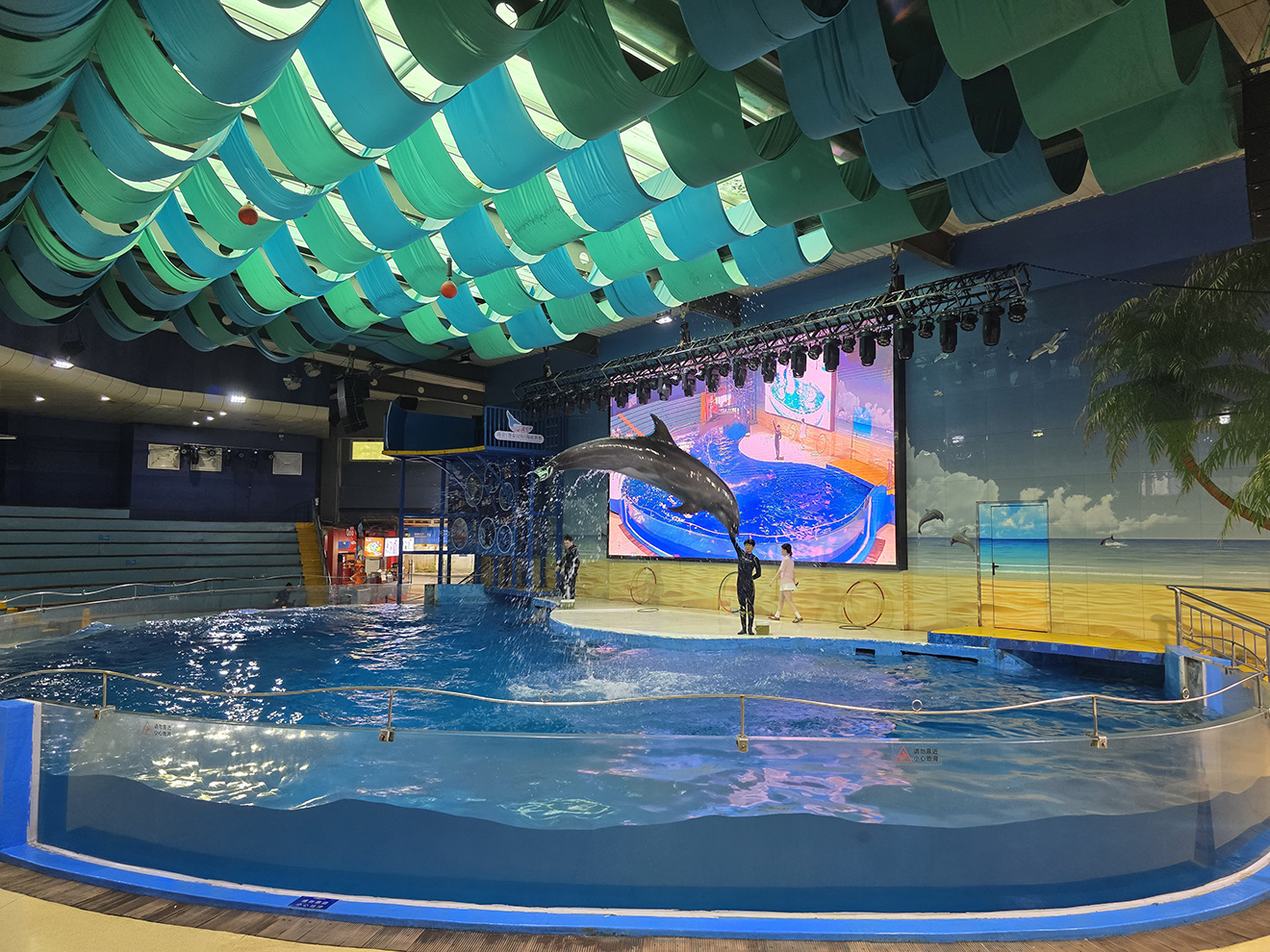
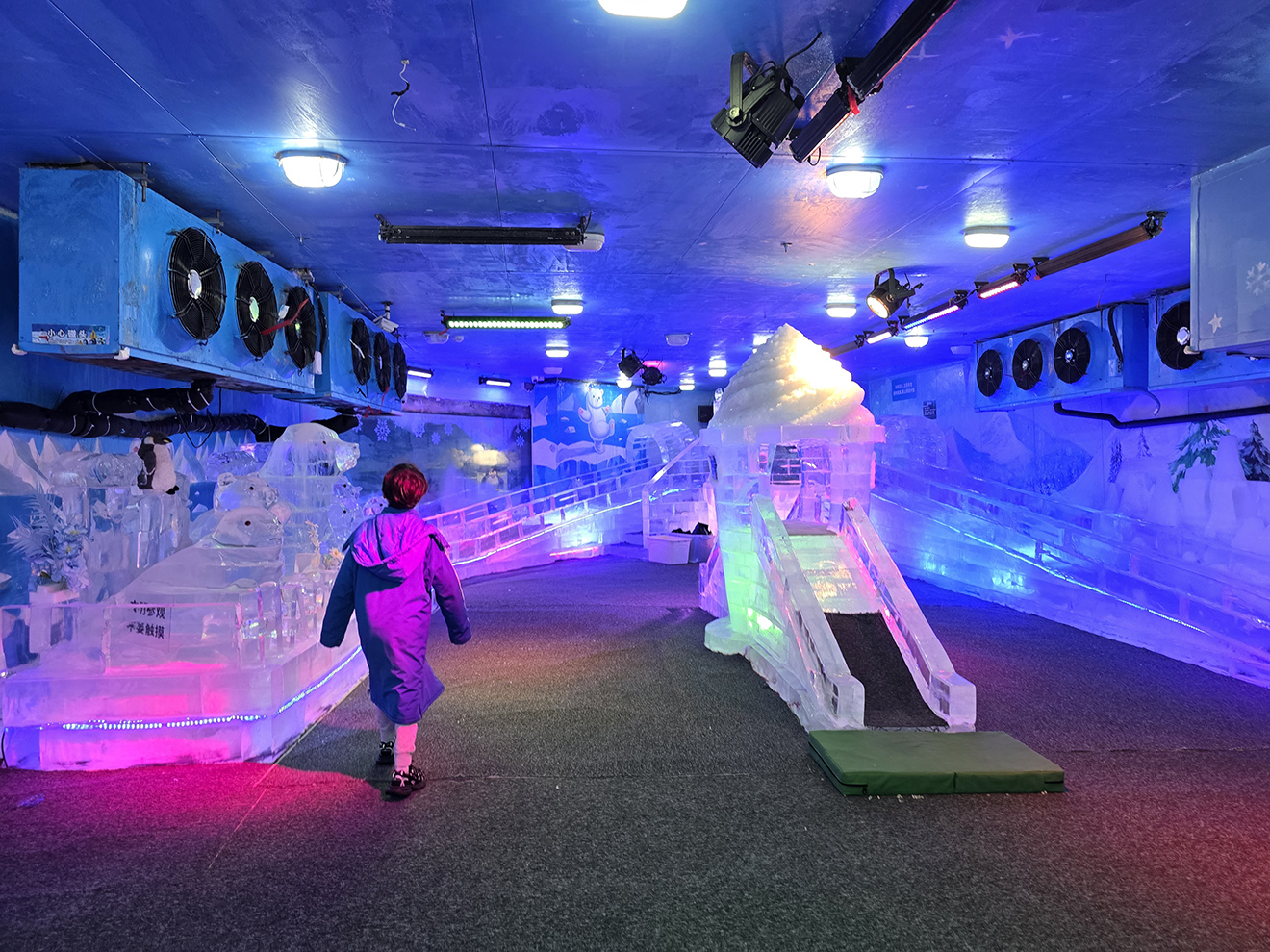
After a great lunch, we got a taxi to the Purple Mountain, which is home to many of Nanjing's major tourist attractions such the Ming Tomb (which I visited with Connie years back). I had been thinking of taking Zack to the tomb but Connie's parents insisted that he'd have more fun at Nanjing Underwater World, an aquarium in the same area, so I decided to give that a go instead. It turned out that taxis will only take you to the entrance of the Purple Mountain area, not all the way to any of the sites within. There is, however, a convenient shuttle bus that goes to all the main spots. Well, convenient if you can actually get tickets for it. These days, there's no ticket seller and not even a ticket machine. It's handled via a plug-in app for WeChat (a Chinese messaging app). I'll explain WeChat, AliPay, and China's shift to digital payments in detail in today's RCC. But in the meantime, suffice it to say that, if you don't have a Chinese phone and phone number, it's a bit of a crap shot in regards to whether all those plug-in apps work. I spent a solid 20 minutes or so trying, and failing, to get tickets for the shuttle bus before finally giving up, leaving Zack and I no choice but to walk half an hour to Underwater World. It was a fairly nice walk, but the whole thing was extremely frustrating and a big waste of time. When we finally got there, Underwater World itself was a pretty nice aquarium. I wouldn't put it in my top five or anything, but it was a decent size and had some nice fish and other aquatic creatures, along with an arctic section, which I don't see very often. For some reason, there was also a sizable area focused on decidedly non-aquatic animals. Between looping though all the exhibits and watching the dolphin show, we spent about two hours there. Personally, I would have rather visited some of the famous tombs and monuments and such, but it was still an enjoyable way to spend the afternoon. Unfortunately, after another failed attempt at buying shuttle bus tickets, we had to walk all the way back out of the Purple Mountain before we could get a taxi to Nanjing Station and catch a train (standing room only) back to Maanshan. And then, just to make my day a little more frustrating, I ran into some problems paying the taxi driver who took us to Connie's parents' place. All in all, it wasn't a bad day. In fact, it was pretty enjoyable for the most part. But all the payment issues put a bit of a damper on things.
Random China Comment: Chinese Payment Systems
When I visited China in the past, I paid for quite a lot of stuff in cash, with the occasional credit card purchase at hotels or larger restaurants. There was one time though when I visited a bakery that only accepted some type of digital payment, which caused me a lot of confusion (you can read about it in a previous travelogue). Well, now that's the norm. Hardly anyone accepts cash anymore and many places don't even let you pay with a credit card. At least, not directly. You have to pay with your phone. Now normally, when you think of phone payments, you probably think of Apple Pay or Google Wallet. Unfortunately, it's not that simple here. In China, payments are now almost universally handled via one of two apps, AliPay and WeChat. First off, WeChat is a messaging app (since China bans pretty much all the popular messaging apps used everywhere else in the world) and honestly has no business acting as a payment system, but everyone in China has it and you can connect a credit card to it. I had previously used WeChat a bit as a messaging app when Connie still lived in China, but I had a lot of trouble with it and wanted to avoid using it again if at all possible so instead, before the trip, I set AliPay. AliPay is an app primarily made for digital payments. As with WeChat, you can put your credit card in. How you actually pay varies. Once (and only once) I found a place that used it with a NFC scanner just like Apple Pay or Google Wallet. Other times, I have the app display a QR code which the shop scans. That's always worked for me (though it can be a little slow). However, there's also a lot of situations (especially with taxi drivers, smaller ticket vendors, and the like) where they instead show you a QR code which you have to scan and then enter the payment amount. That works too, but certain QR codes only work with AliPay or WeChat, not both. Some places will have a code for each, but I've had a few situations where they only accept payment via WeChat (I had to hastily set up an entire WeChat account to make a payment at one point). Oh, it's probably also worth mentioning that you usually have to enter a pin number to confirm each payment (annoying, yes, but it ensures someone can't steal your phone and rack up tons of charges). Is this a good system? Um, I'm going to say no. I mean, it's fine when it works but it means that it's pretty much impossible to buy anything unless you have both a cell phone and a data connection. As such, DO NOT travel in China without an international data plan, it would be a nightmare. Even forgetting about tourists and people who might not have a cell phone for whatever reason, it seems like any sort of service outtage at one of the cell networks would basically shut down the entire economy, which can't be good.
But wait, there's more! And this is where it gets especially frustrating. Rather than just handle direct payments, some QR codes launch a plug-in app (a few of which AliPay already has installed by default like Didi (that super useful ride-share and taxi app)). Quite a lot of restaurants use plug-in apps for ordering and payment (some Japanese restaurants do something similar, except all the ones I saw there were web based, not app based, and were only used for ordering). But many other things here use plug-in apps as well, such as the ticket system for the Purple Mountain shuttle bus in Nanjing. In some cases the plug-in apps work fairly well (though even the best ones tend to lag a little). In others they're poorly designed and organized, making it very hard to do what you want. Most of them also don't have native English language support. Here's where AliPay has an advantage over WeChat, because it has a built in translation feature. It's a little slow and not perfect by any means, but it's allowed me to make a lot of purchases and orders that would have otherwise been difficult to impossible without being able to read Chinese. WeChat actually has one as well, but it's a hard to find and doesn't work nearly as well. Language aside, the real problem with plug-in apps though is that some of them just don't work. I've run into many situations where I get stuck because I don't have a Chinese phone number (even if it specifically gives me the option to enter a foreign number), and a bunch of others where the entire thing just crashes or fails to load because I don't have a Chinese phone, Chinese phone number, or some other random issue. Sometimes (as with Nanjing Da Pai Dang) there's a backup method you can use to make your order or purchase without the mini-app (though it's not always a smooth process). Other times (as with the Purple Mountain shuttle bus), you're just plain screwed.
So, long story short, if you're going to travel in China make sure you have a phone with an international data plan and set up accounts with payment info using both AliPay and WeChat. But even then, be prepared to get completely stuck and frustrated sometimes because almost every purchase and payment here requires the use of a buggy, network dependant system that was clearly never designed with any thought that non-Chinese people might occasionally need to use it.
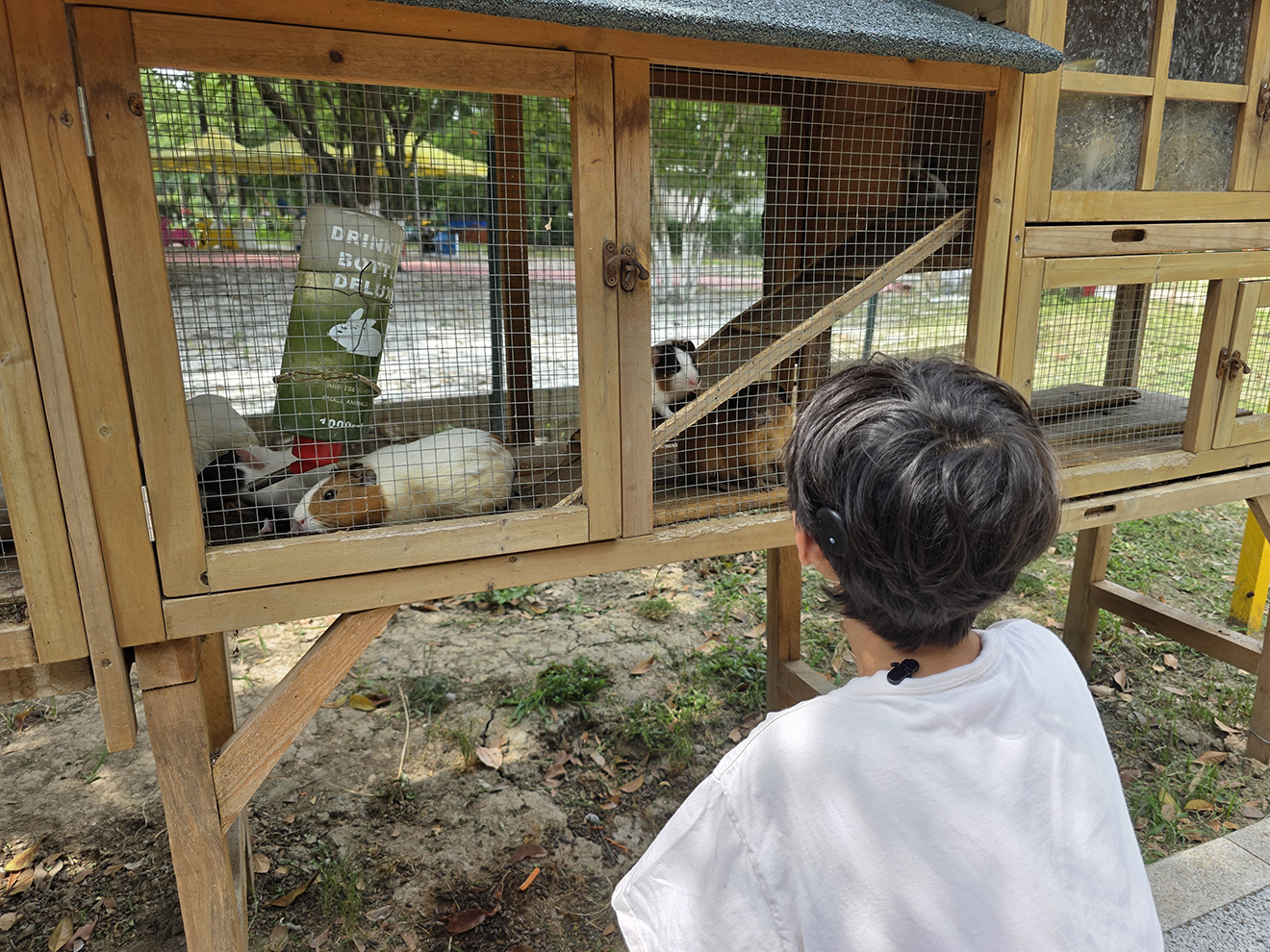
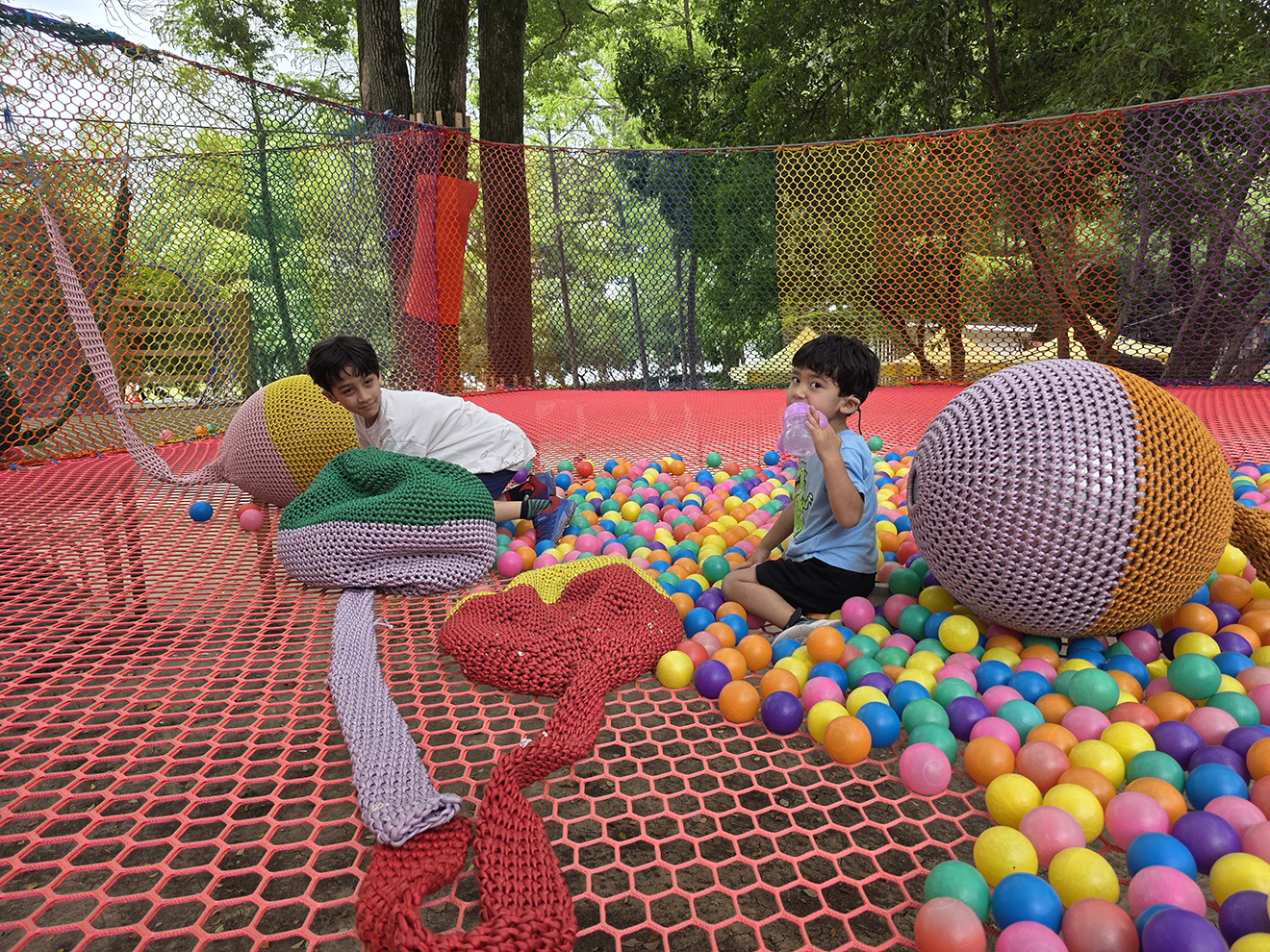
That afternoon, I had a little bit of time to myself though not enough to do anything too time consuming, so I walked around Nanhu Park, which is just south and across the street from Yushan Lake Park. It's considerably smaller than Yushan Lake, and doesn't have nearly as much going on. There's some nice views and a decent playground, but not much else. The square at the south end appeared to host a fountain show over the lake, though I didn't see a time table so I wasn't sure when it happens.
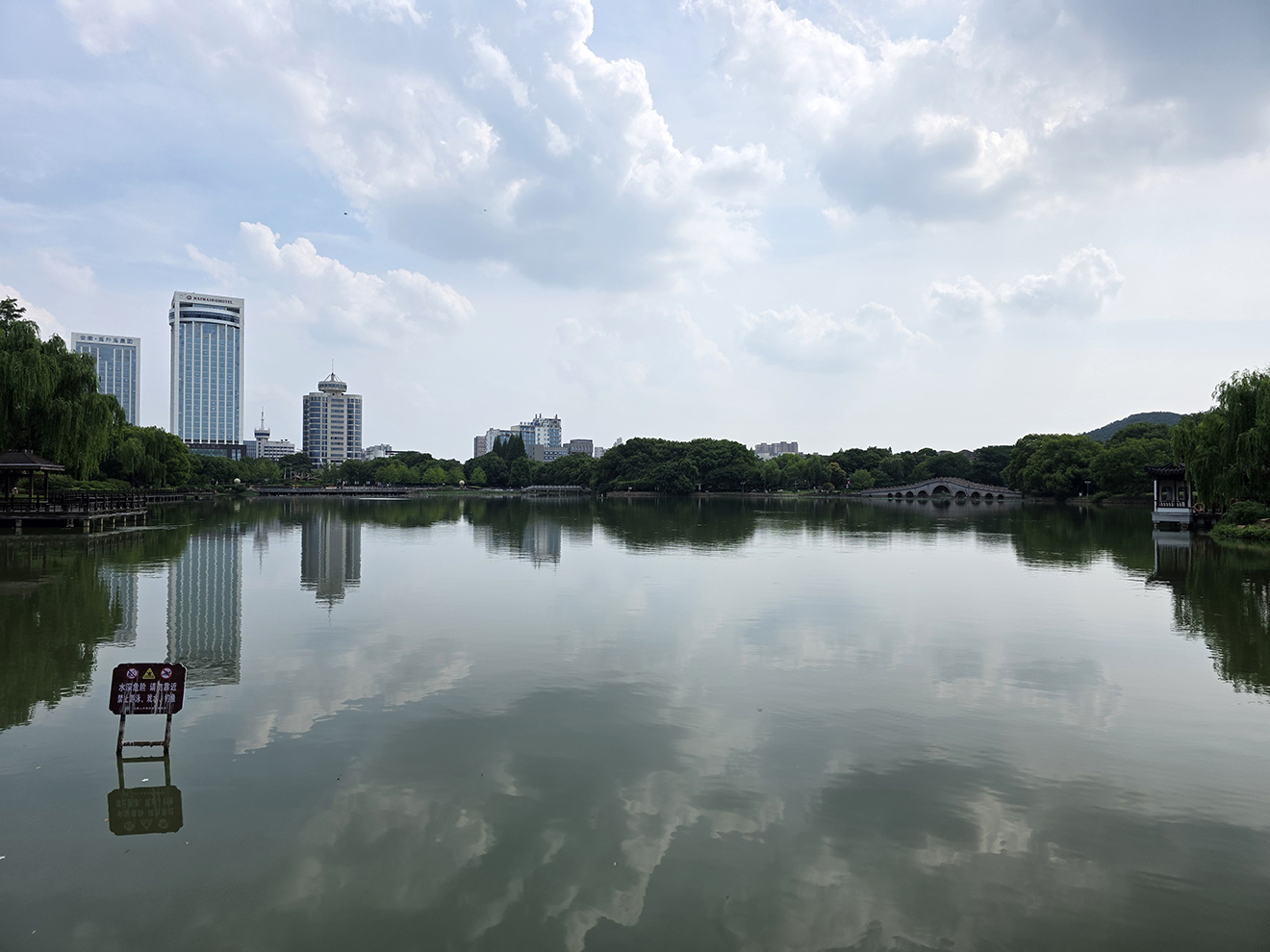
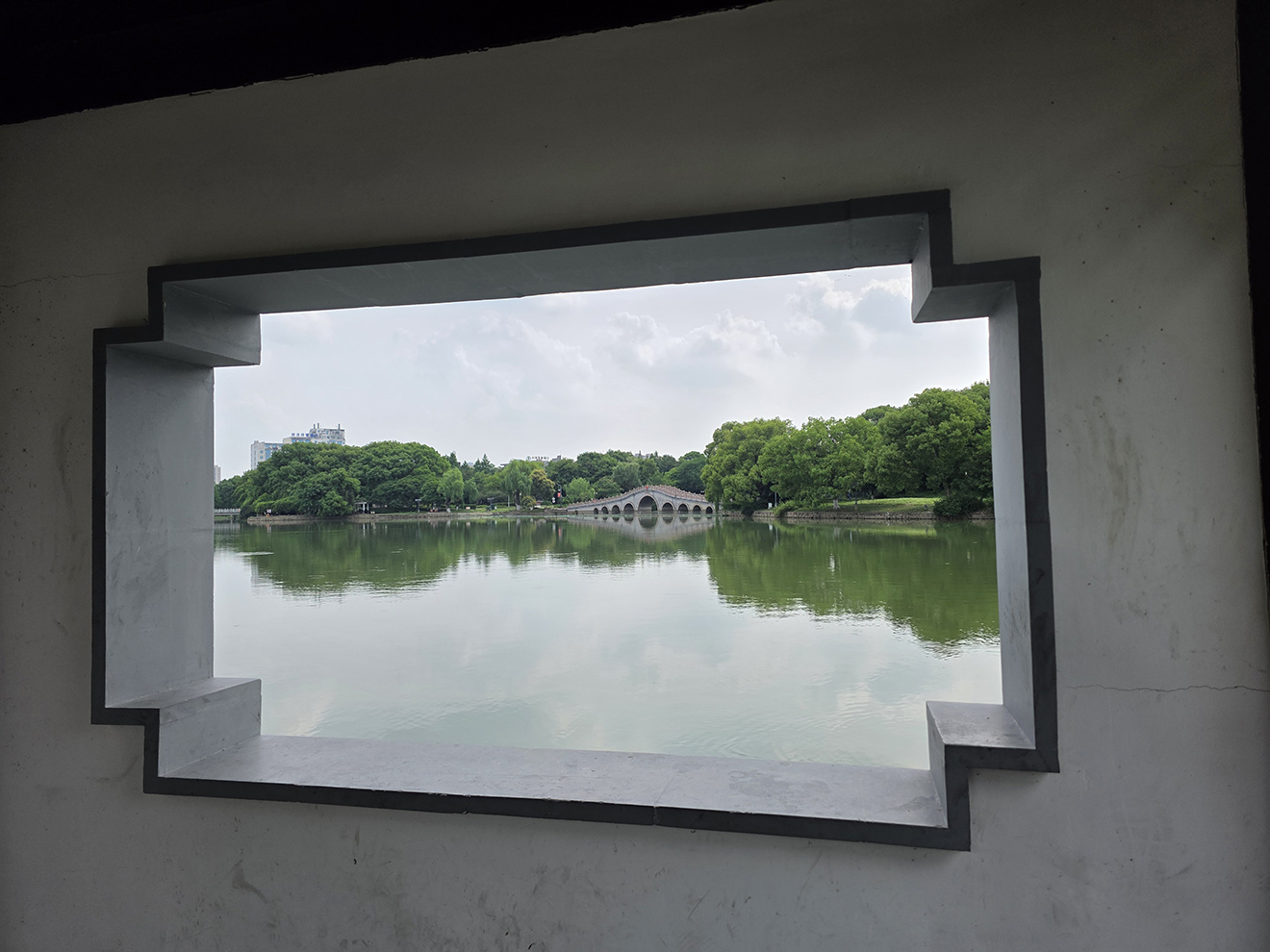
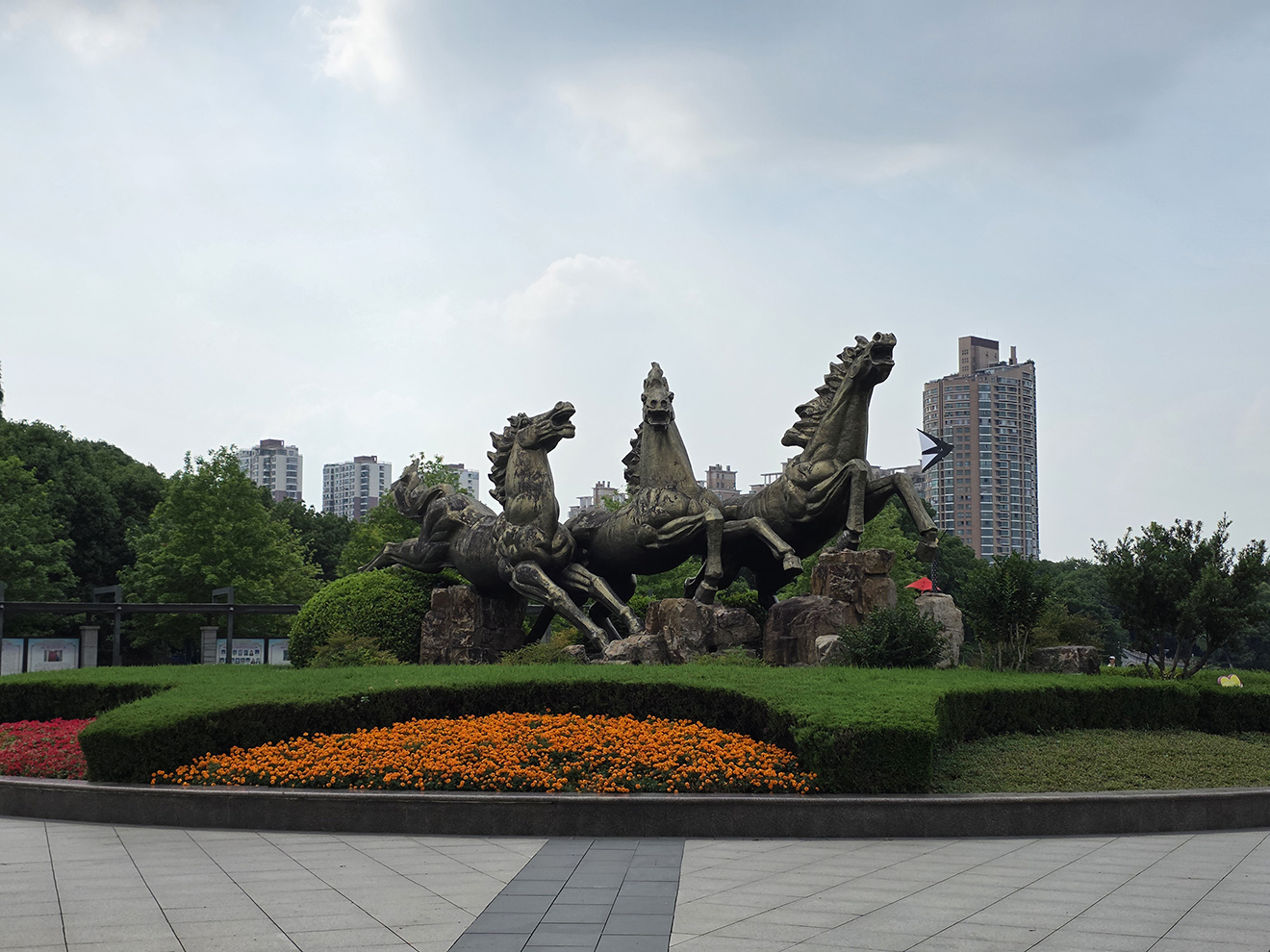
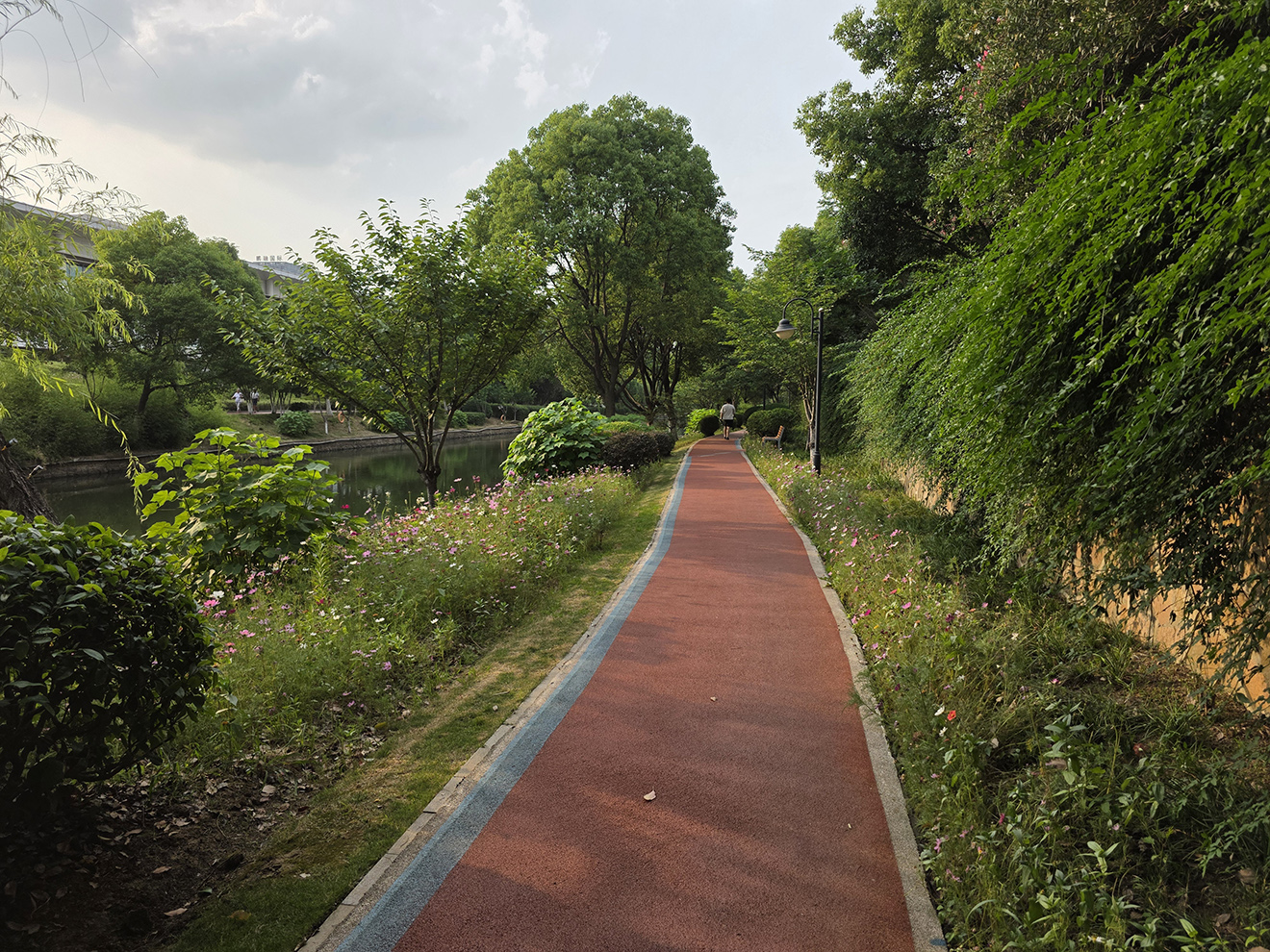
Back and Connie's parents' later in the day, Matt was getting tired of hanging around and wanted to get outside so I spent a while pushing his stroller alongside the Yongfeng River, which has a nice walking path that runs along much (but not all) of its length. That was about it for the day.
Random China Comment: Manners
In the past, I wrote a bit about how Chinese people can often come across as a bit rude by the standards of many other countries. Well, it seems like the Chinese government is aware of that and making some efforts to improve things in certain areas.
First off, the trains (well, high speed G and D trains at least, I can't speak for the slower ones (which you're best off avoiding anyway)) now have signs reminding people to be quiet. That actually seems to be working. So far, I haven't heard anyone blaring music, podcasts, or the like during my trains rides, which is an nice improvement compared to the past. Though it might not be the signs so much as the fact that the train attendants seem to go around telling off anyone that they consider to be too noisy. That said, I think they may be overdoing it a bit, as we've gotten a couple of complaints about Matt babbling at a perfectly reasonable volume level.
The other thing I've seen from time to time (not specifically on trains but in general) are signs asking people to queue up properly when waiting for something. They, however, don't seem to have made much difference as plenty of people will still cut in front of you in line if you leave even the smallest gap for them to squeeze into. It's especially bad in train stations and I've found myself having to do the same if I don't want the entire rest of the line to end up cutting ahead of me.
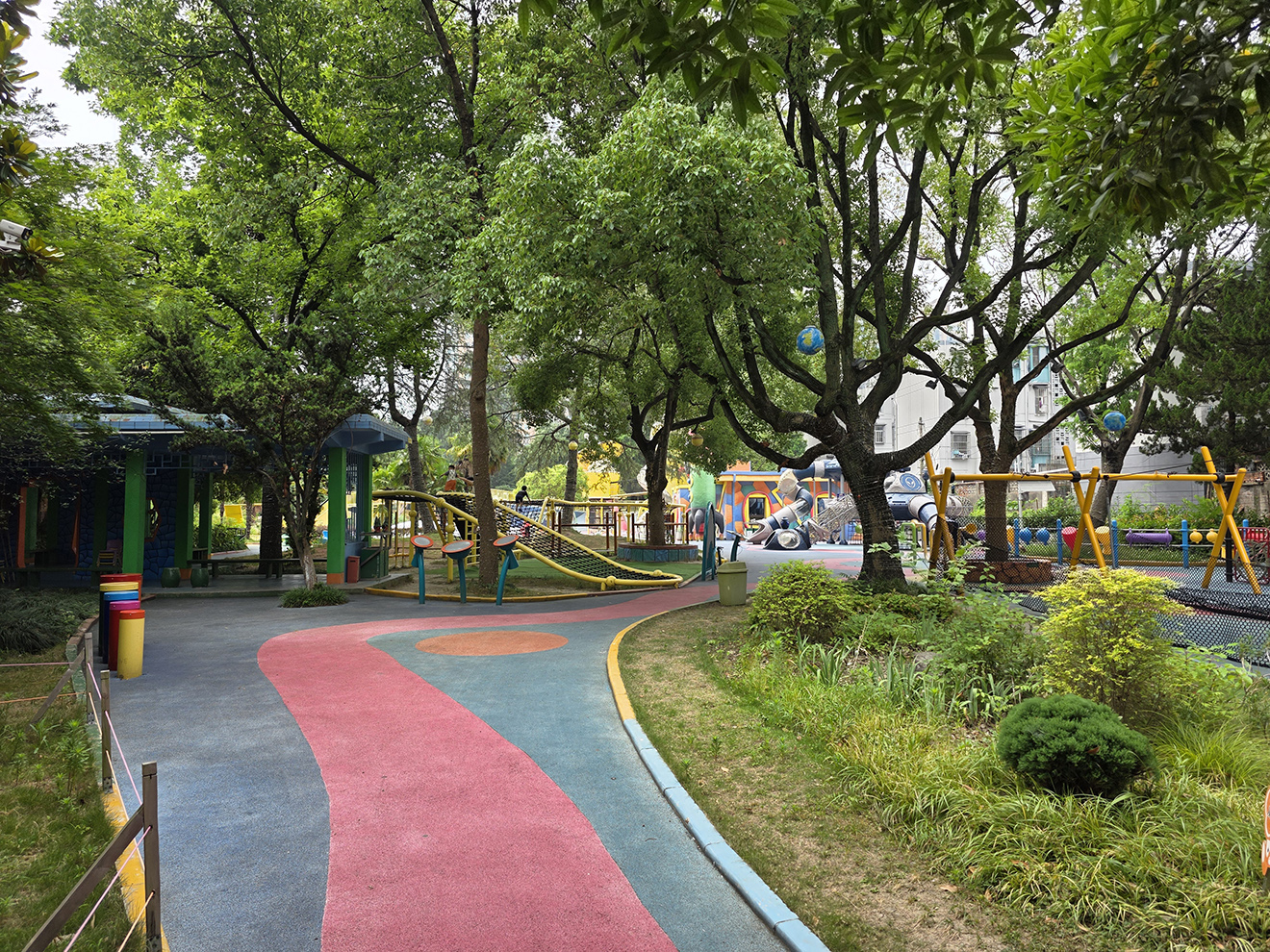
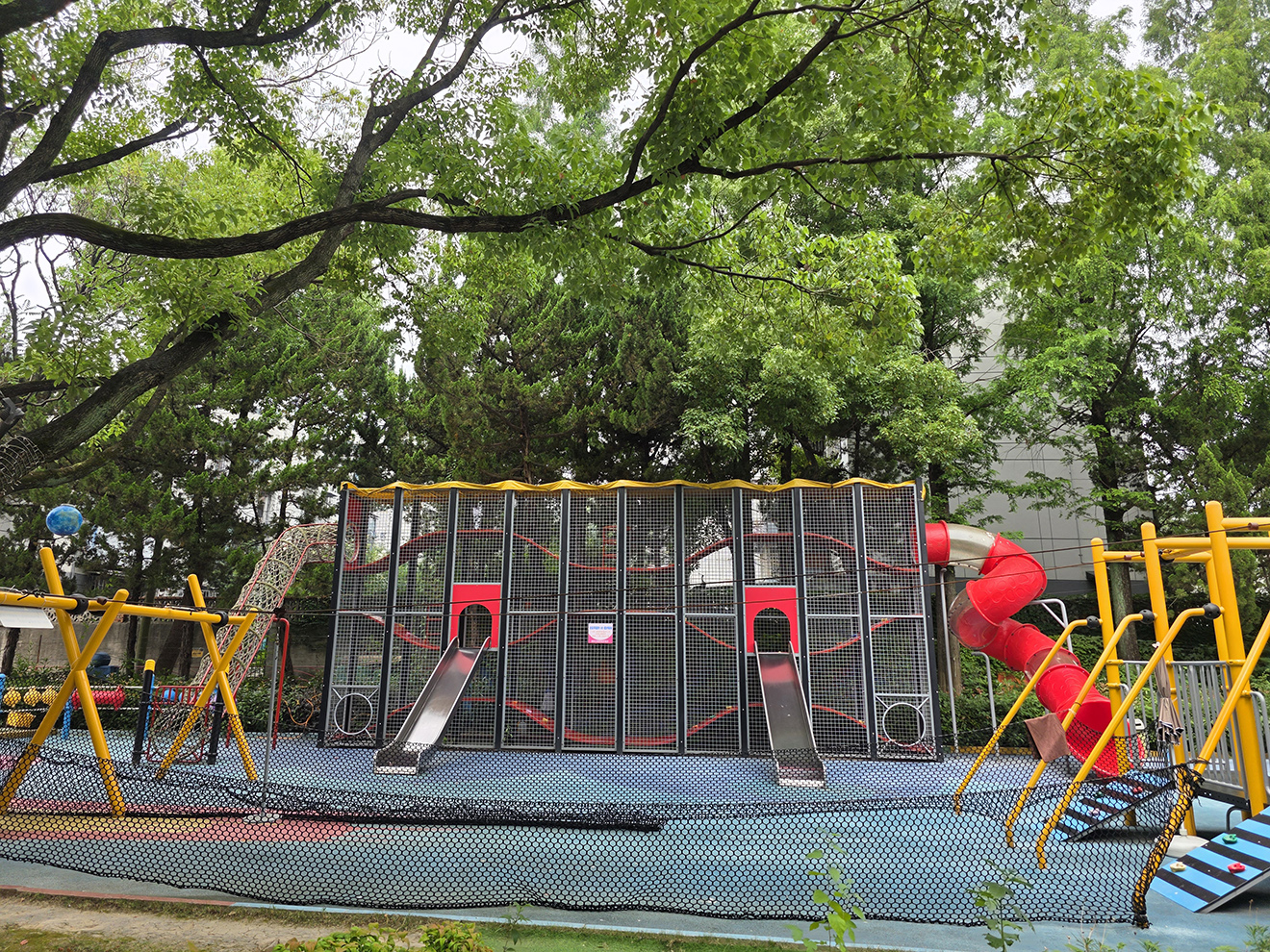
So Zack and Matt played for a while then it was off to spend the rest of the day with her parents (with another long stroller walk for Matt in the middle). Not much to write about.
Random China Comment: English Language Support
I've addressed this in the past but as an update... China is still rather lacking when it comes to English language support. And what there is is rather random. Stores and restaurants may or may not have English signs, tags, and/or menus. In general you'll find more English in places that get larger numbers of foreign visitors but even then, outside of cities like Shanghai and Beijing, even tourists hot spots like the Qinhuai River area in Nanjing can be surprisingly lacking in any language other than Chinese. On the other hand, some shops and restaurants will have good English translations everywhere because some of their branches cater to tourists, and some odd sightseeing spots, even ones that are almost guaranteed to never see foreign tourists, will have English for whatever reason. So it varies, but as a general rule don't expect much and keep Google Translate (or the like) handy.
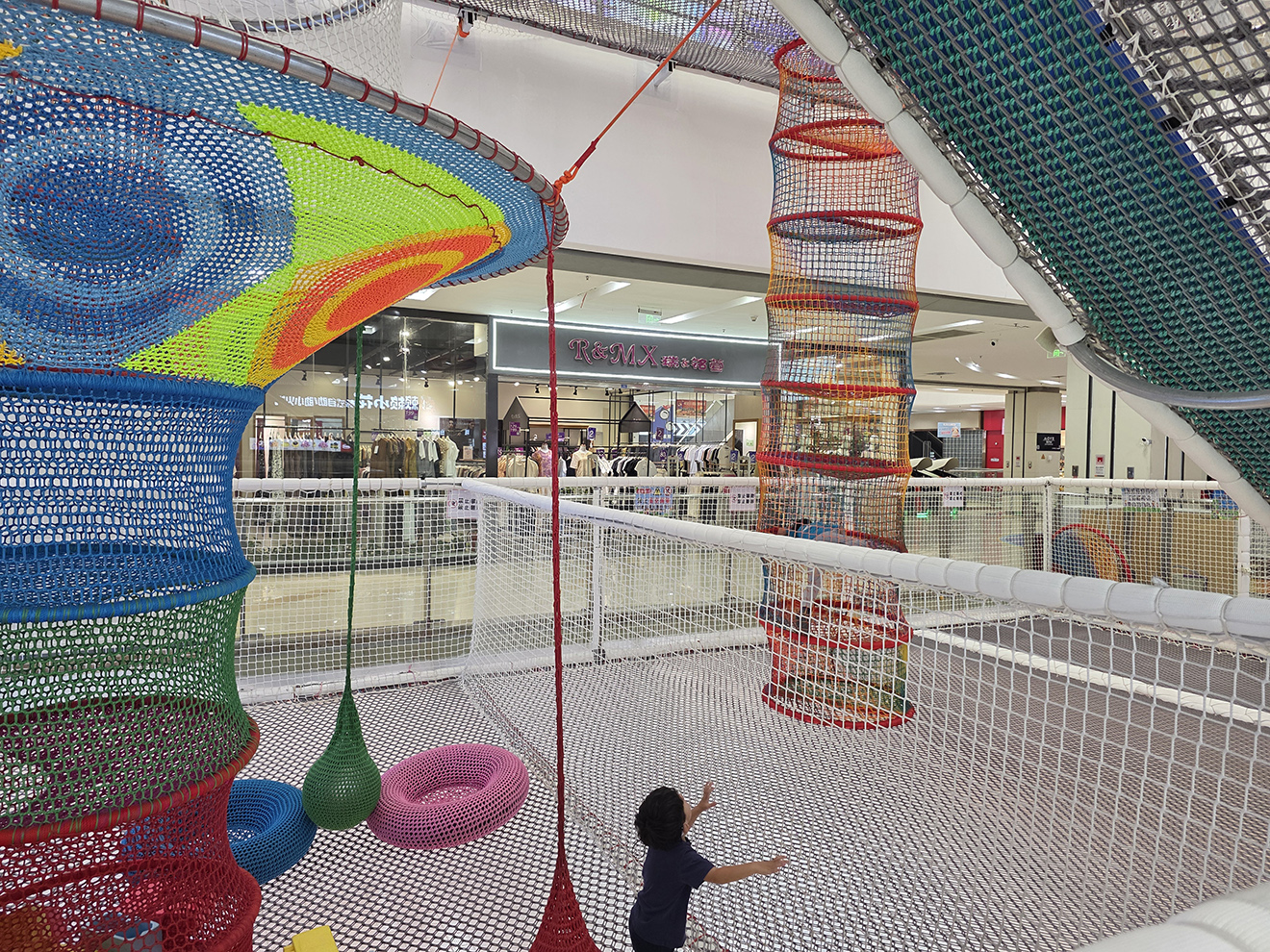
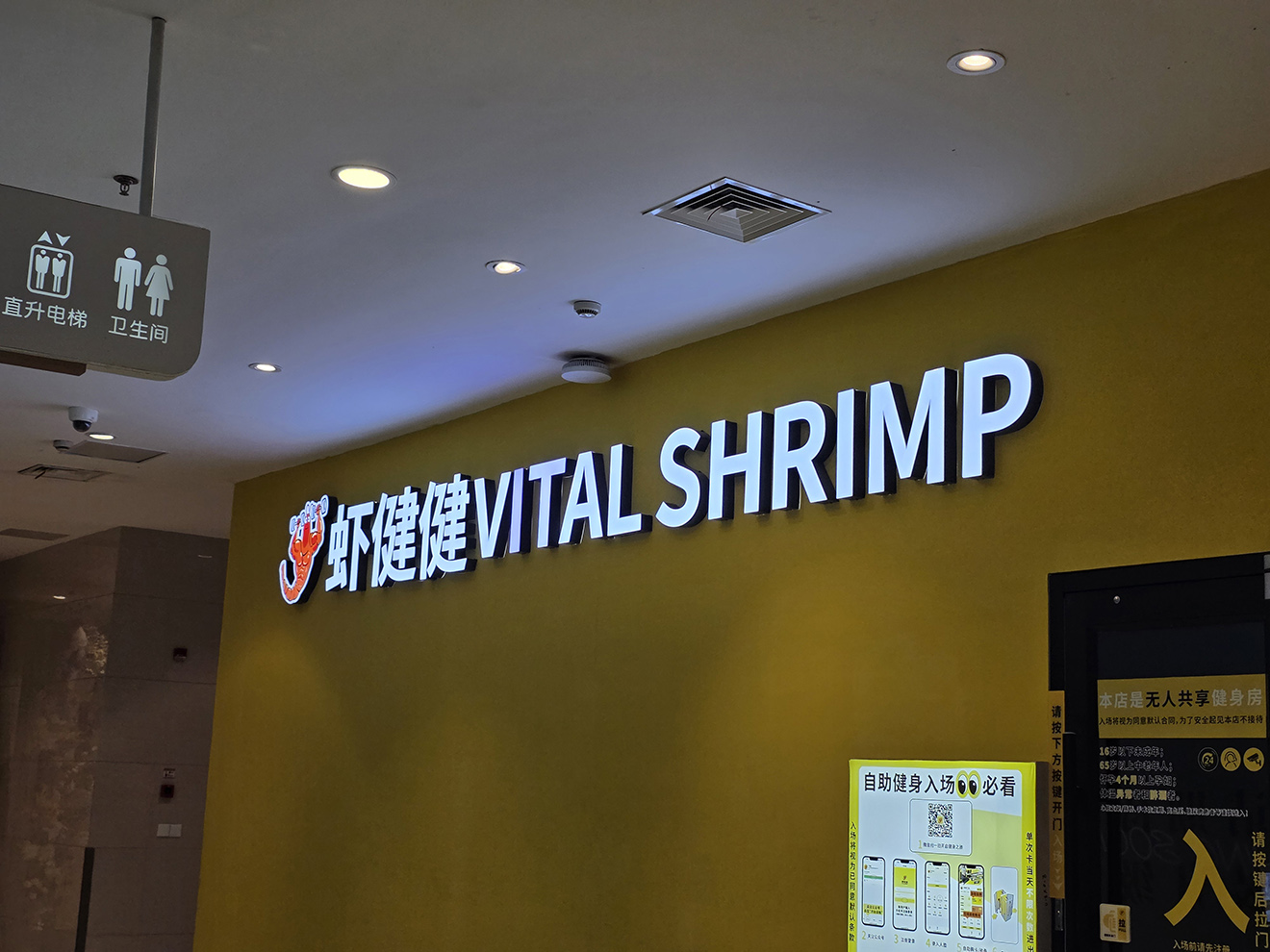
Random China Comment: Ramps and Elevators
I touched on this before, but accessibility is not China's strong point. If you're got a stroller or, even worse, a wheelchair, getting around is going to be a challenge. Aside from the barriers meant to block electric scooters, you'll also have a contend with a serious lack of ramps and elevators. I've frequently had to take's Matt's stroller up escalators (despite signs saying not to) or just straight up carry it up and down staircases. Unlike in the US, the presence of ramps and elevators is in no way guaranteed and, even when they do exist, they aren't always easy to find. Shopping mall elevators, for example, often seem to be hidden away, sometimes in little side rooms and passages where it kind of looks like you're not actually supposed to go, despite the signs pointing there. I've managed, but I'm really glad I got a new light and easy to carry stroller specifically for the trip. And I can't even imagine trying to navigate most of the placers we've visited in a wheelchair so keep that in mind if you're planning a trip.
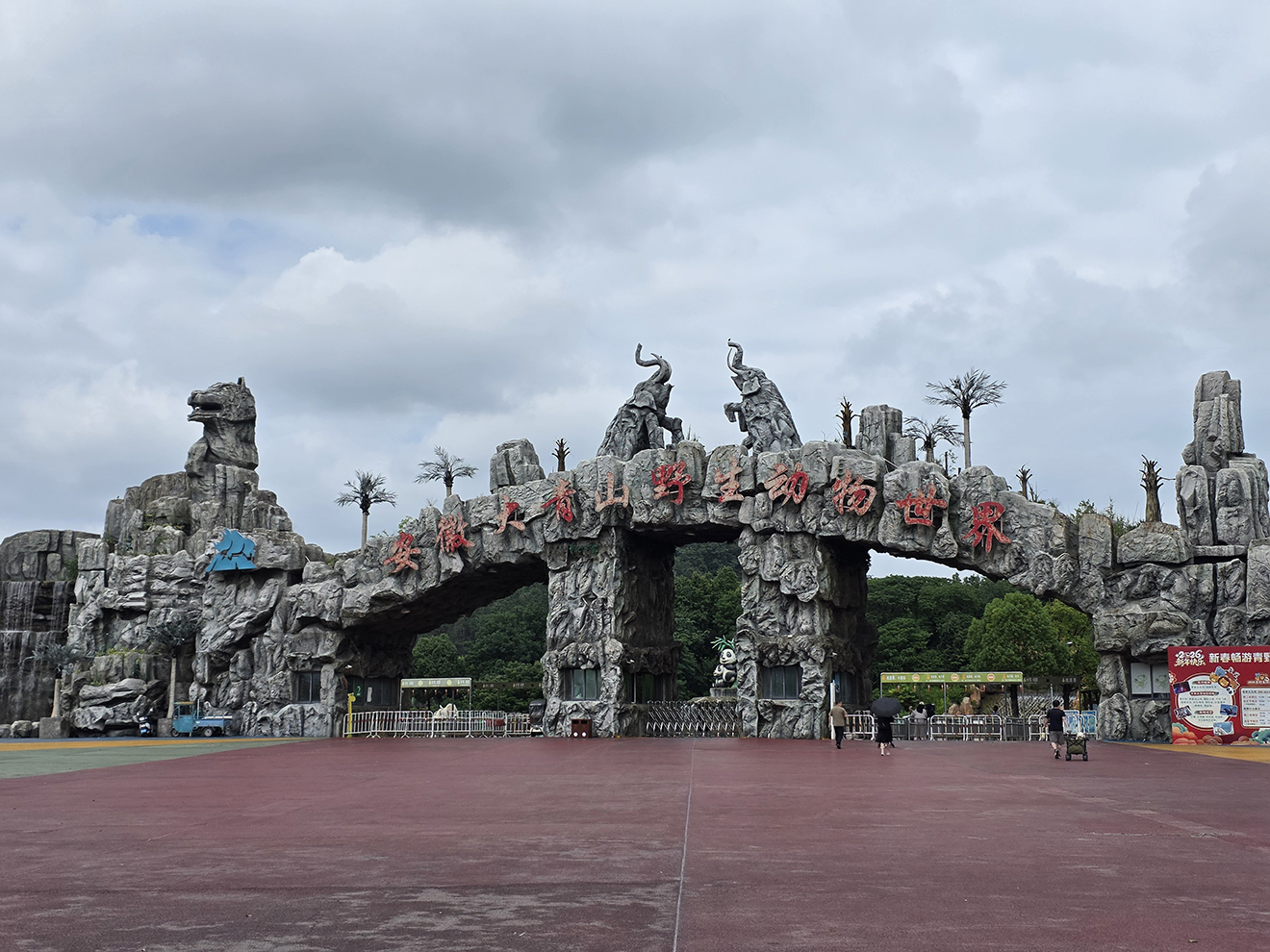
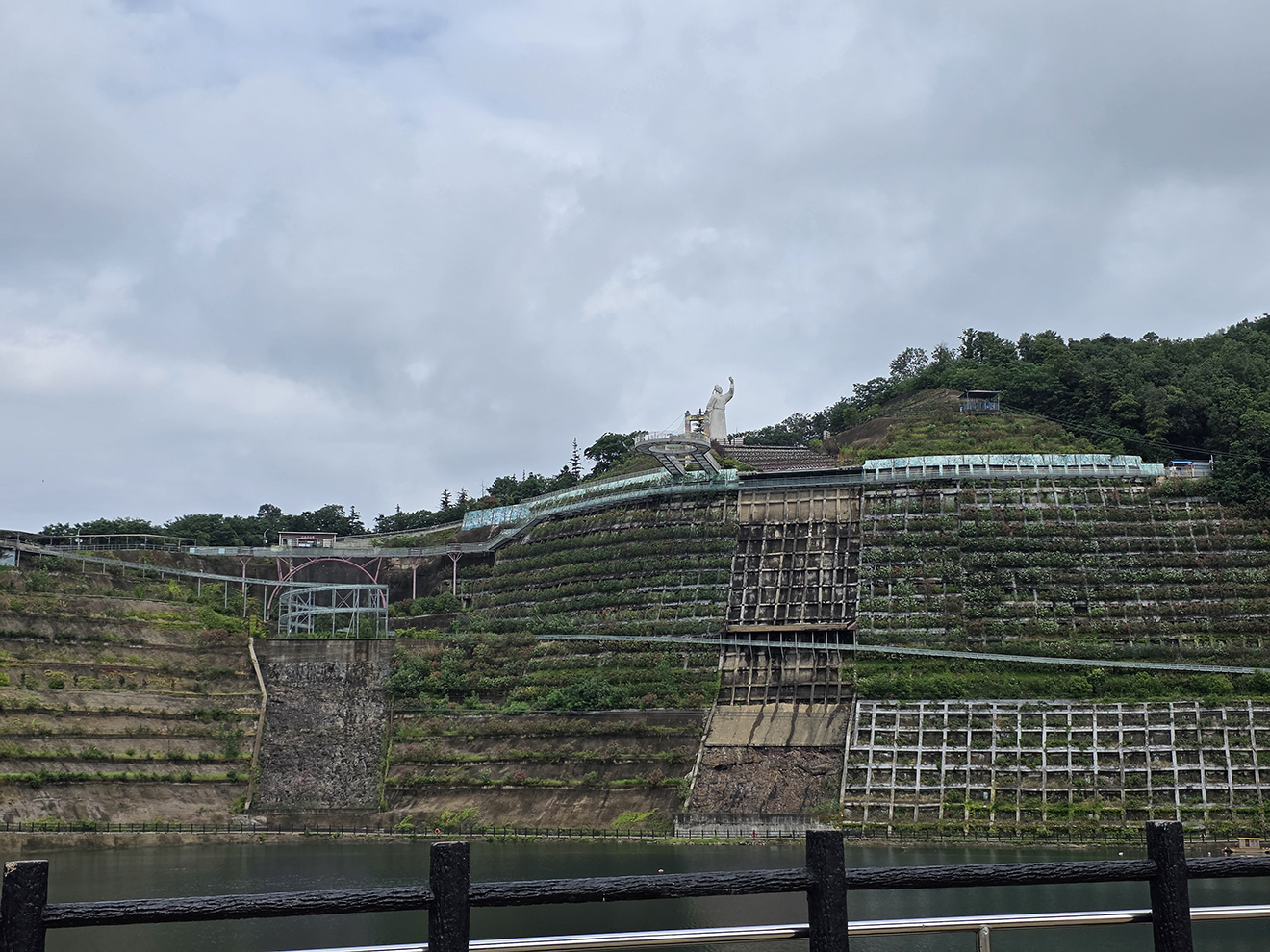
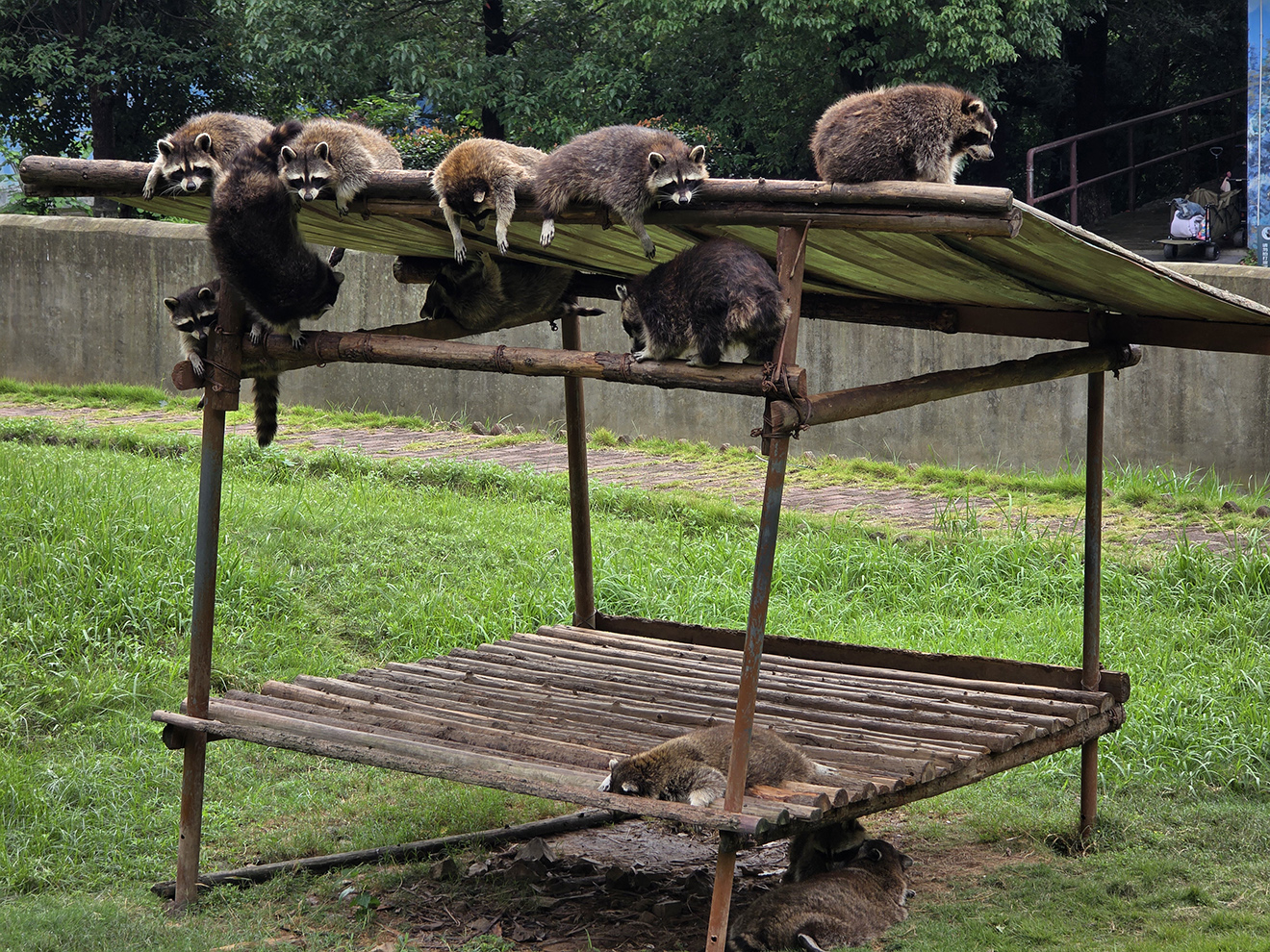
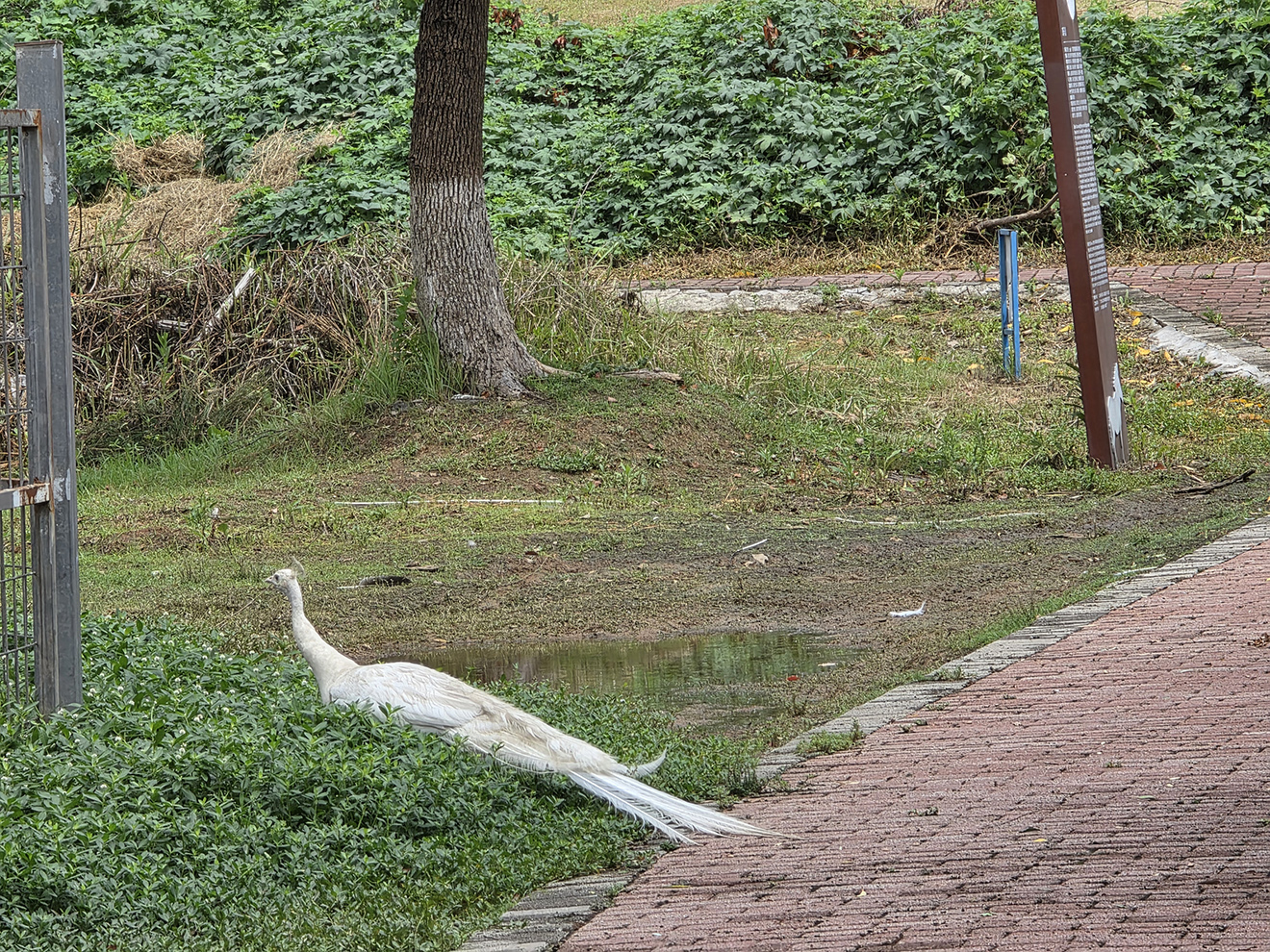
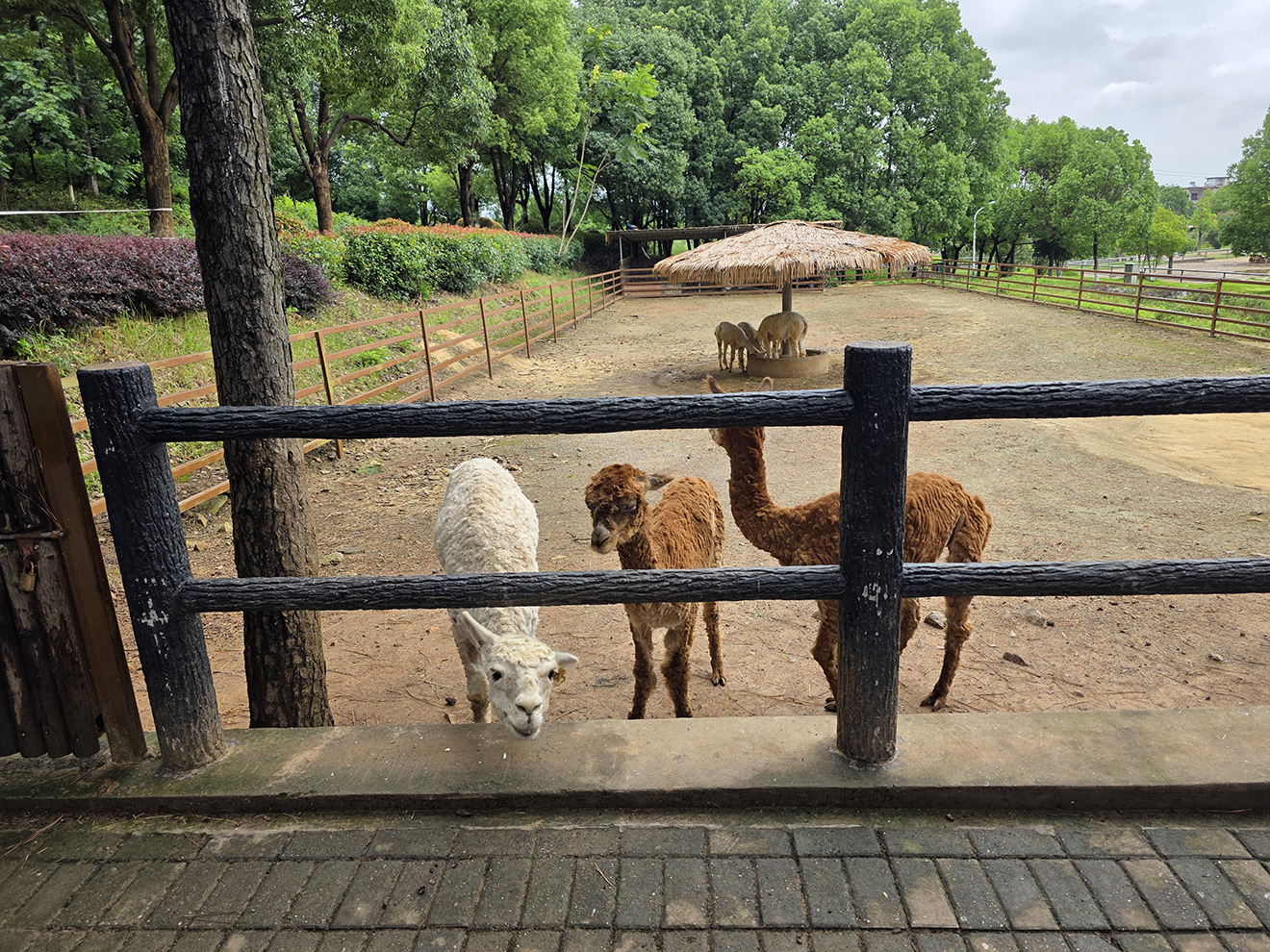
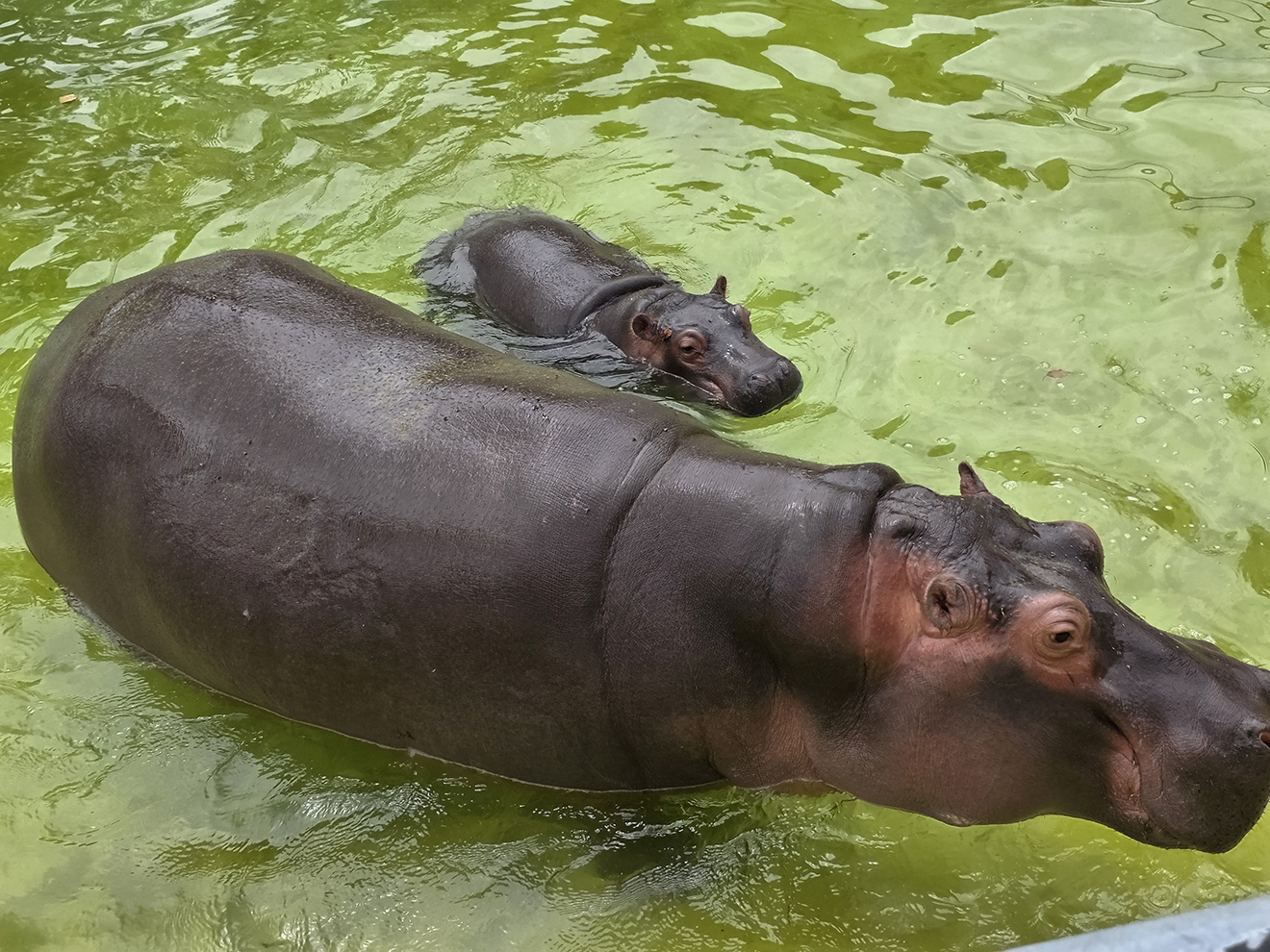
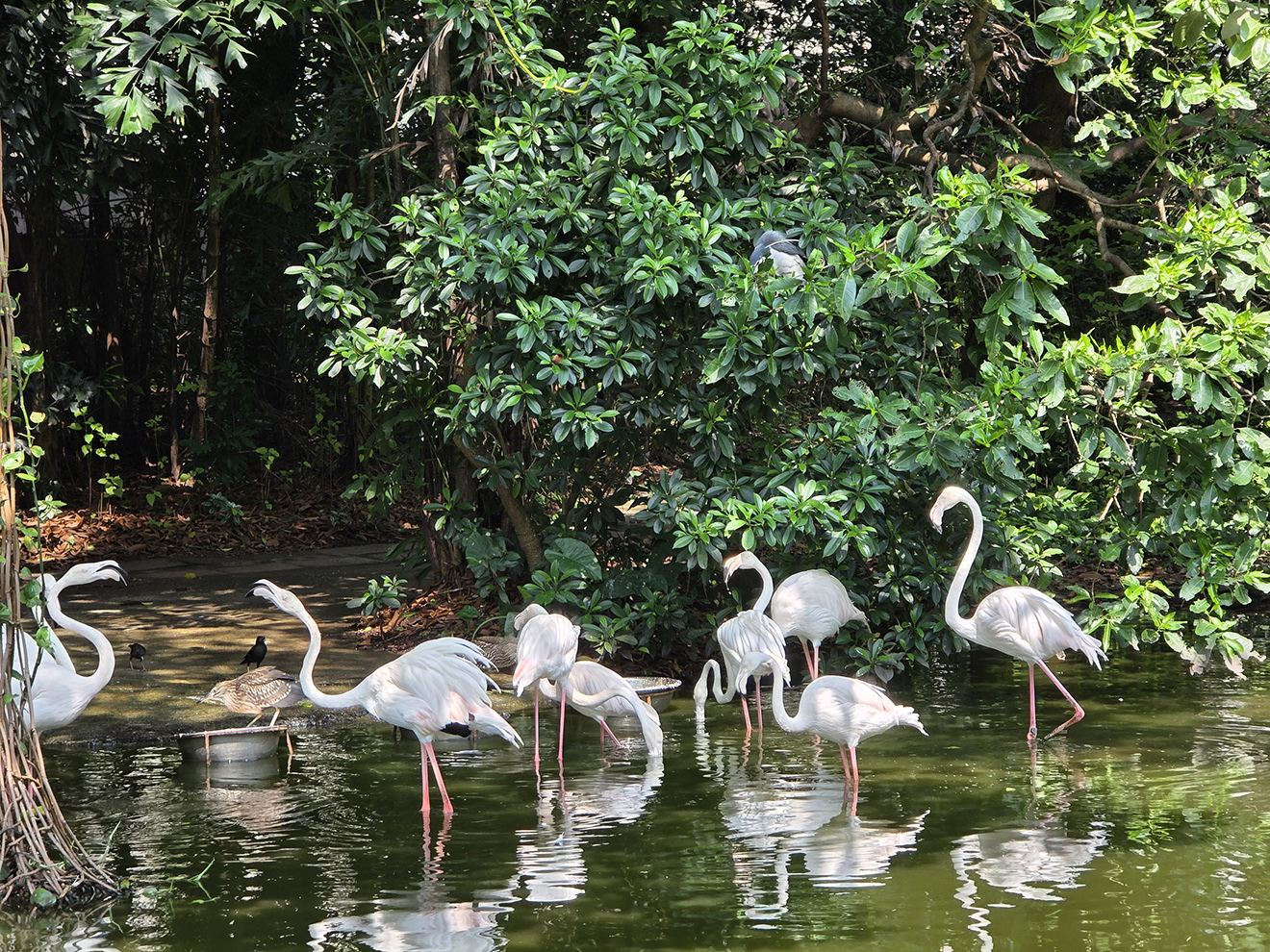
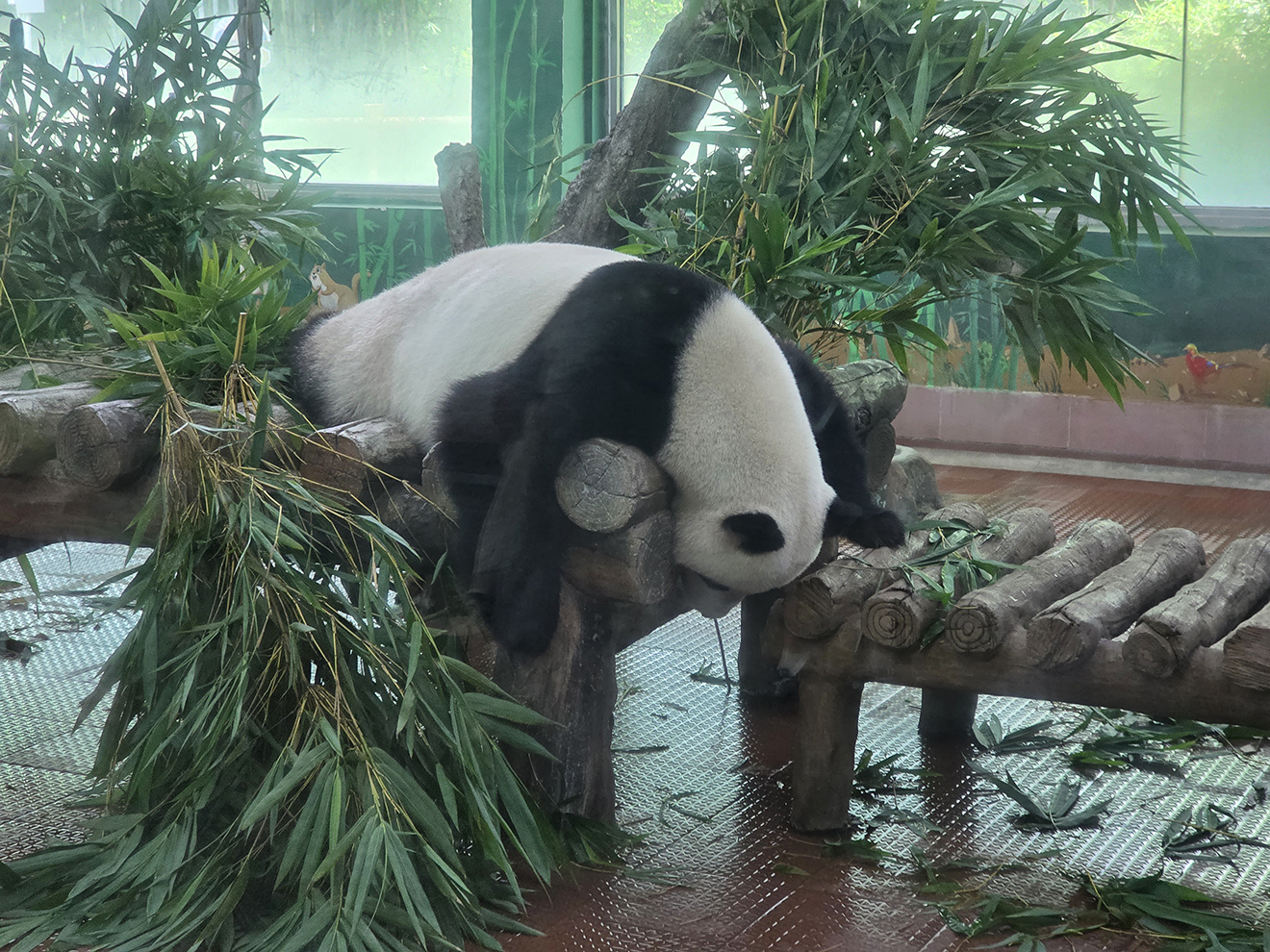
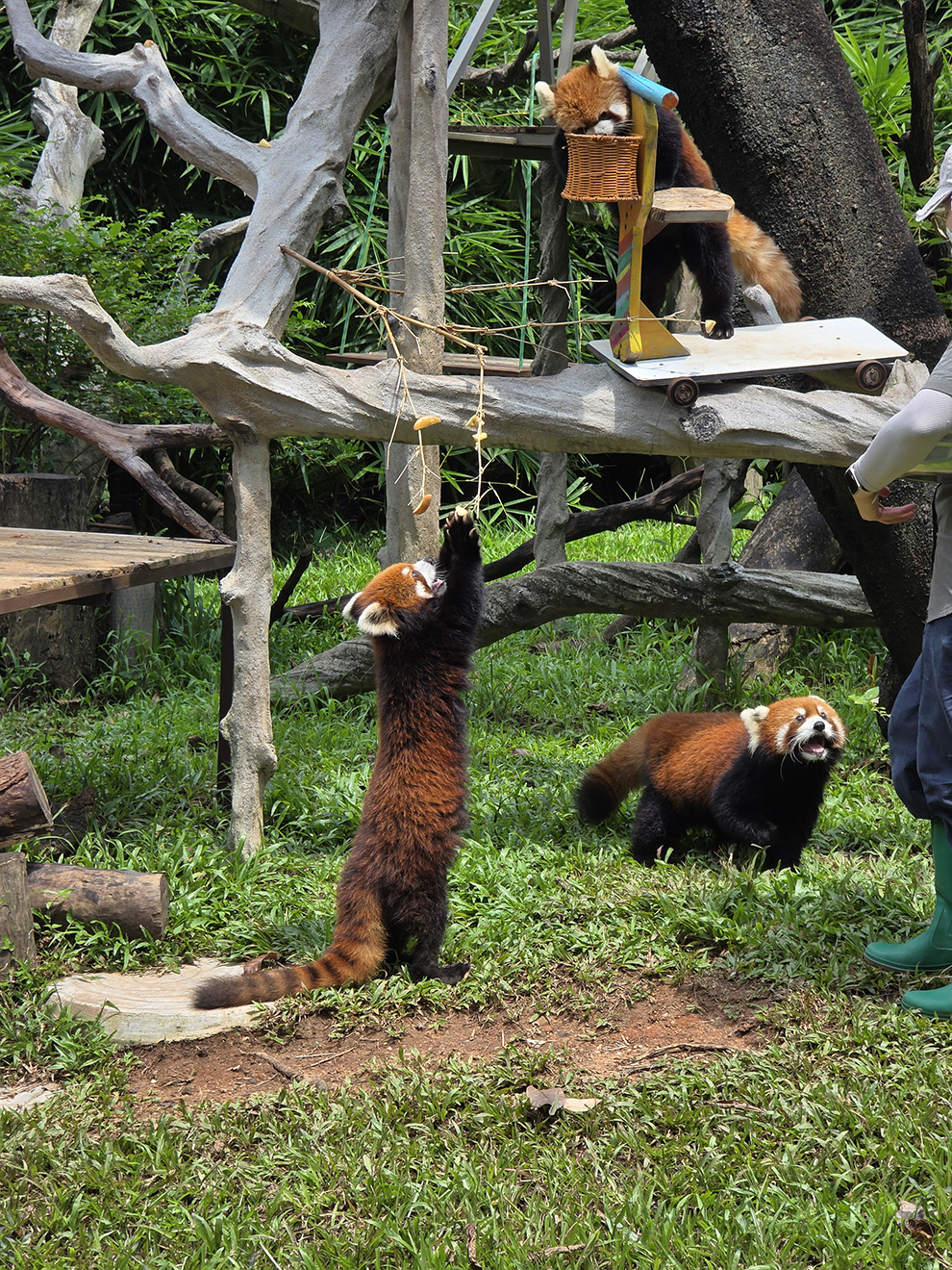
Wildlife World featured a big impressive entrance though, like most of the children and family places I've been to in the area, it wasn't especially busy (even though it was a weekend) and looked like they'd been slacking off a bit on maintenance over the years. Makes me wonder if there's a lack of kids in Anhui (and Nanjing for that matter) or they're all in day-care, or staying inside because of the heat, or something. Anyway though, Wildlife World covers a fairly large area (you can rent a golf kart type vehicle if you want) and also features what looked to be a set of thrill rides and a little amusement park, though we didn't take a close look at those. As for the zoo itself, we didn't rent a kart, and it took a decent bit of walking to actually reach the animals, but once we did, it was a pretty nice zoo. Their selection of animals wasn't especially massive (not that it was small either), and there wasn't anything I hadn't seen before, but you could get right up close to many of them. More so than at most zoos I've visited. There were also quite a lot of animals you could feed (those lamas in the last photo, for example), which was fun. Interestingly enough, while there were booths selling vegetables outside certain animal pens, I saw multiple families who appeared to have just brought their own shopping bags stuffed with carrots and cabbage to feed the animals and no one seemed to mind. That even applied to the animals that you weren't actually supposed to feed. Not entirely sure how good that is in regards to animal health and safety and all that, but it was fun and both Zack and Matt, who often aren't super into zoos, found some animals they really enjoyed watching. We spent around two hours making a complete circuit of the zoo though, like I said, we skipped over the rides and such. All in all, I liked Wildlife World a lot more than I expected. I've been to a lot of zoos but being able to get close to and even feed so many animals helped it stand out. It even had English descriptions of all the animals despite that fact that, due to being so far off the beaten path, I suspect we were the only non-Chinese visitors they'd had in ages.
The rest of the day was, unsurprisingly, spent at Connie's parents' place (other than walking Matt again, of course).
Random China Comment: Hiring a Driver
Sometimes, if you're going to somewhere a bit off the beaten path, you can't always be sure there will be a taxi or ride share nearby to pick you up when you're done (though I would assume Didi ups the odds a lot compared to how things used to be). As such, it's not uncommon to pay a driver to take you to your destination then hang out nearby until you're ready to leave. Though as a foreigner, it's not necessarily easy to arrange in advance, unless you're going through a tour company or the like. In a nice enough hotel, the front desk staff might also be be able to help. Alternately, if you can make yourself understood, you may be able to bargain with your current driver upon arrival. You'll likely have to pay a premium but, by American standards, the price should still be pretty reasonable.
That evening, I picked up Zack and took him out to eat at Pizza Hut. Not very high on my list of restaurants I wanted to visit in China, but he was begging for pizza so we decided to let him have it once. First off, their main way of ordering is one of those plug-in apps I talked about before and it's terrible. It's a confusing mess that breaks down entirely without a Chinese phone. You'd think an American brand would be more tourist friendly... Anyway, after wasting a lot of time figuring out that there was nothing I could do to get the app working, I talked to an employee and managed to get what looked to be their one physical menu and got an order made. Pizzas here are more or less personal sized so I got Zack a plain cheese and I got one with wagyu beef and vegetables. I was hoping for something more "Chinese" but most of the pizzas in the print menu had pork or some kind of seafood that I can't eat so there weren't many options. There was a durian pizza, but as much as I like to experiment, I just couldn't imagine myself being able to eat more than a few bites of that. On a side note, they didn't have all mayonnaise and corn based pizzas that you'd see in Japan. So how was the pizza? Um, ok I guess. Not terrible but nothing all that great either. I suppose Pizza Hut in the US is probably the same in that regard (though the Chinese ones are fancier), but I haven't eaten at a US Pizza Hut in twenty some years so I can't really compare.
Anyway... From Nanjing (with is a quick train ride from Maanshan), it's fairly easy to get to Guangzhou by both high speed train (6 1/2 hours) or plane (2 1/2 hours). We spent a while debating which option was better. The train takes longer, but it's cheaper, more comfortable, and you don't have to deal with all the annoying airport stuff. In the end we decided on the train. Well, sort of. Apparently, there's only one or two trains between Nanjing and Guangzhou per day and they tend to sell out quickly. We were able to get tickets for the train going down, but not the one coming back, so we're flying one way (at least that'll answer the question of which option is more convenient).
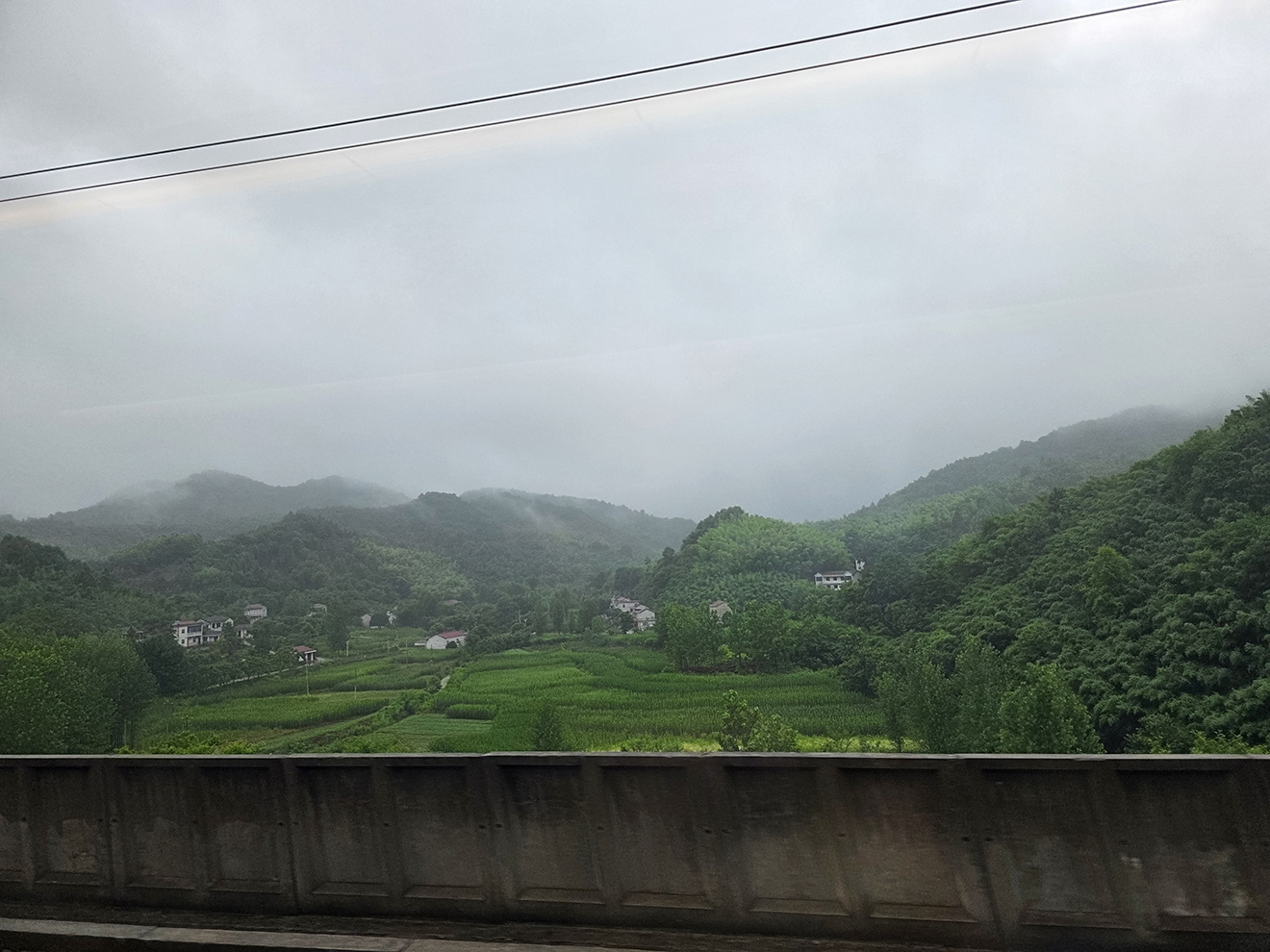
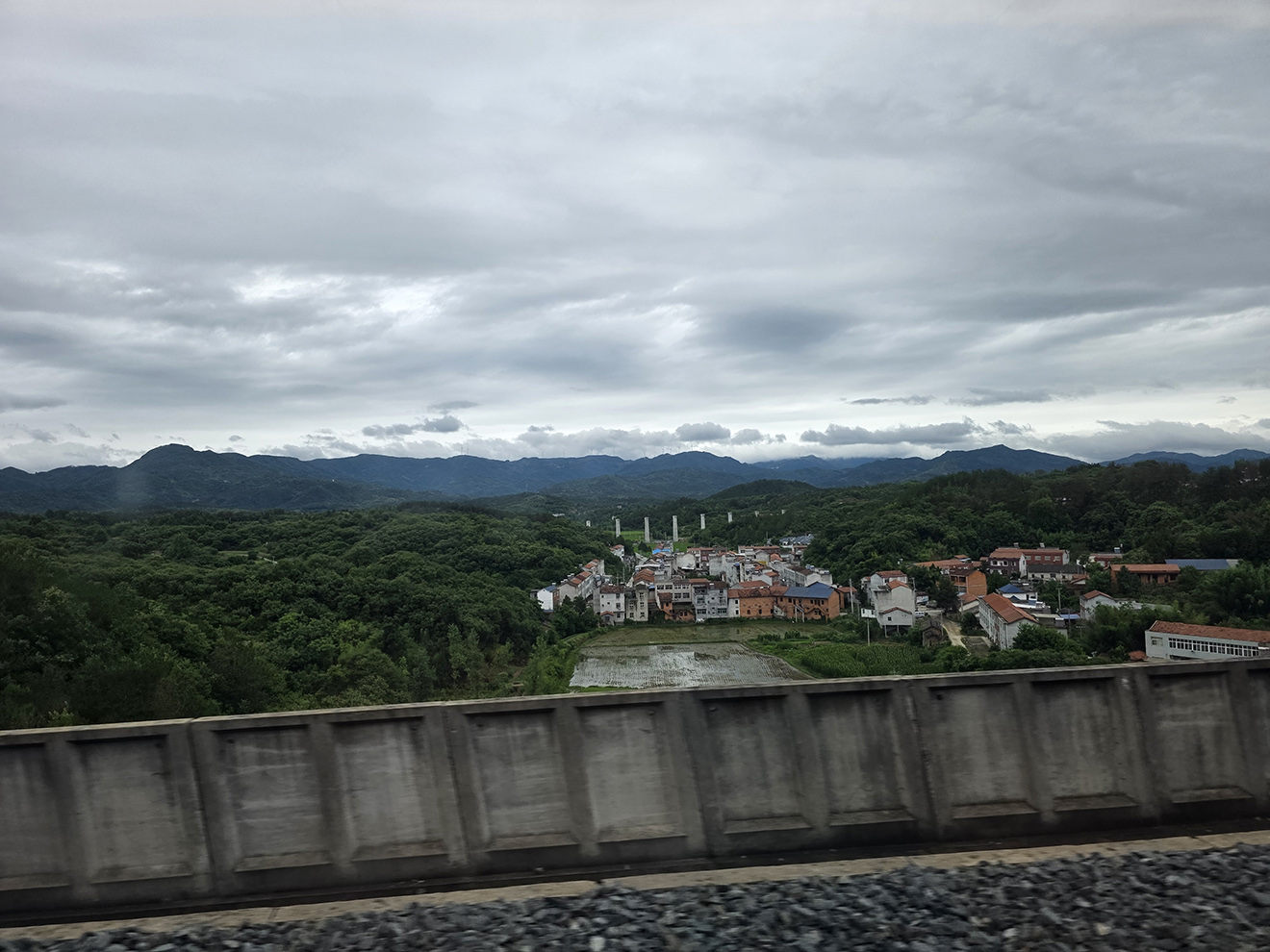
The first step was to get to the station in Maanshan and take a train to Nanjing. Simple enough...or at least it should have been. It was raining pretty hard that morning, which for some reason made it really difficult to get a taxi. Fortunately, when one finally came it was large enough to fit all our luggage (as previously mentioned, there's no way to request a larger car). If it hadn't, there's no telling how long we would have been stuck waiting for a second. For a little while there, I was worried we might miss out train entirely. In the end, we made to Maanshan East Station with little time to spare, but we were in time. From there it was a short tide to Nanjing and a simple transfer to the train to Guangzhou. Getting the luggage situated was a bit harder than I had expected (I guess Shinkansen are roomier), and keeping Matt happy for the duration wasn't always easy, but over all it wasn't a bad ride. Got to see a bit of the countryside along the way.
After reaching Guangzhou Station we still had a fairly long taxi ride (in two taxis this time) to our hotel in the downtown area. Initial impressions were that the city looks pretty big and modern, which some neat architecture. Though I had to use to my phone to keep Matt calm in the taxi so I couldn't take many photos. I did manage to get one of this really interesting coin shaped building though. Once again, I spent a bit more for a high end hotel (getting a full multi room suite) but by the time we checked it in was getting late so, at the recommendation of the front desk, we hurried to a nearby mall and ate at a popular Cantonese restaurant. It was decent, though didn't particularly stand out to me (might have just been the dishes we ordered though). After that, we really just wanted to get some rest.
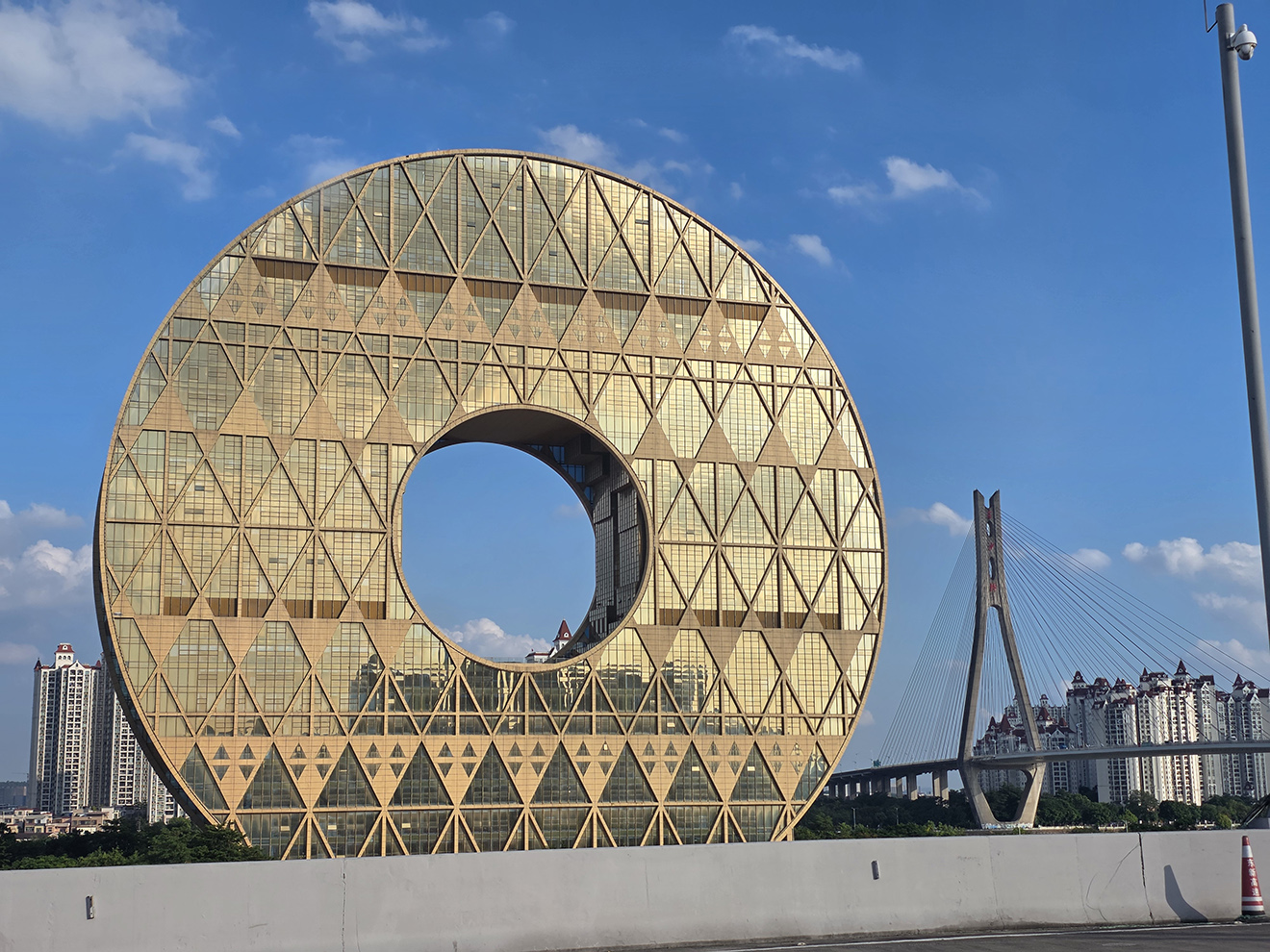
Random China Comment: Train Tickets
One big improvement compared to my previous visits to China is that it's not a lot easier for foreigners to get train tickets. Trip.com now lets you search for trains, see how many seats are available in the different classes, and buy your tickets. It can be done via the app or web site and works fairly well. However, there are a few important things to keep in mind.
First off, it's not an immediate or guaranteed thing. Ticket purchases take 5 or 10 minutes to process and there's a chance they'll fail if the seats sell out in the meantime, so don't count your tickets until you've gotten a confirmation.
Second, I had issues with it not seating us together (I always got tickets in the same car, but not next to each other, even if there were empty seats). Not entirely sure why, but I think it might have had something to do with their seat preference options (if you're in a group and want to sit together, I'd suggest leaving that field blank).
Third, your ticket is tied directly to your passport (or passports for a group) so it's very important that the info you enter in Trip.com perfectly matches your passport, if not, you'll run into issues.
For routes that aren't that busy, or have a lot of trains, such as Maanshan to Nanjing, I've successfully gotten tickets while riding in a taxi to the station. For a more high demand train like Nanjing to Guangzhou, you can put in a purchase request way ahead of time and they'll try and get the tickets as soon as they go on sale. Try being the operative word though (as previously mentioned, we were only able to get tickets going to Guangzhou, not returning). So it's not perfect. But, as a said before, a huge improvement over having to wait in line at a ticket office or get your tickets by mail order.
Speaking of tickets, they don't actually give you proper tickets anymore. No paper tickets and not even a QR code. Instead, when going through security at the entrance to the train station, and again when going through the gate to reach the platform, they scan your passport. If you've purchased a suitable ticket tied to that passport, they'll let you in. A bit awkward but it works (so long as your info is correct). However, keep in mind that the automated scanners often don't work with passports, only Chinese ID cards, so you'll probably need to get in the manual screening line and have a station attendant check your passports instead (watch out for all the people trying to cut ahead of you in line or you could be stuck there for quite a while). Anyway, it's a lot better than it used to be, though still nowhere near as easy and convenient as trains in Japan.
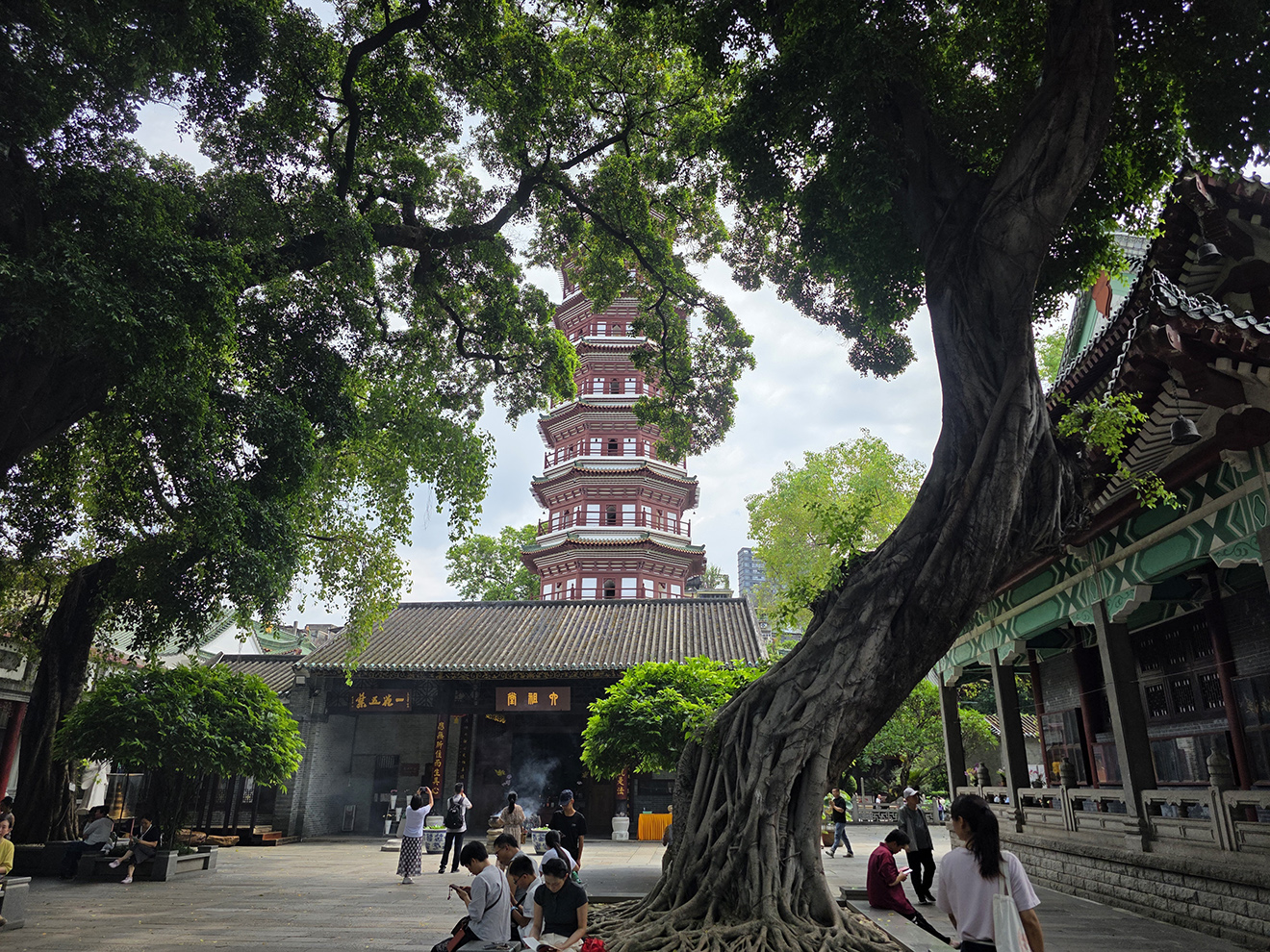
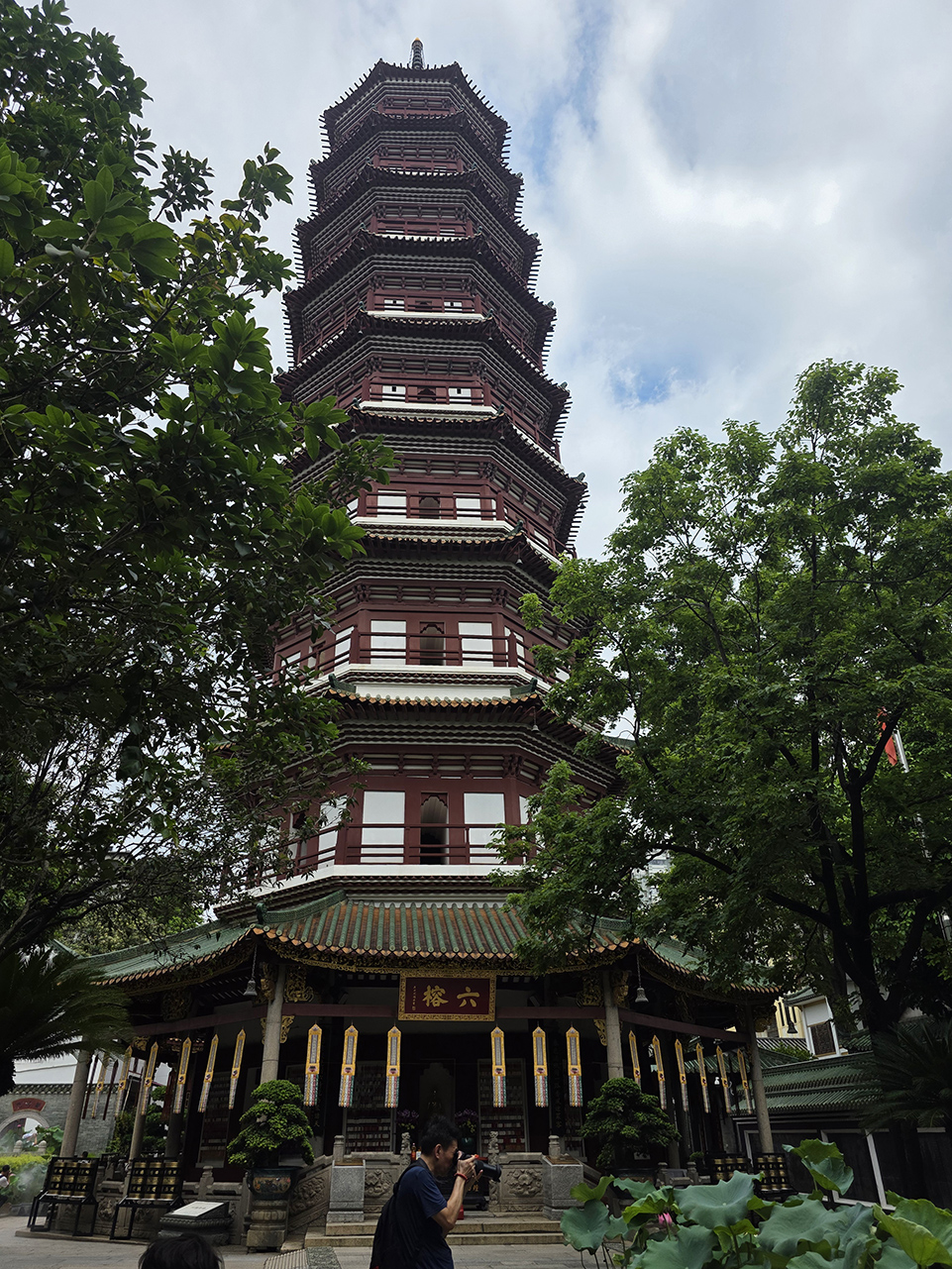
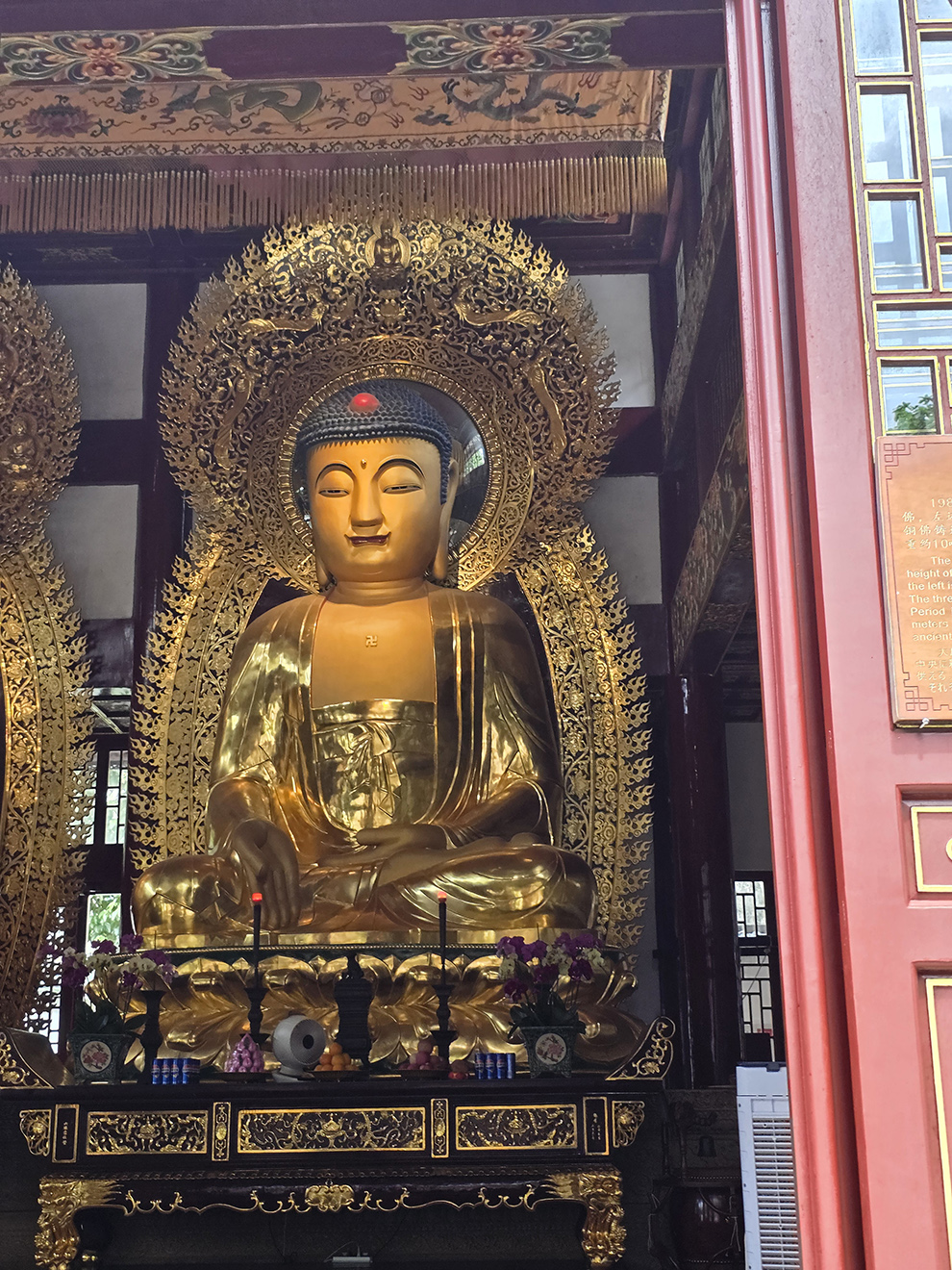
So in the morning we headed out of the hotel to meet our guide, a young Chinese woman named Melody (presumably her English name, much like "Connie"). The driver had a pretty big and nice car (the second row of seats were essentially recliners) and soon we were off to our first destination. Liurong Temple, or the Temple of the Six Banyan Trees, is known for its six banyan trees (in case the name didn't clue you in) and its nine story pagoda. It originally dates back to 537 AD though it was burned down and rebuilt a couple of times since then. There's several buildings in the complex, including one that houses three large golden Buddha statues (the largest in Guangzhou, though I've seen bigger elsewhere). As someone who has visited a lot of Buddhist temples, it's interesting how much the styles vary from place to place. Sometimes even in within the same country, as I've encountered several drastically different styles of temple in China alone, none of which are like the ones in Japan. Liurong is a very picturesque temple, with the banyan trees, some nice lotus plants, and a lot of large detailed carvings. I enjoyed it. I doubt Matt cared too much though he stayed relatively content in his stroller for the entire time. Probably not one of Zack's favorites either, but he looked around, asked some questions, and appeared somewhat engaged. One interesting bit of trivia I learned from Melody. Chinese temples, and a lot of old Chinese houses as well, have a raised barrier at the entrance that you need to step over to get inside (which is a bit annoying when you're pushing a stroller). Apparently the reason is to ward off evil because, according to ancient Chinese superstition, evil can't jump. Interesting. Though I'm not sure why evil can't just lift its legs up and step over. And what about jiangshi (Chinese zombies)? Don't they hop everywhere? Well, anyway, I guess at the very least it wards off people with bad knees.
Our next stop was the Cantonese Opera Art Museum. It features a nice garden complete with performances by opera singers throughout the day. The museum itself has sections dedicated to various aspects of Cantonese opera include costumes, makeup, instruments, and famous actors. There were English translations of most of it, though I didn't have the time to read things too closely. I also wasn't able to take many pictures since I had to give Matt my phone to keep him entertained and I haven't gotten a new dedicated camera yet (still waiting in hopes that someone releases a compact superzoom that isn't just an eight year old model with a USB C port and a much higher price tag). It was a nice museum though and Zack seemed more interested in the displays and even the music than I would have expected.
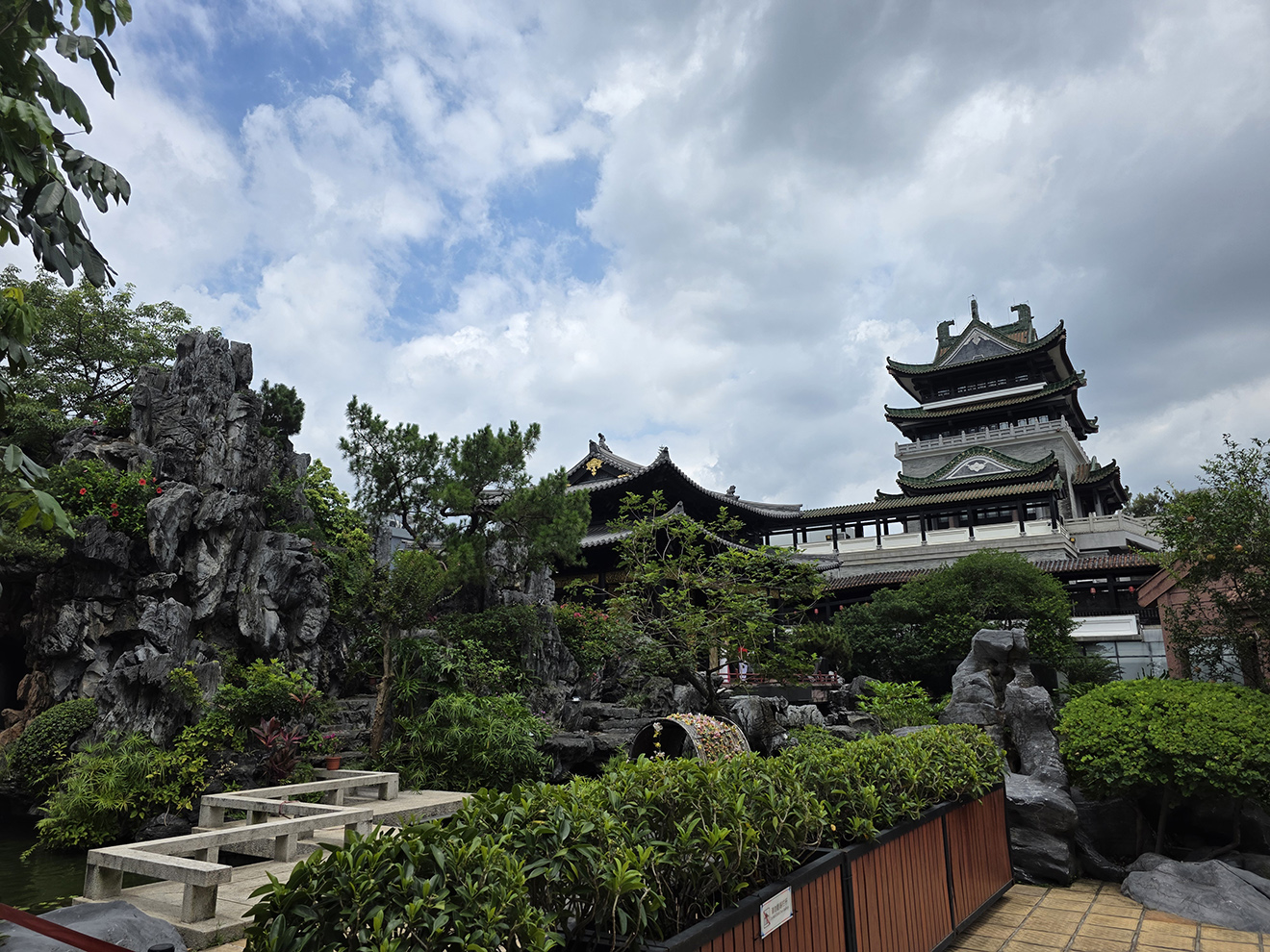
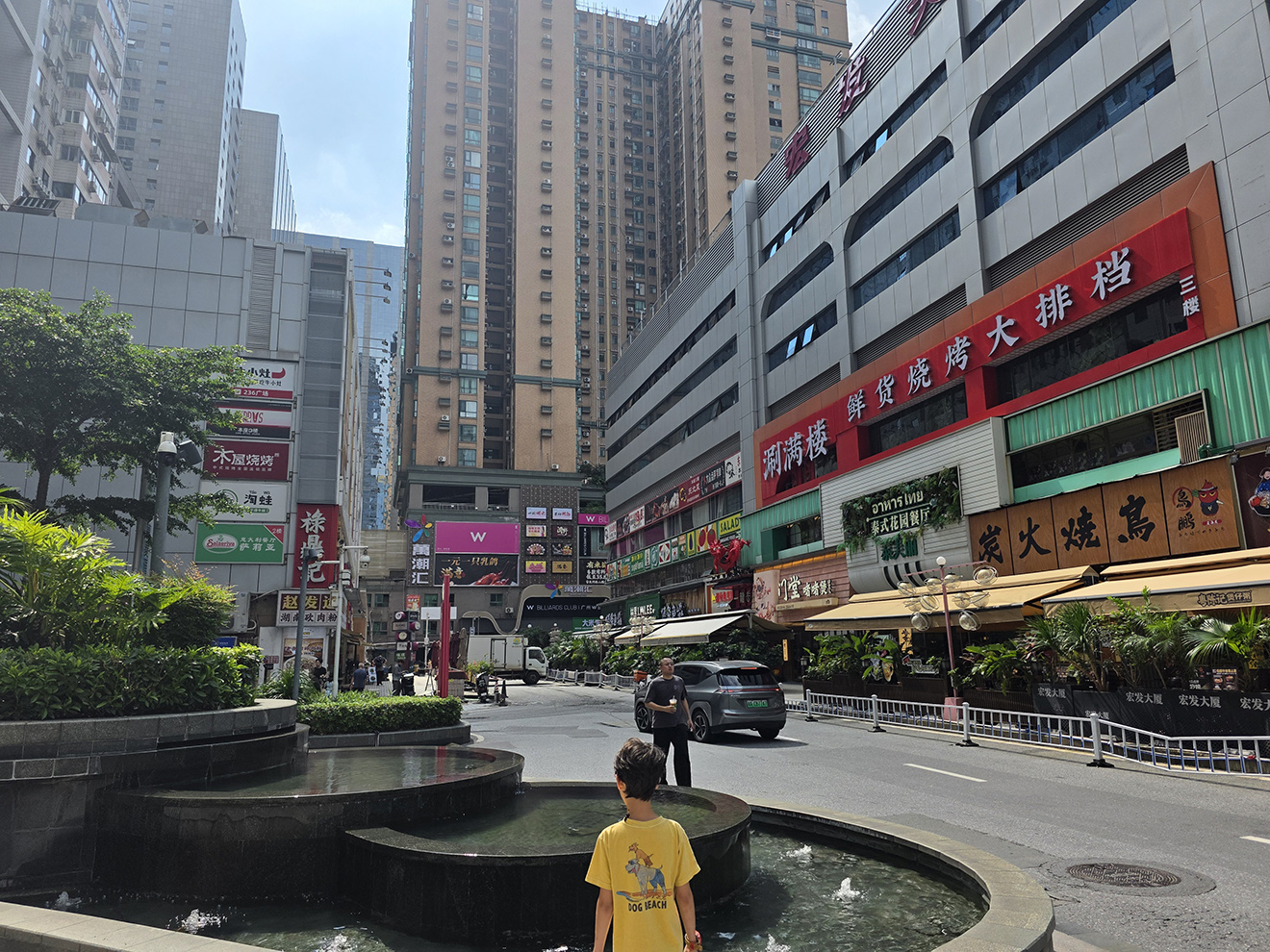
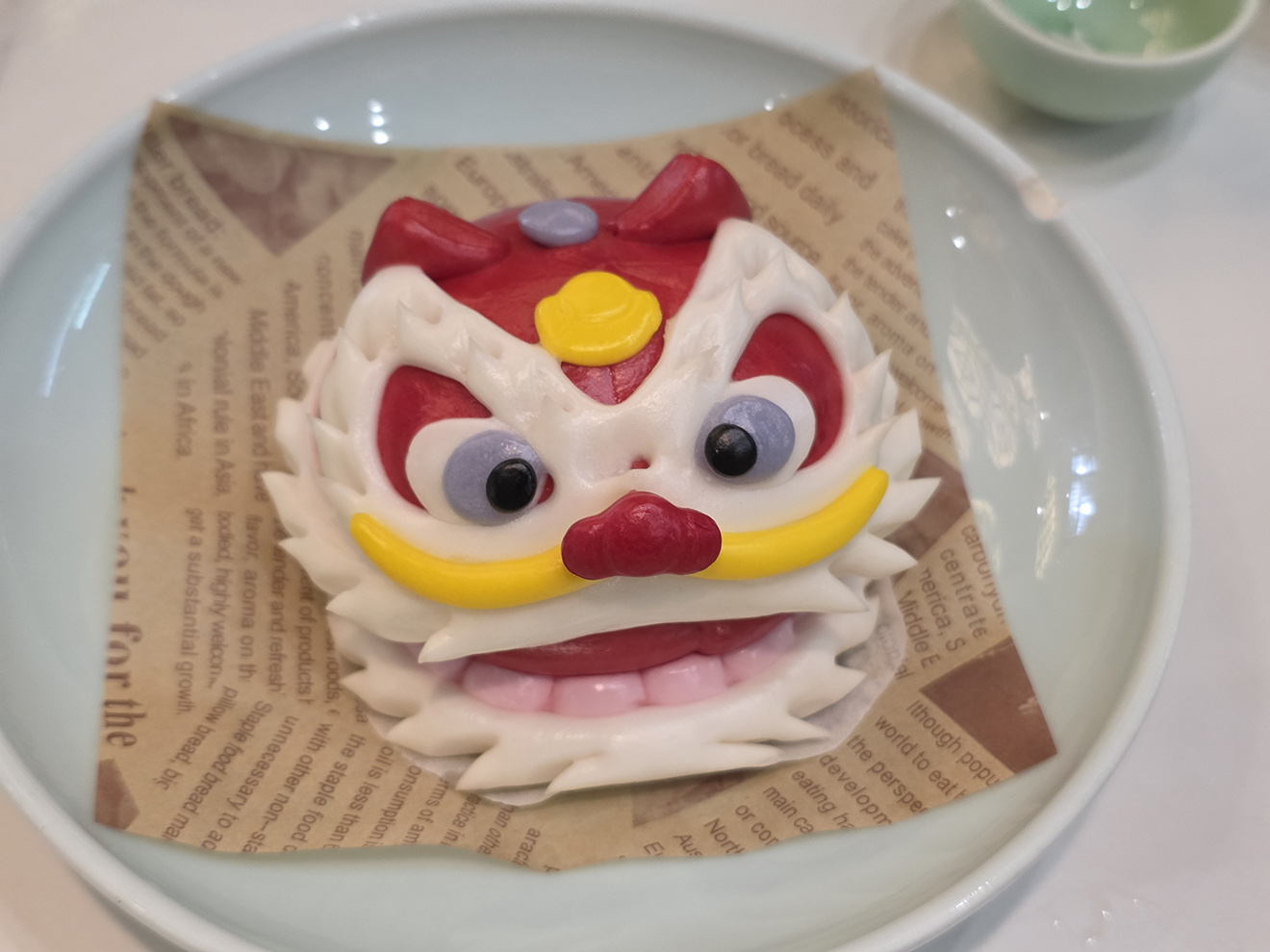
The museum is in area called Yongqing Fang, which features a number of old buildings that have been restored and turned into restaurants and such. It's not overly large, but it's fun to walk around and, at Melody's recommendation, we got lunch at a popular Cantonese restaurant (if you haven't figured it out yet, Guangzhou is part of the "Canton" area). I ended up getting a selection of dim-sum, most of which Zack enjoyed (Matt, whose has been a very picky eater since that stomach bug, just ate bread that Connie had packed for him). It was quite good. Once again, I used my phone to keep Matt happy, but I did grab it back to take a picture of this one special steamed bun which had a sweet egg paste inside. We got lucky in that it rained really hard for about 20 minutes when we were inside the restaurant, but stopped before we were finished and remained clear for the rest of the day.
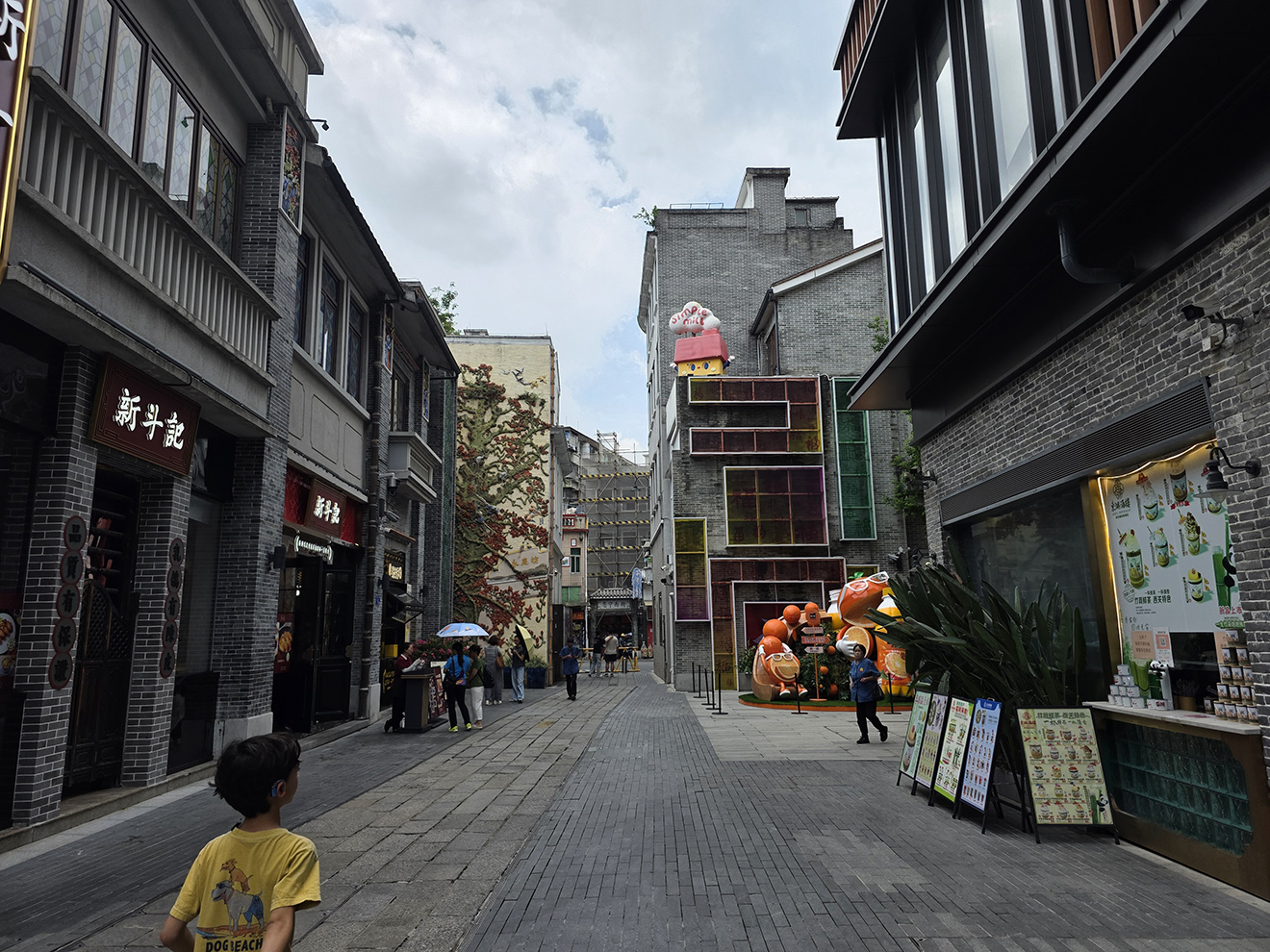
Our final stop for the afternoon was Shamian Island. It started out as a sandbar that at various points served as a port and military installation. But was put under the control of France and the UK after the Opium Wars and turned into an artificial island. It was, for a time, the center of European presence in the region and that really shows in the layout and architecture. If it wasn't for the Chinese signs, I would have thought I was walking down a street in Europe. It's a pleasant place to stroll, and there are some shops and restaurants, but it's mainly an area to visit for the history and the major change of scenery compared to the rest of the city.
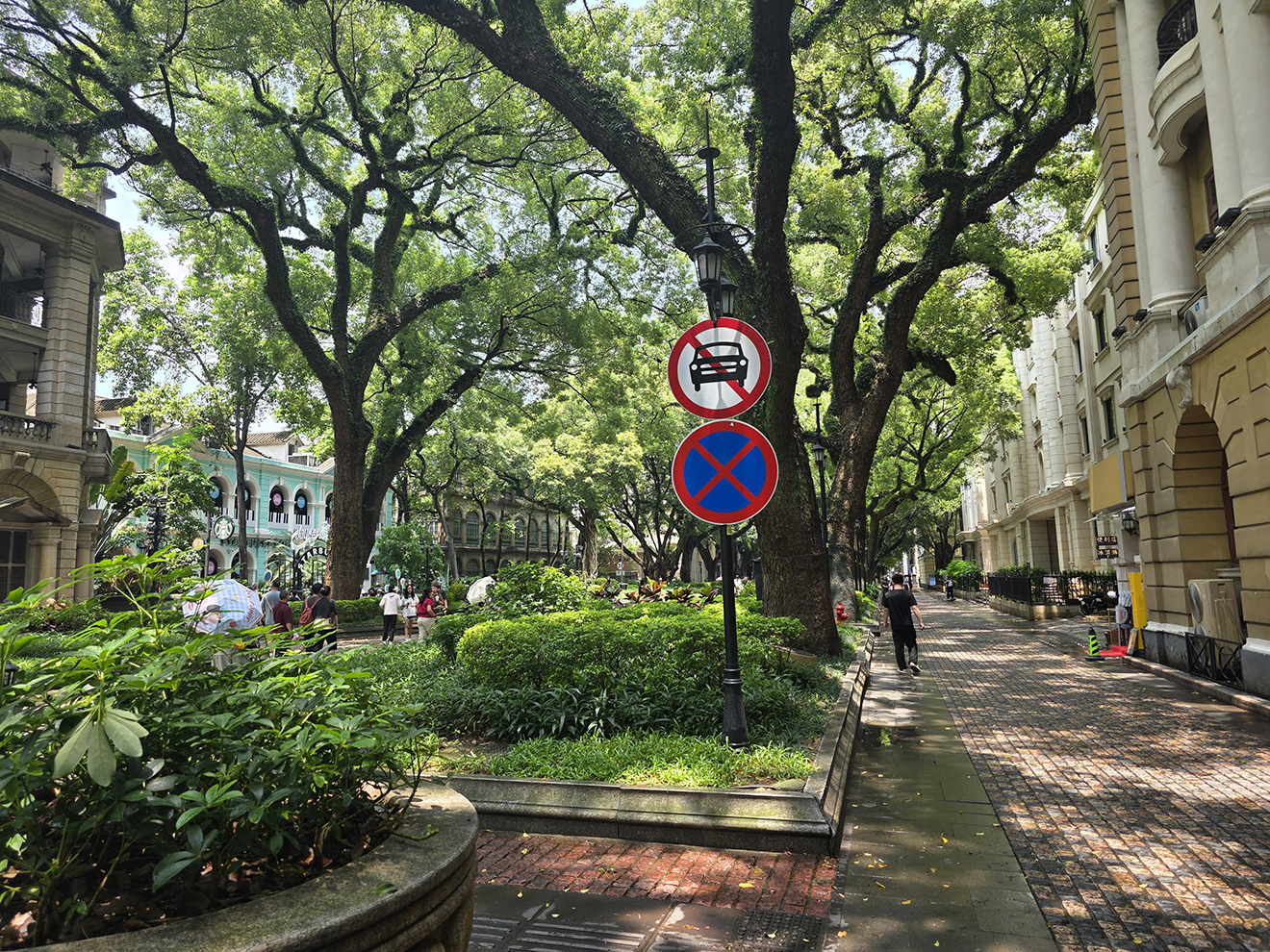
At that point, it was mid-afternoon and very hot, so we headed back to the hotel. Connie wasn't back yet so I took Zack and Matt to the swimming pool for a while, which was pleasant, despite an annoying rule requiring swim caps (which I had to buy, since I don't normally use them). After Connie returned, we walked over to a nearby mall to visit Din Tai Fung, one of my favorite Chinese restaurant chains. It specializes in soup dumpling, though they have a lot of other dishes as well. It was just as good as I remembered and we all had a nice dinner.
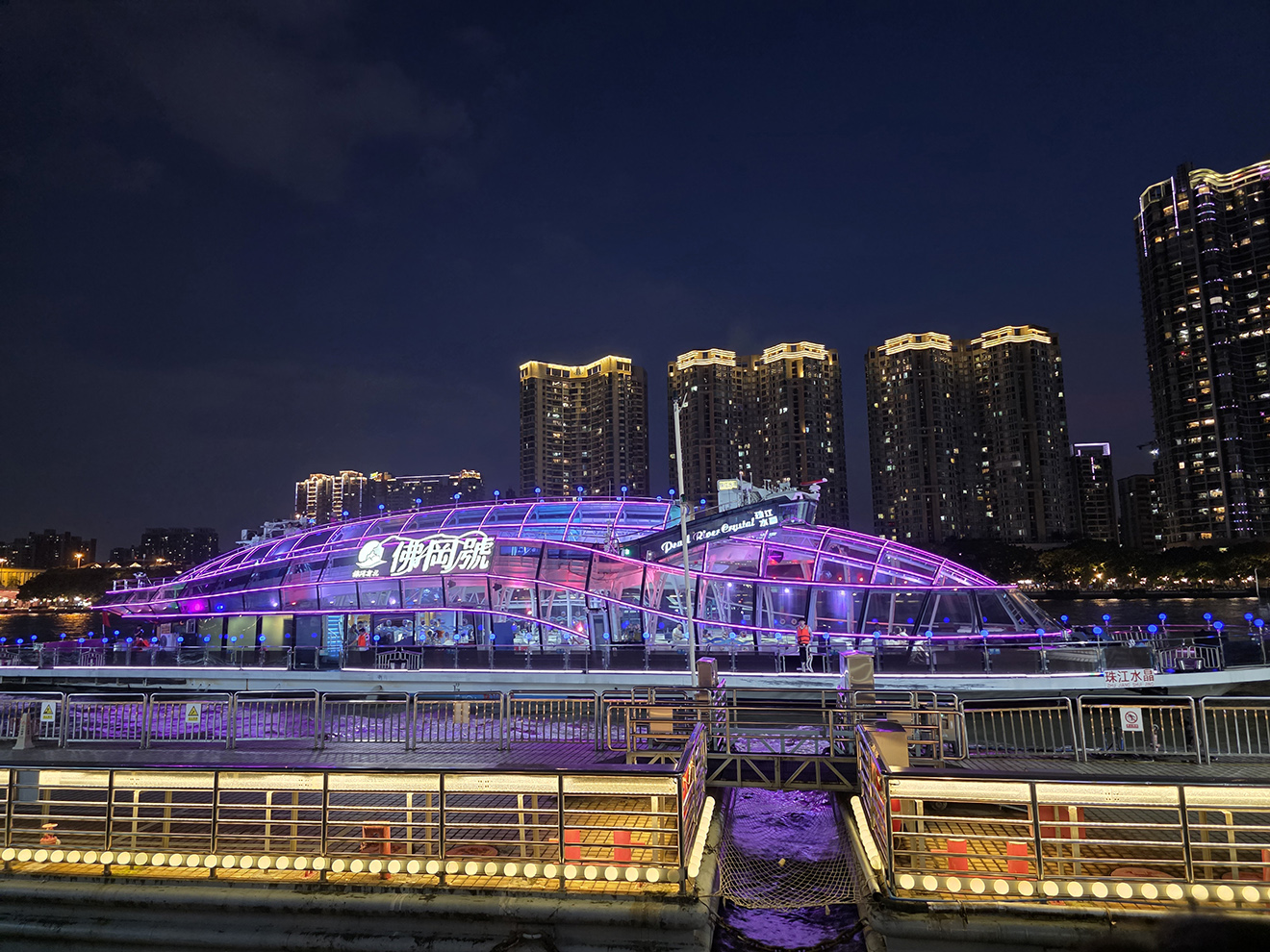
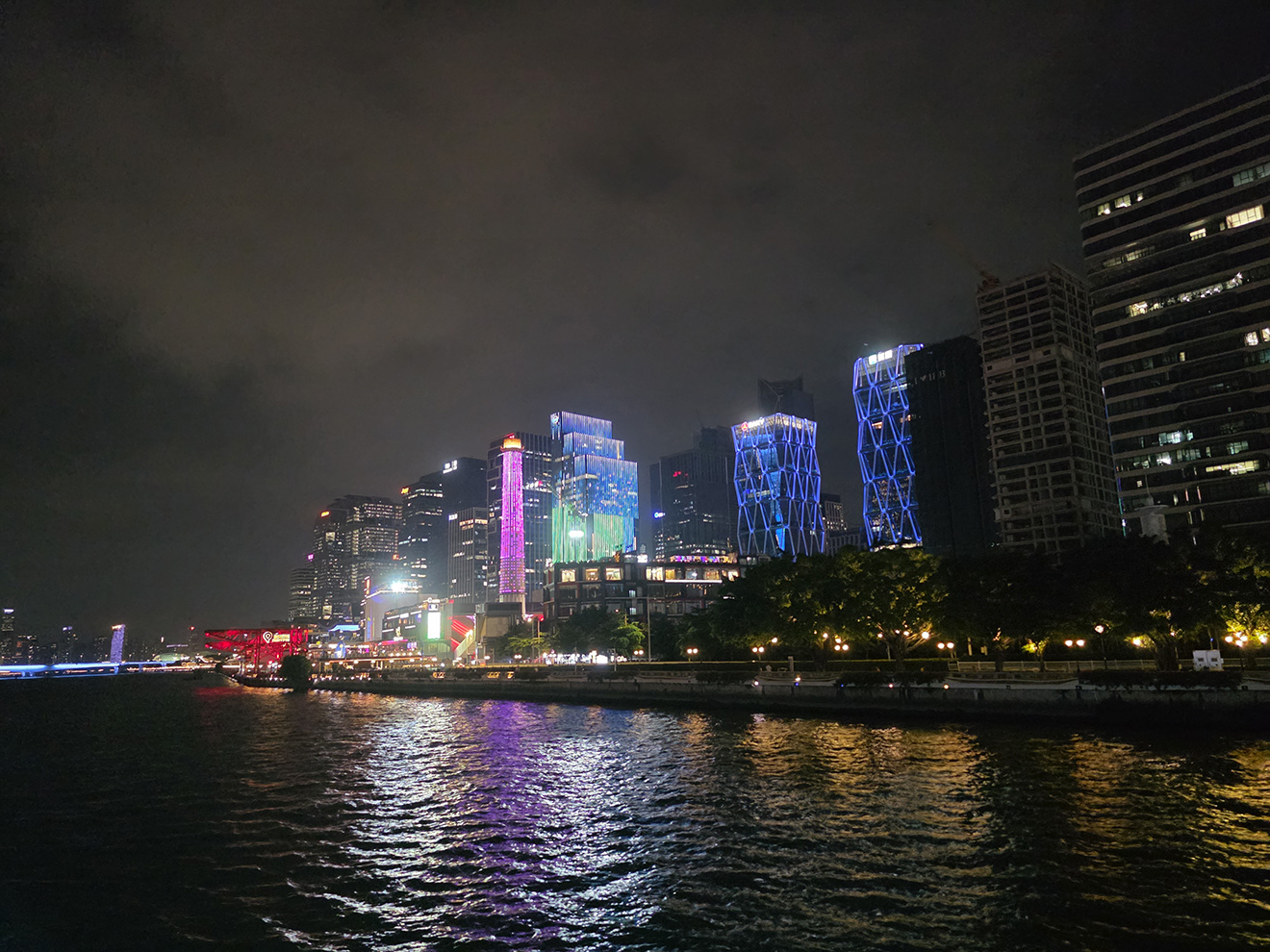
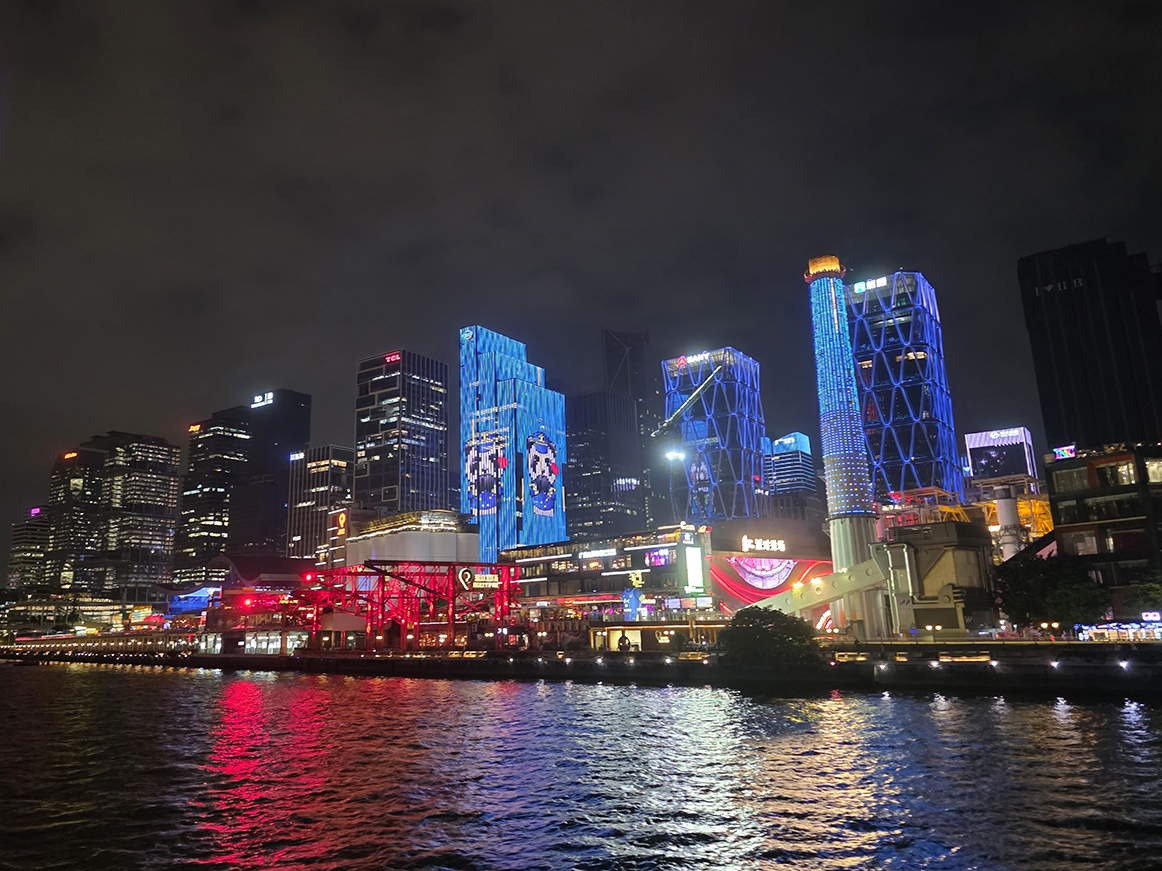
But that wasn't quite the end of the day. While Connie and Matt returned to the hotel, Zack and I met back up with Melody for a night time cruise on the Pearl River. There's a number of sightseeing boats that run hour long cruises up and down the river. I would assume they have them during the day as well, but the big draw is at night when everything is lit up. The most popular landmark is Canton Tower (which I unfortunately did not get to go up on this trip). It's one of the world's tallest towers, though a bit shorter than the Tokyo Skytree. This bridge featuring projection mapped animations was pretty cool as well. It was a fun experience and I took a lot of nice pictures of the night time scenery. As such, it made for a great way to wrap up our first day in Guangzhou.
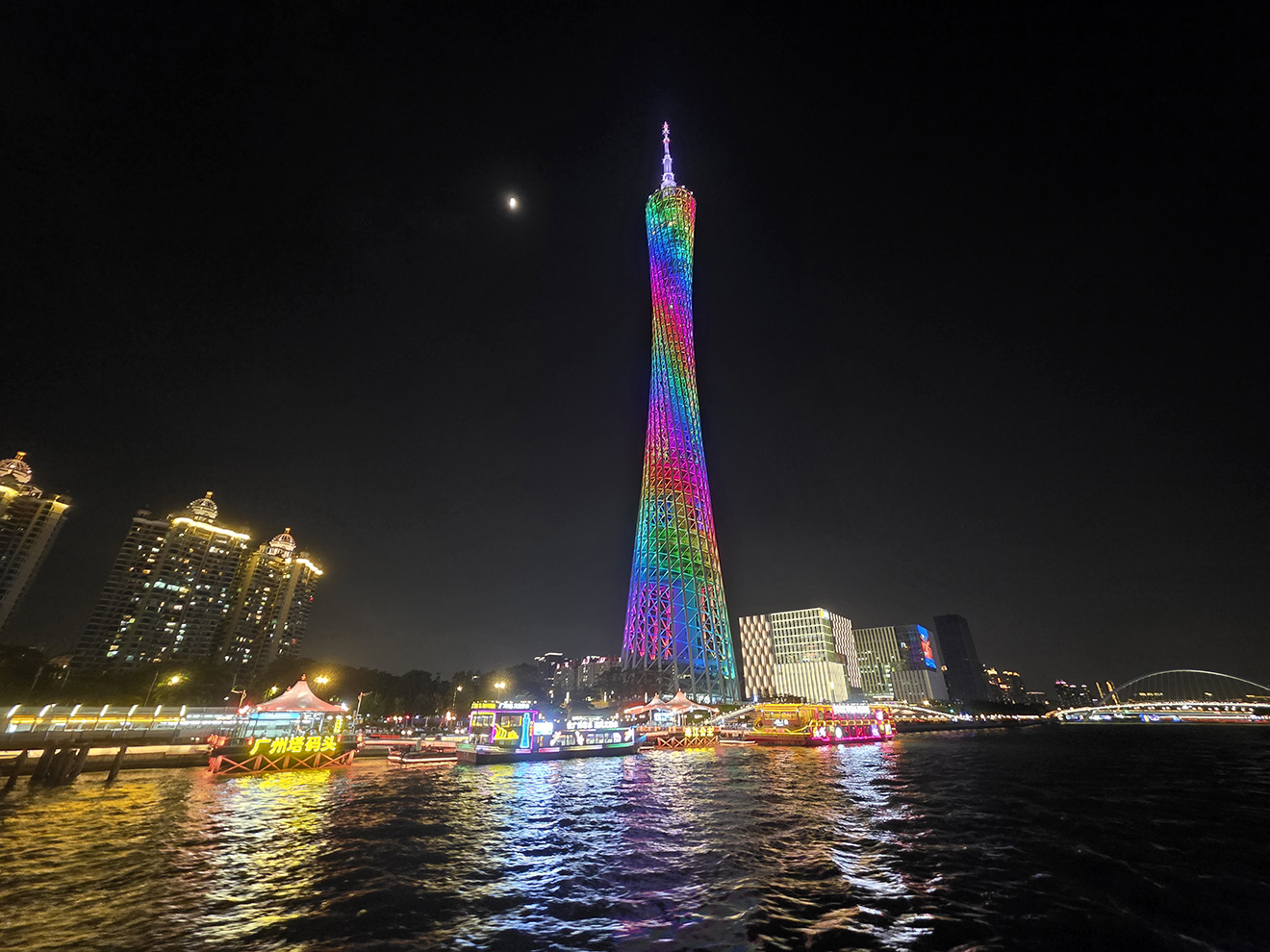
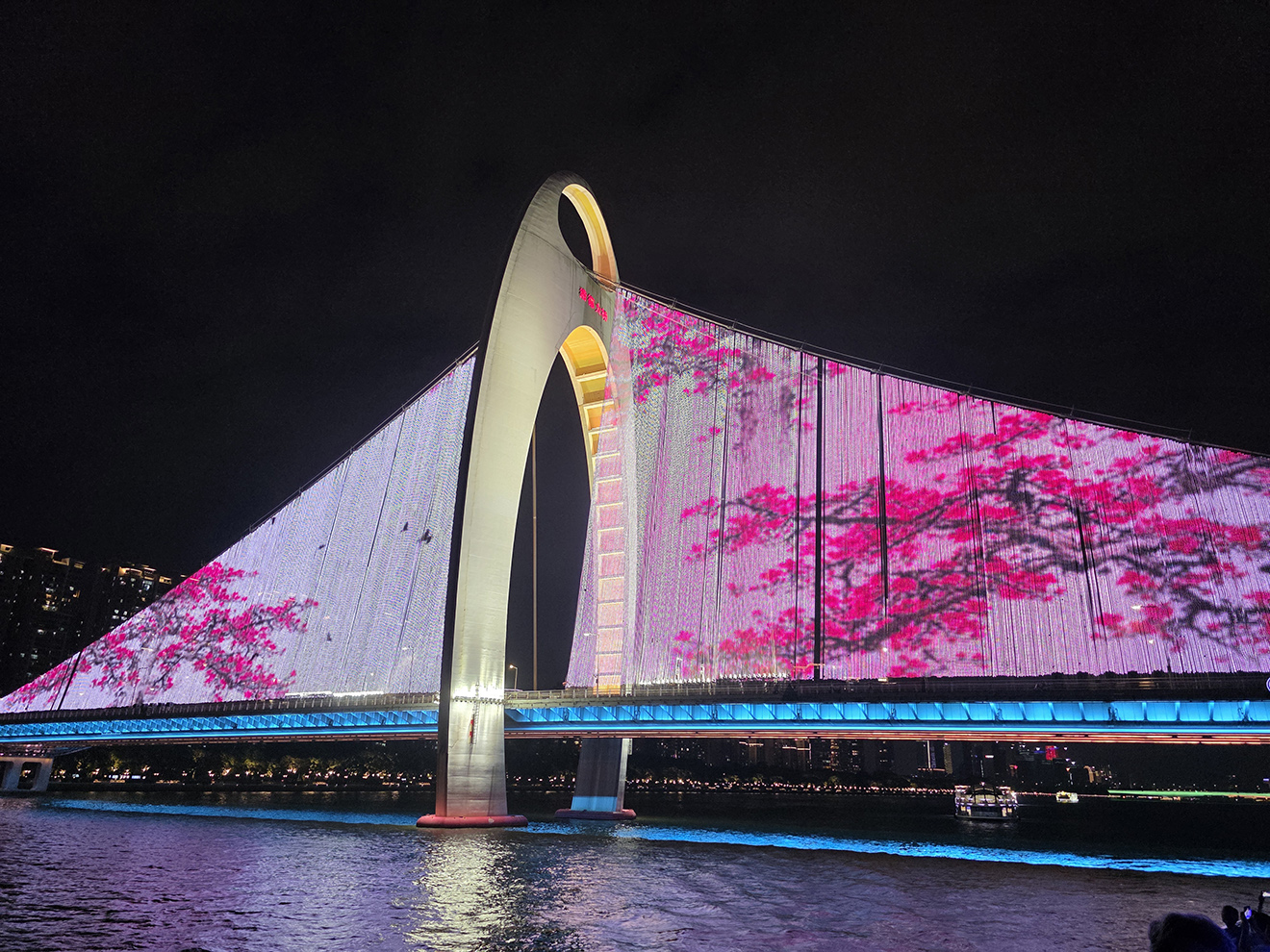
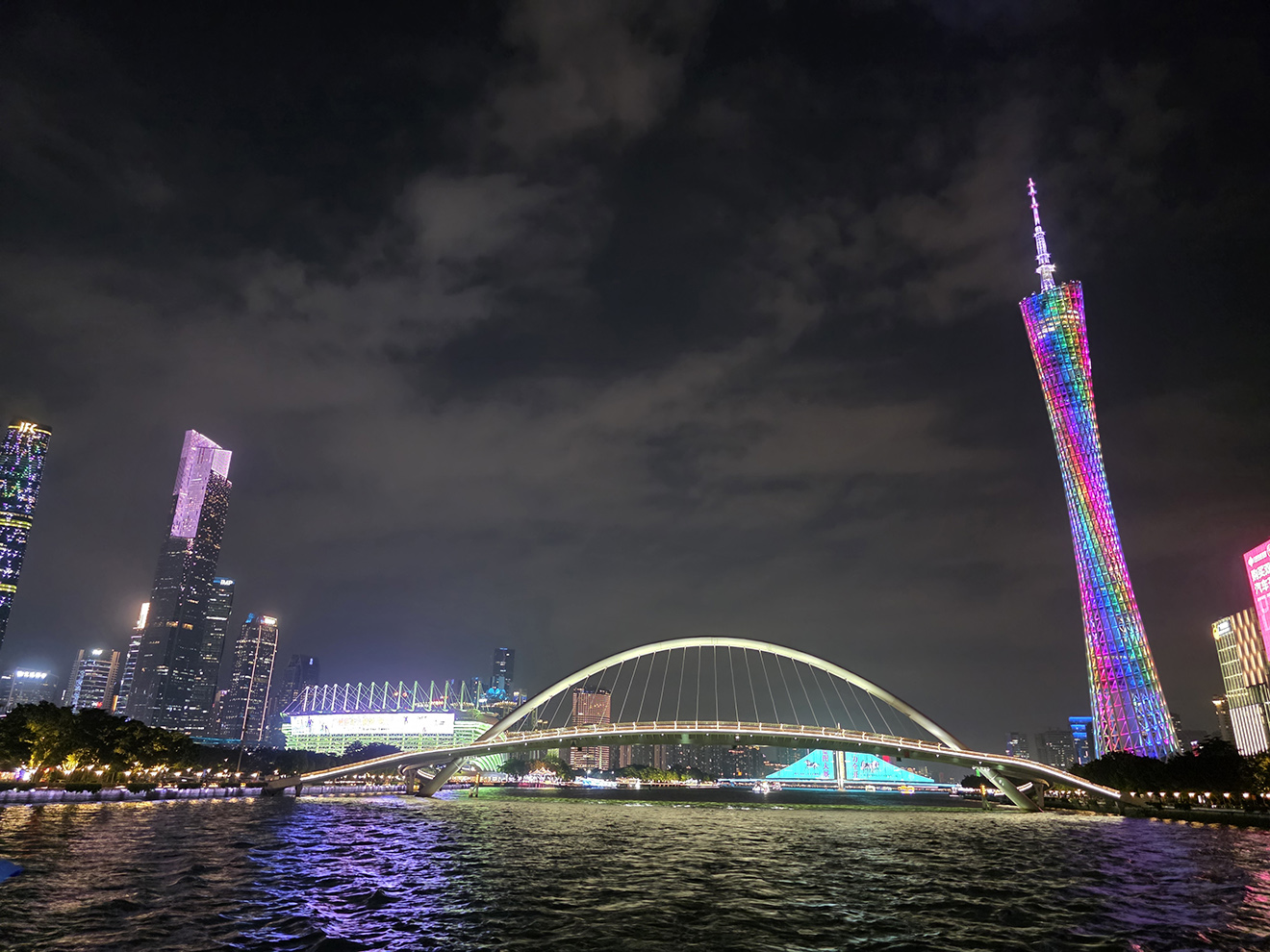
Random China Comment: Impressions of Guangzhou
Guangzhou is a large city and a bit more modern overall than the others I've visited (though it still has plenty of old and, in some cases, run down areas). It's also fairly internationally inclined (likely do to its proximity to Hong Kong) and featured more English than most parts of China I've visited (other than Shanghai and Beijing). That said, it was still a lot less English than you'd find in Tokyo, for example. There appears to be an extensive metro system though, since we had a driver, I didn't actually use it. And there's quite a lot of interesting things to see and do, both historical and modern. Lots of fancy shopping malls as well, all of which feature a wide selection of restaurants (Guangzhou is known for its food). As a note, despite being a bit of an international hub, from what I saw and what I heard from Melody, it doesn't actually get a lot of America tourists, mostly Russian and Indian. I should also mention the climate. Guangzhou feels somewhat tropical (perhaps similar to Florida) and I saw a lot of banyan trees, banana trees, and the occasional palm. Unfortunately, that also means it's hot and muggy. Most of our visit was marked by very high humidity and temperatures in the low to mid 90's. Presumably it's a lot more pleasant in the winter. Overall, I liked Guangzhou and would certainly be up for visiting again. Even without doing any serious research, I spotted a number of additional attractions and sightseeing spots I'd be interested in checking out.
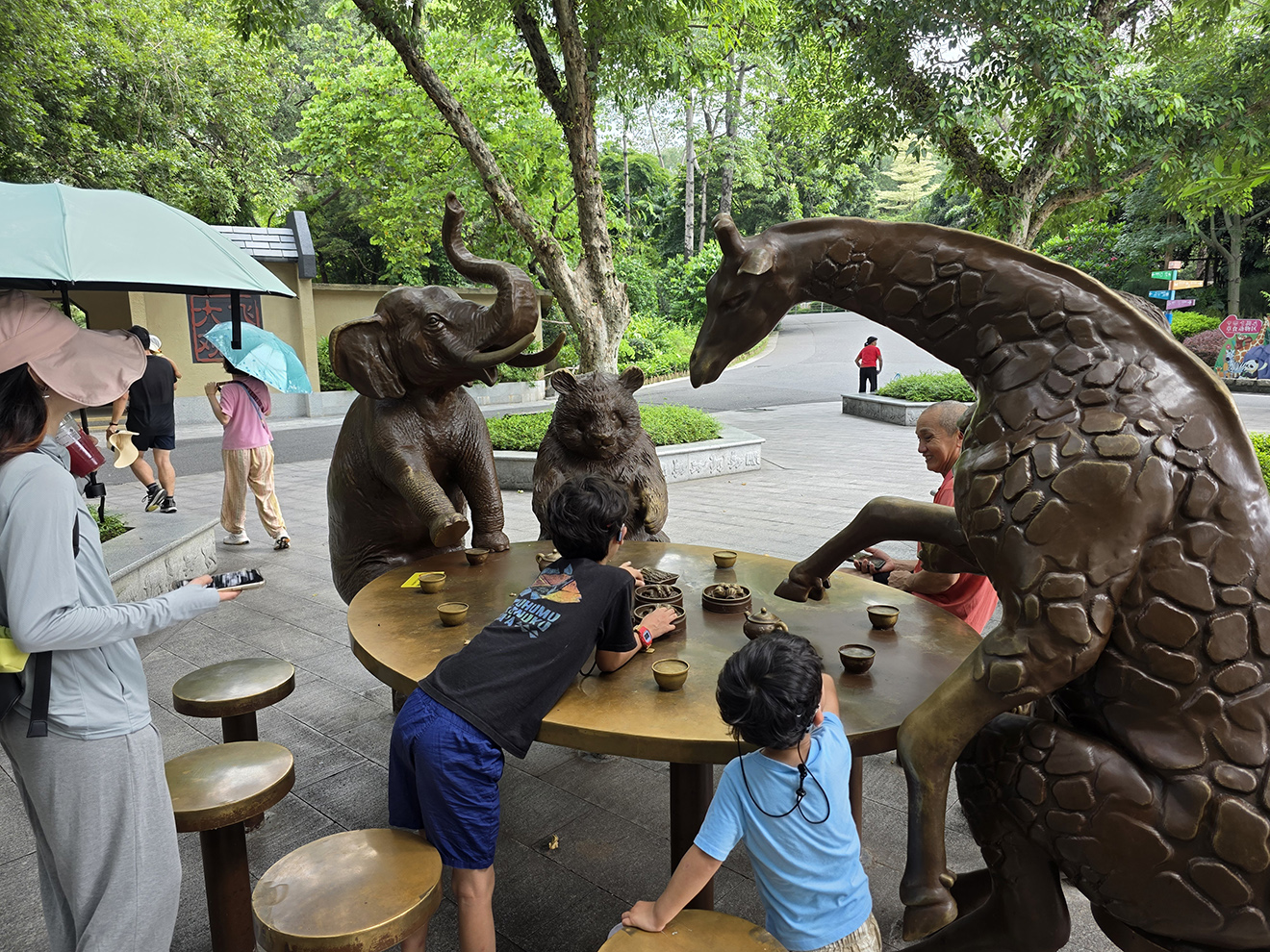
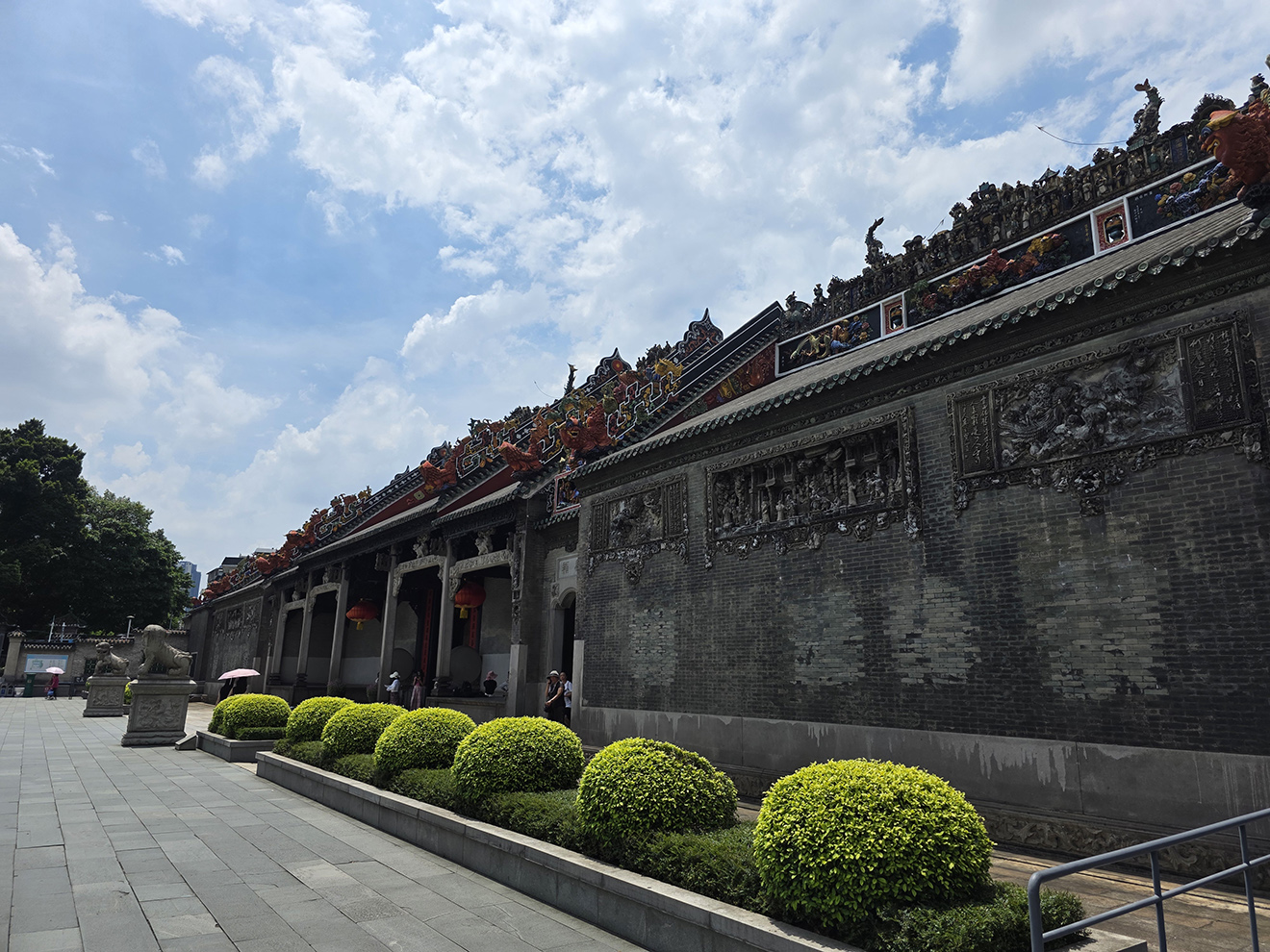
After lunch, we visited the Chen Clan Ancestral Hall (or Memorial Hall, depending on the translation,) which also doubles as the Guangdong Folk Art Museum. Built in the late 1800's, it originally served as both a temple where the aforementioned Chen family could enshrine and worship their ancestors and a dorm and prep school of sorts for the family. The most notable feature, at least in my opinion, is the elaborate carvings covering the roofs and many other surfaces. Chinese buildings are generally decorated more elaborately than those in Japan, but even with that in mind this compound was especially impressive and it's known as an excellent example of traditional Cantonese architecture and decoration. Some of the rooms were filled with displays of various regional handcrafts such as ink stones, wood carvings, and porcelain. While others contained the memorial cabinets used for ancestor worship. I also just really enjoyed walking through the courtyards and looking at the carvings. Though I had to keep moving at a decent pace to keep Matt happy without my phone... This is another one of those attractions that was of a lot more interest to me than the kids, and I could have easily gone slower and spent a while longer there. But Zack found it somewhat interesting as well and didn't complain or anything, so that was good.
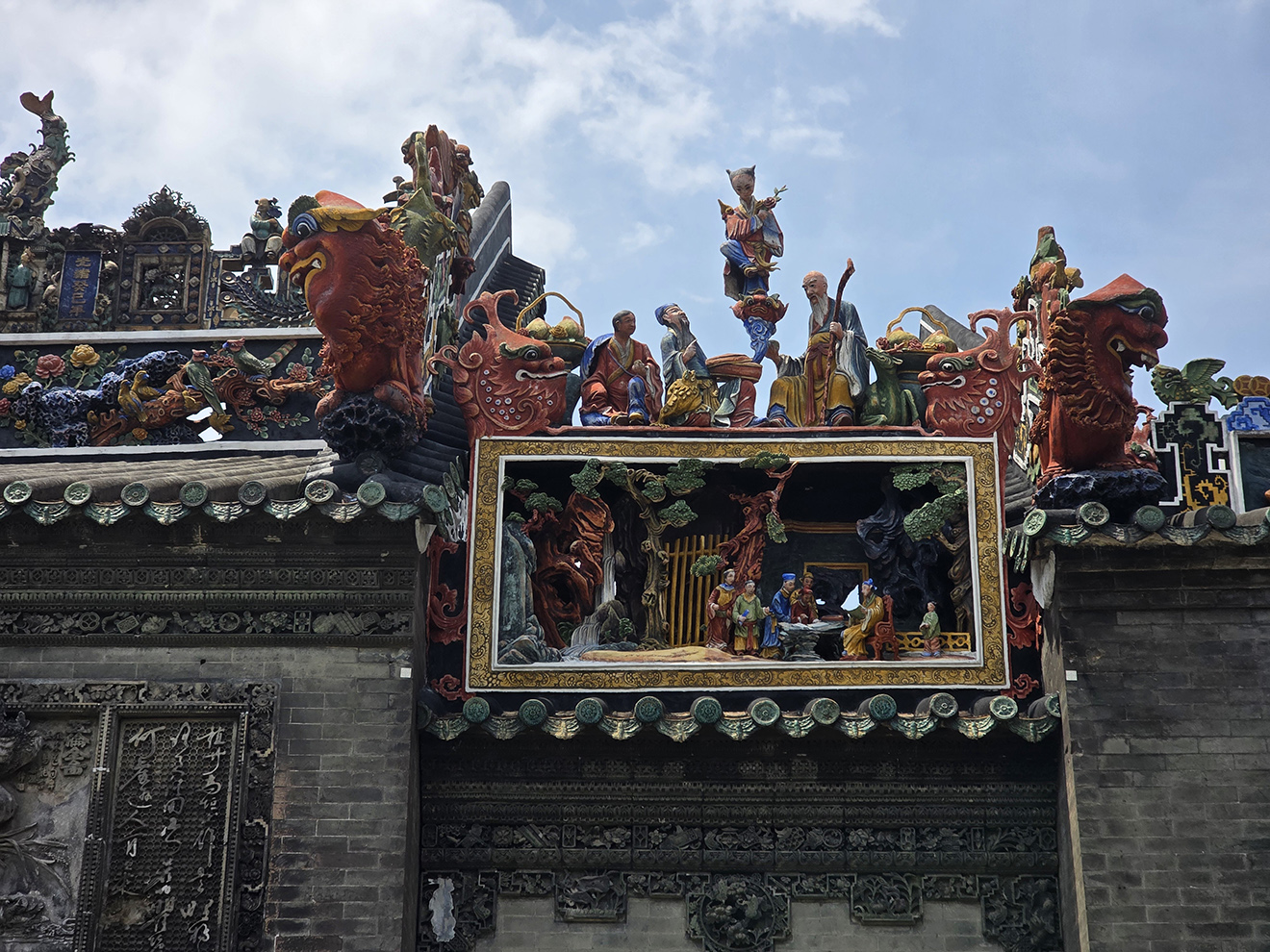
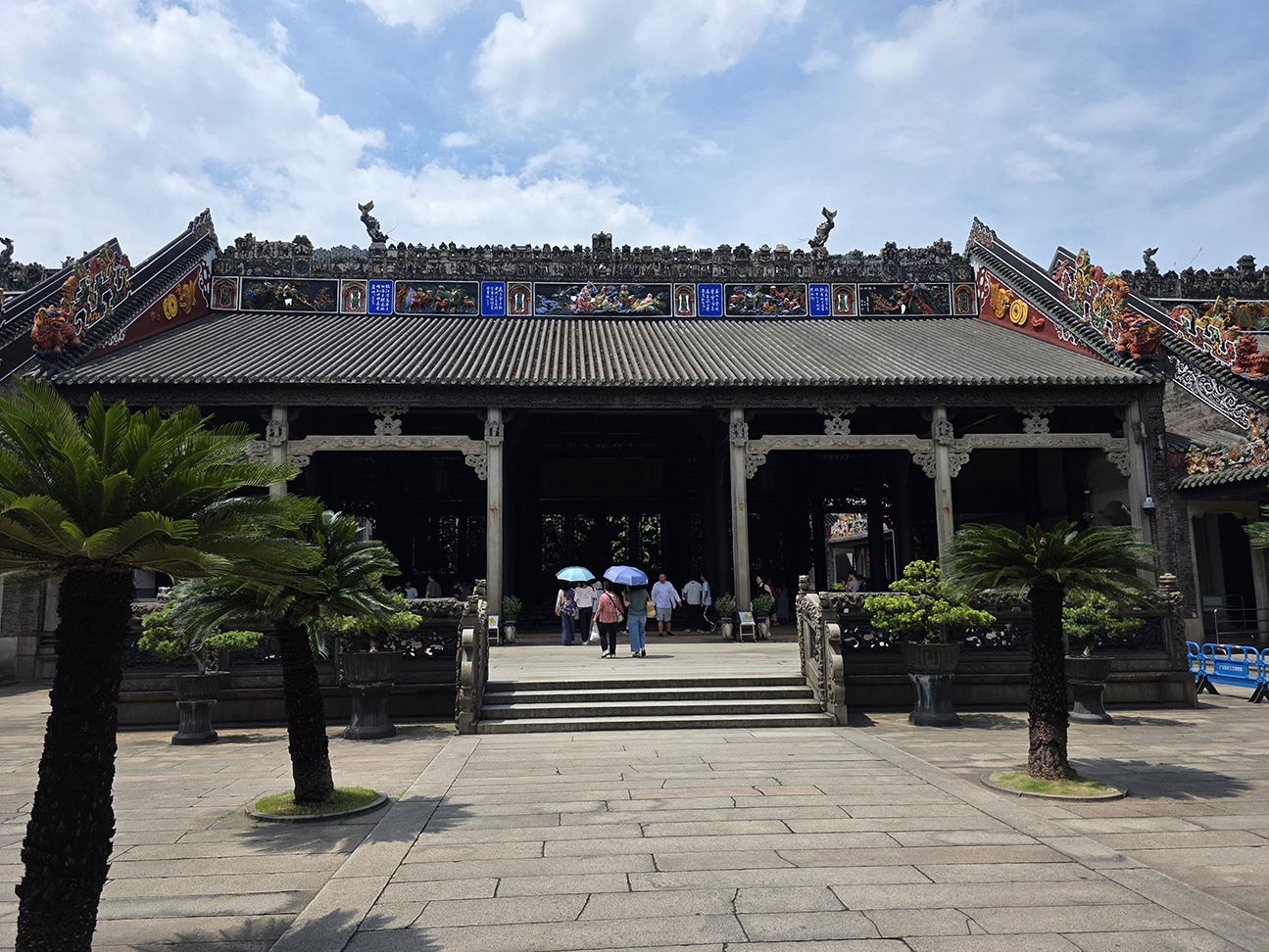
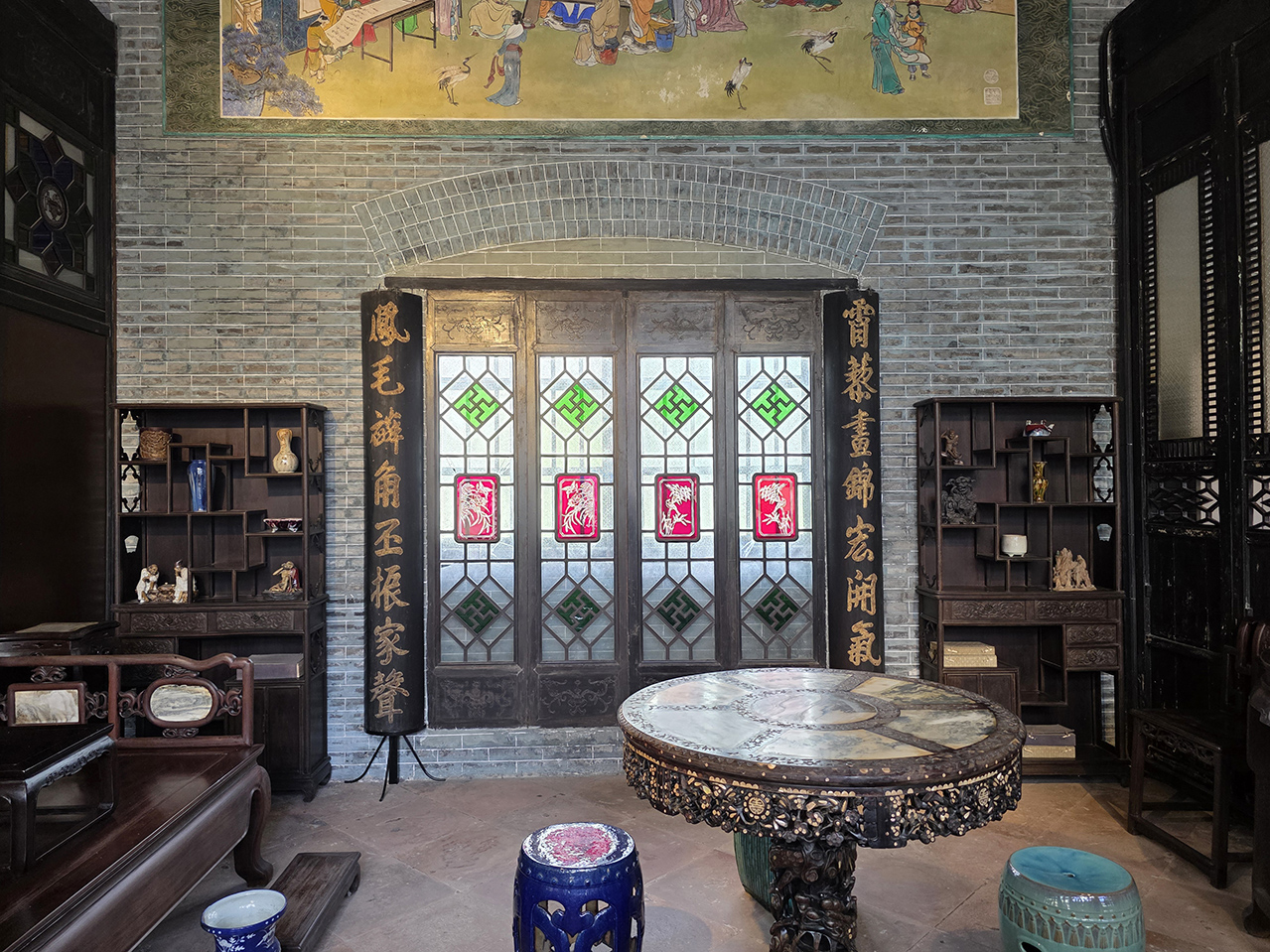
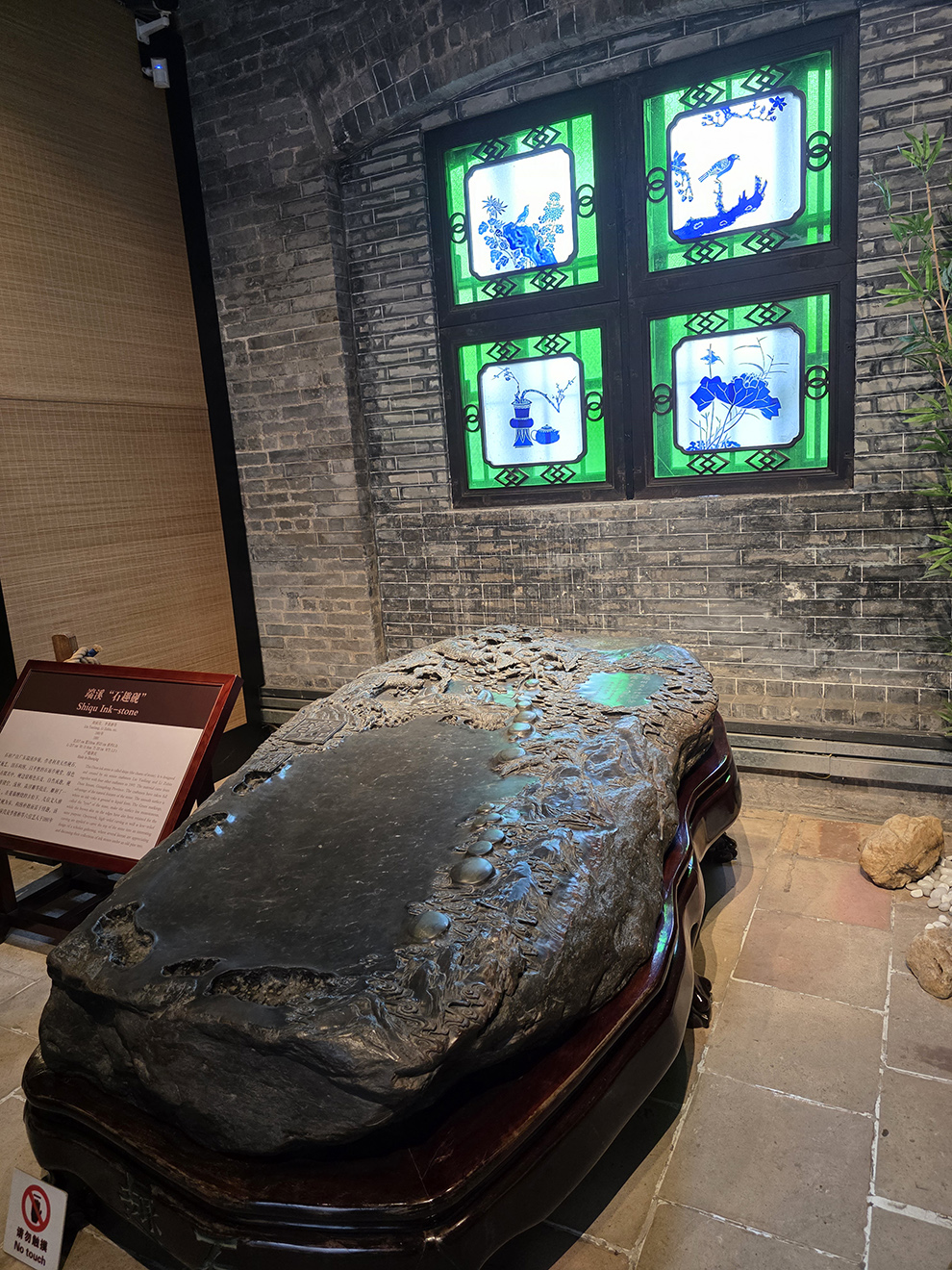
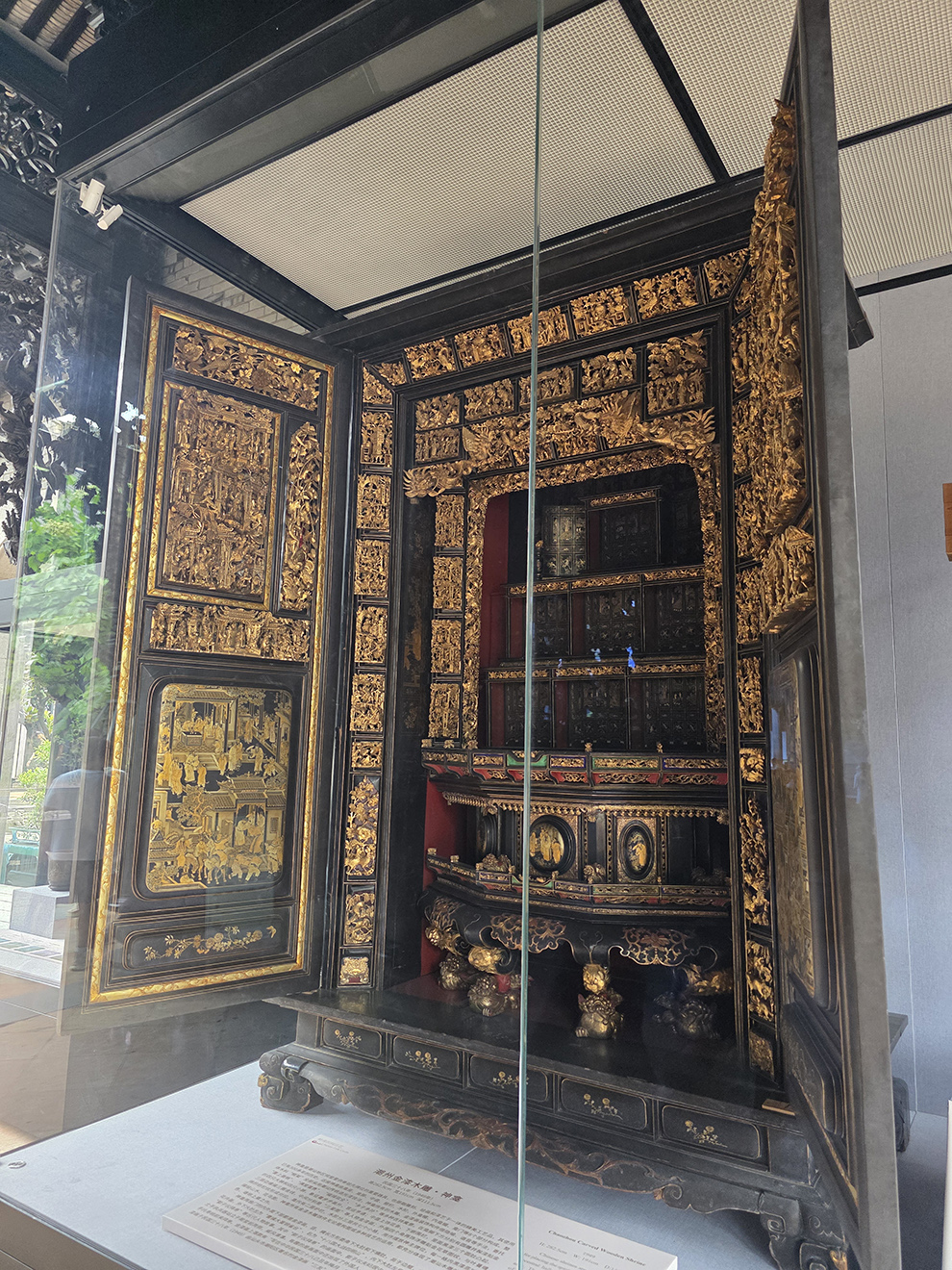
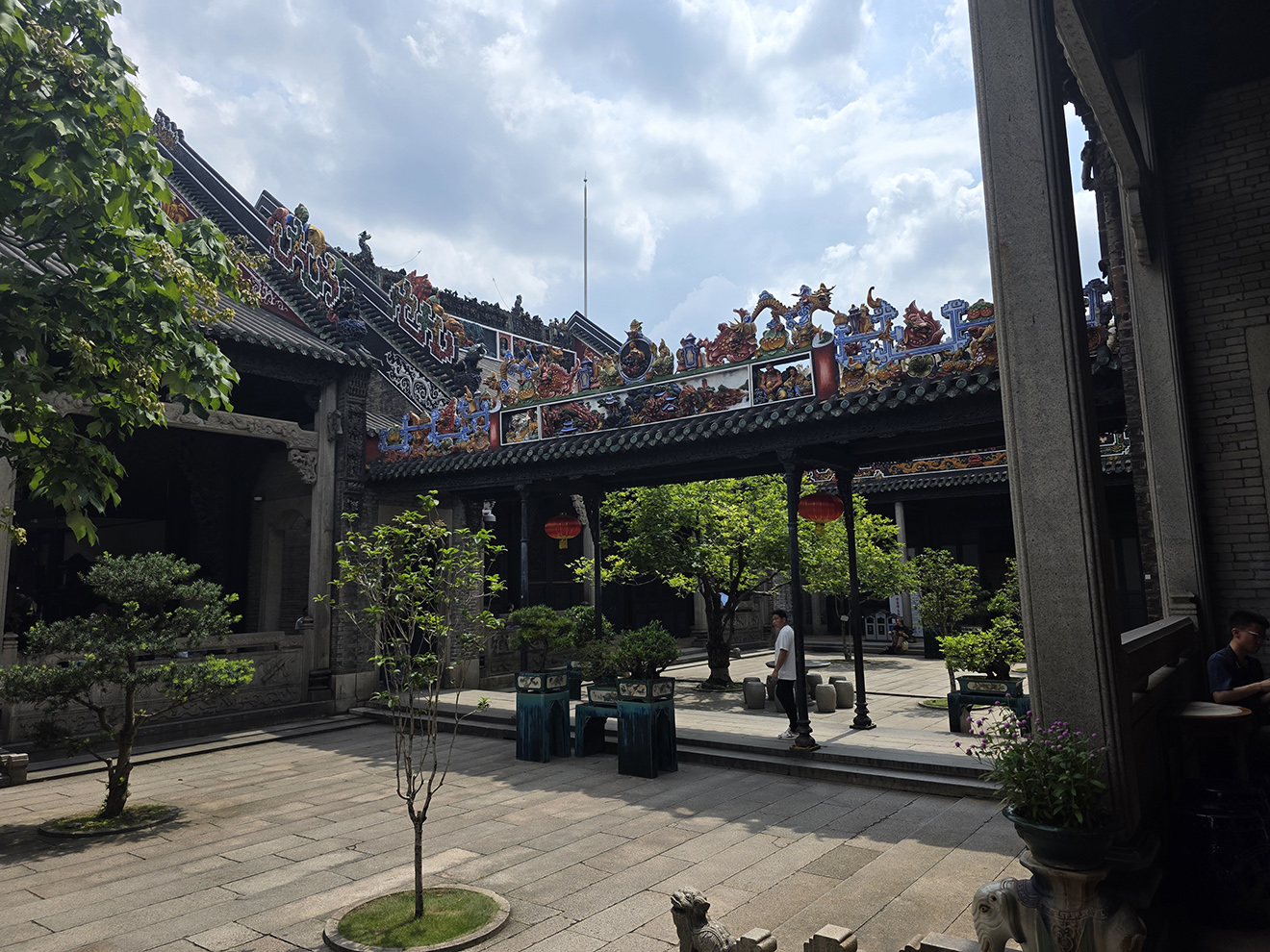
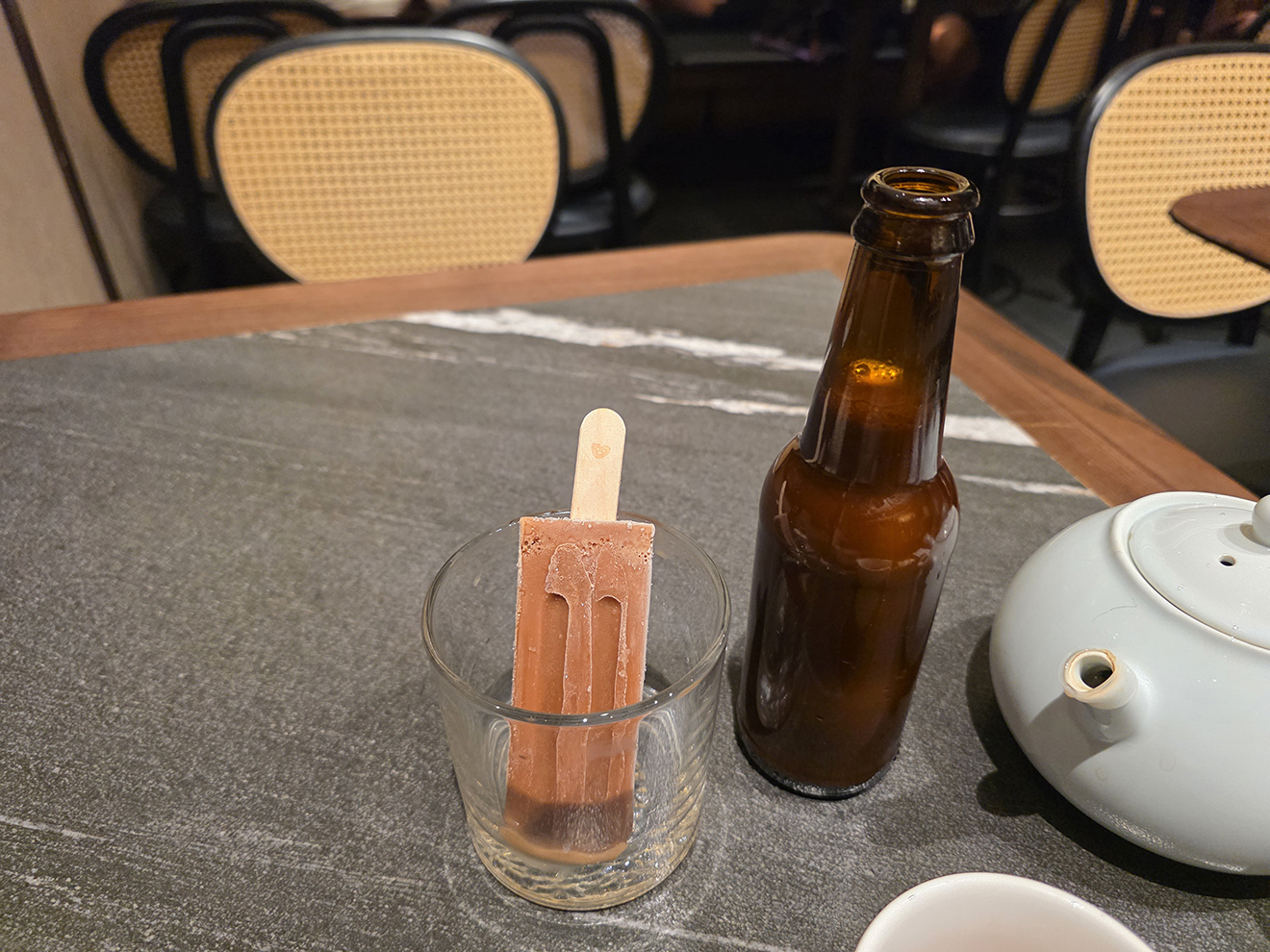
With the day's sightseeing done, we headed back to the hotel to rest for a bit before dinner. We were all going to go out for dinner together when Matt decided that he didn't want to go in the stroller, or use the child leash, or even hold my hand and walk. Problem is, the area was way too crowded and busy for him to run off on his own and, after a long and fairly taxing day (mostly thanks to Matt's earlier temper tantrums), I didn't feel up to carrying him all the way to the restaurant and back (if he would even allow that). He threw a fit and absolutely refused to calm down no matter what, to the point where Connie and Zack had to go off to dinner on their own while I stayed in the hotel room with a very upset Matt. He calmed down eventually, and when Connie and Zack got back she was able to feed him some bread while I headed out to get my own supper. By that point it was getting late so I decided to stay close to the hotel and see what I could find in the attached mall. There were quite a lot of restaurants (and a Madoka Magica pop-up, strangely enough) though I think at least 50% were various types of hot pot, which I wasn't in the mood for. A lot of places also had very long lines. In the end, I settled for another Cantonese dim sum restaurant which looked decent and wasn't especially busy. I was kind of burned out and not super hungry, so I ended up with some congee and a couple types of steamed buns I hadn't tried yet. Also this milk tea in a beer bottle which you were supposed to pour over the popsicle (also made of milk tea) to melt it. The tea itself was pretty normal, but the presentation was fun. After that, I was ready to get some rest.
Random China Comment: Internet in Guangzhou
I'm not sure if it's this way in Guangzhou as a whole, but our hotel appeared to channel its internet service through Hong Kong, which meant I could access a lot (though not quite all) of the sites that the Great Firewall normally blocks directly on my laptop without having to resort to workarounds. That made it a lot easier to some work done. Though it also helped that we had a suite with fully separately living room and bed rooms, so I could easily stay up and work after the kids were in bed. I should note that, while a lot better than what's normal in mainland China, the internet access was still somewhat limited as Hong Kong is also controlled by the Chinese government. Its rules and circumstances are a bit different than that of the rest of the country though, from what I've heard, things are becoming increasingly locked down there so there may not be much of a difference in another year or two.
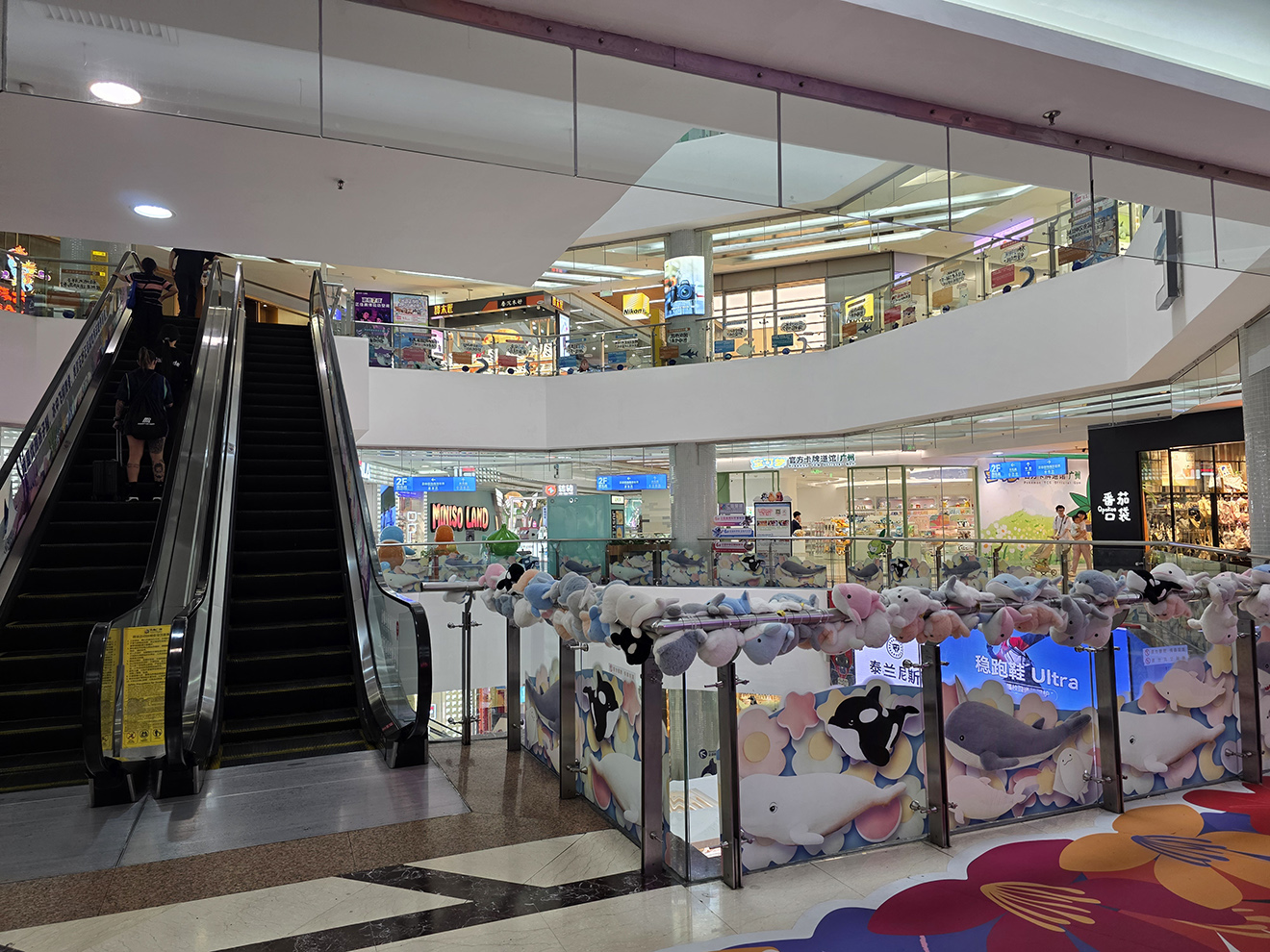
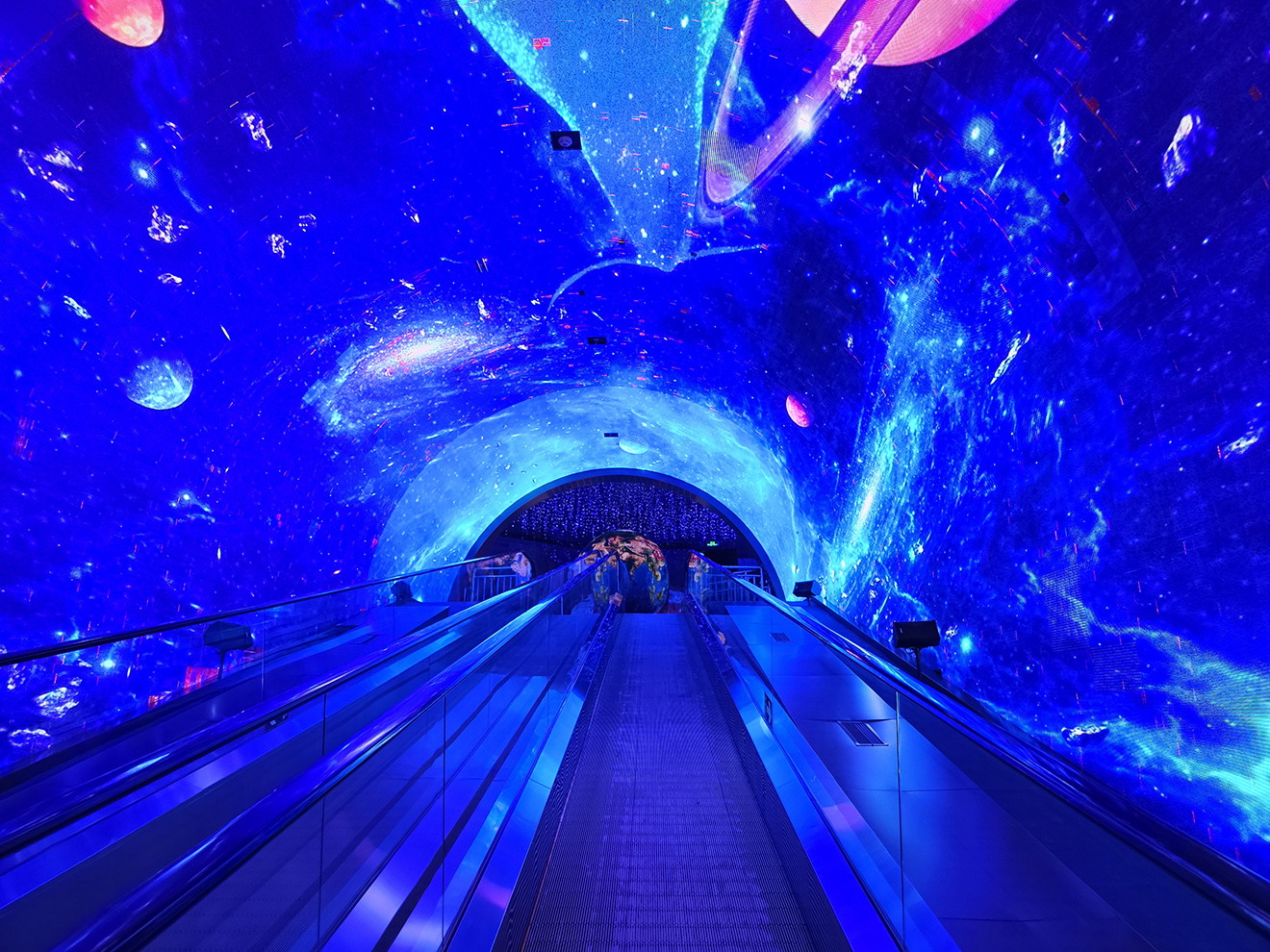
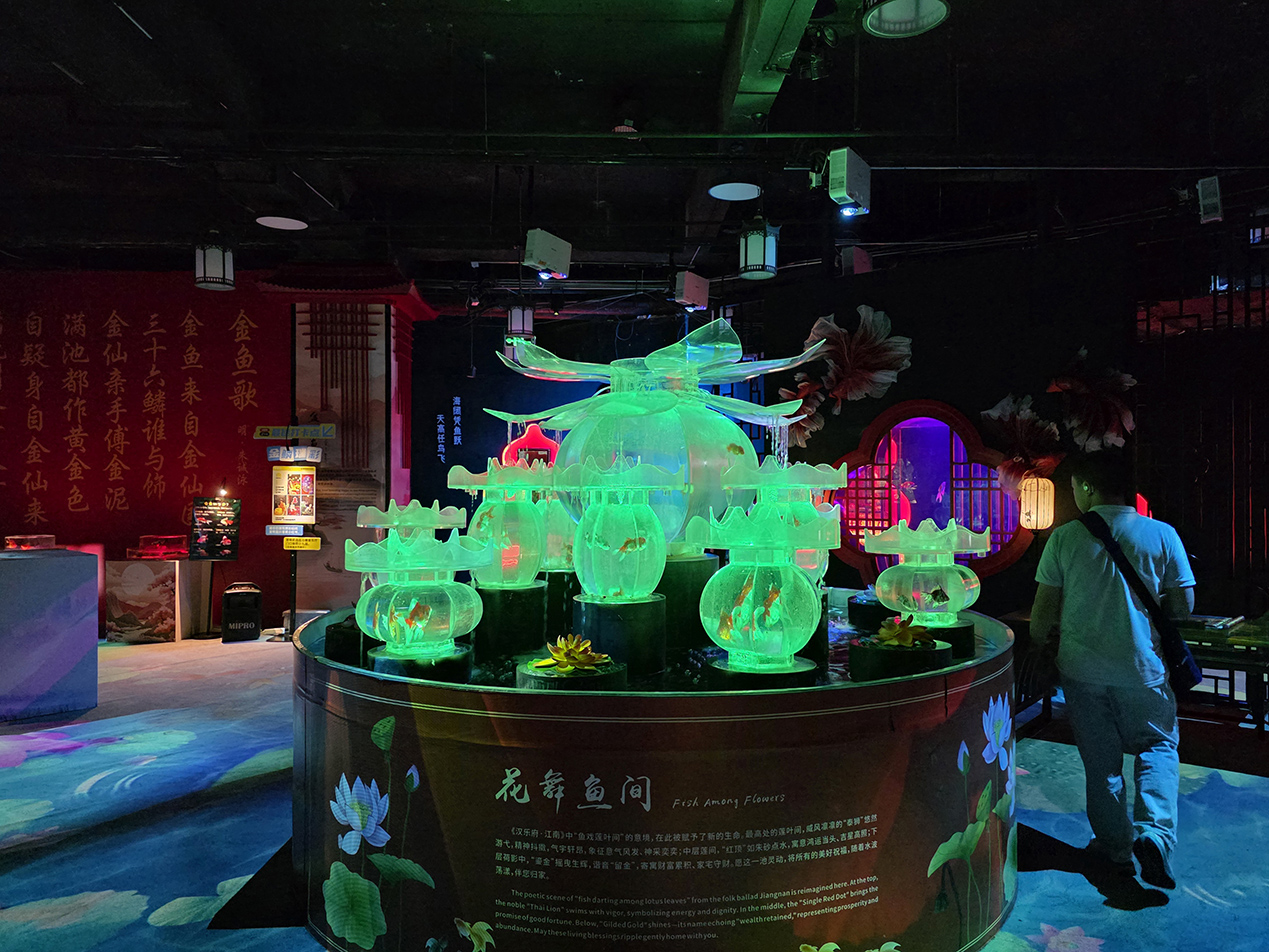
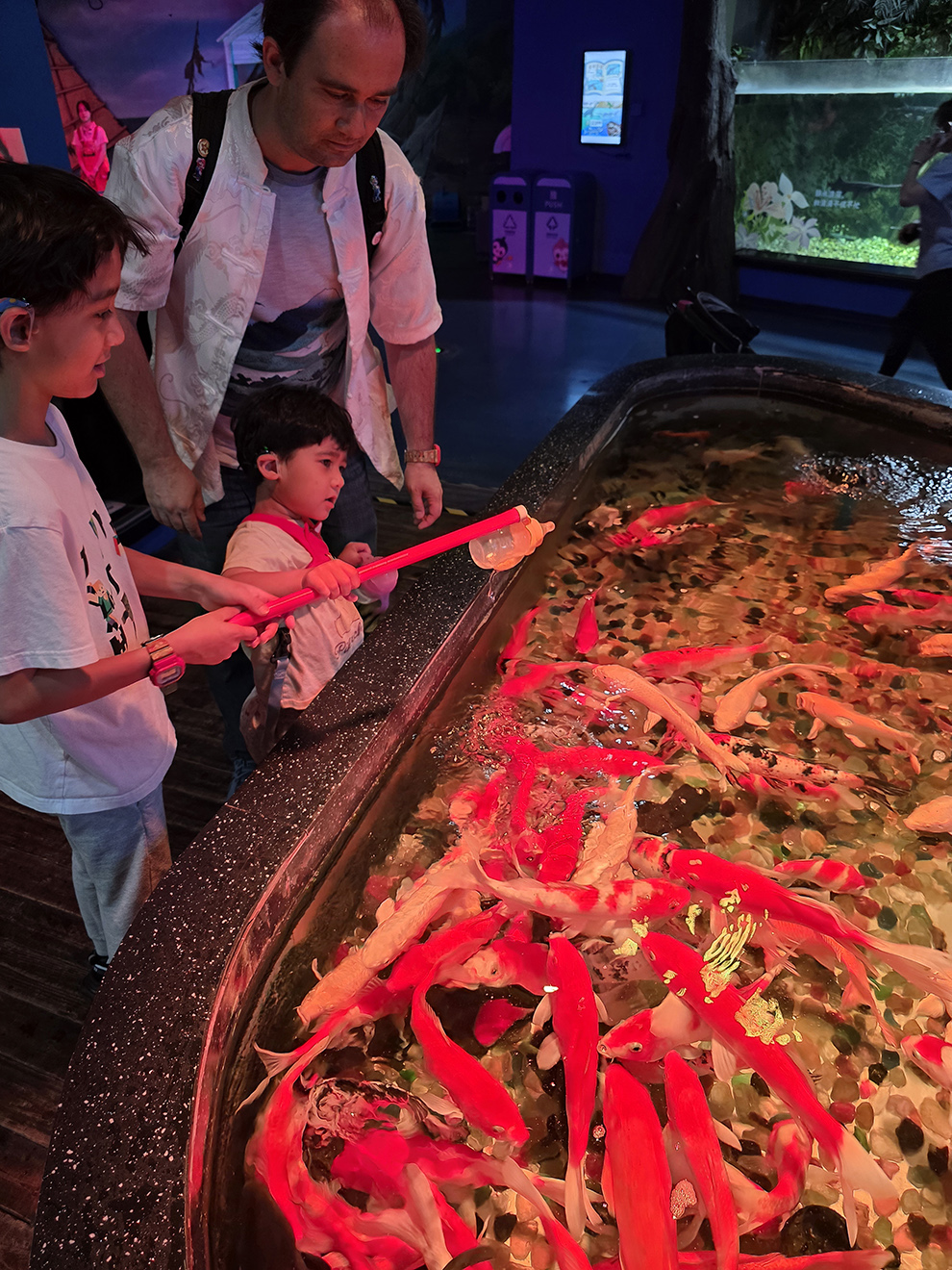
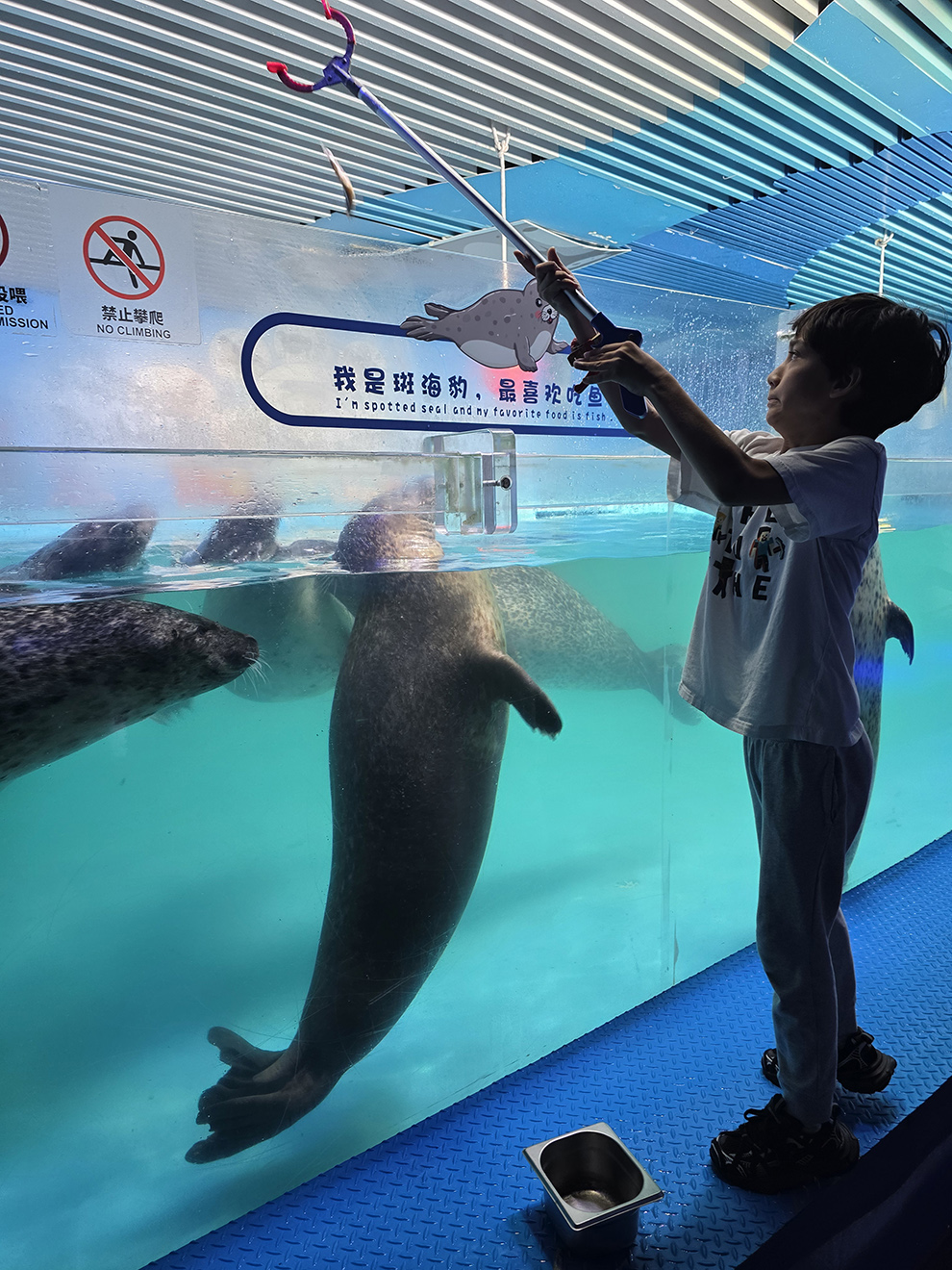
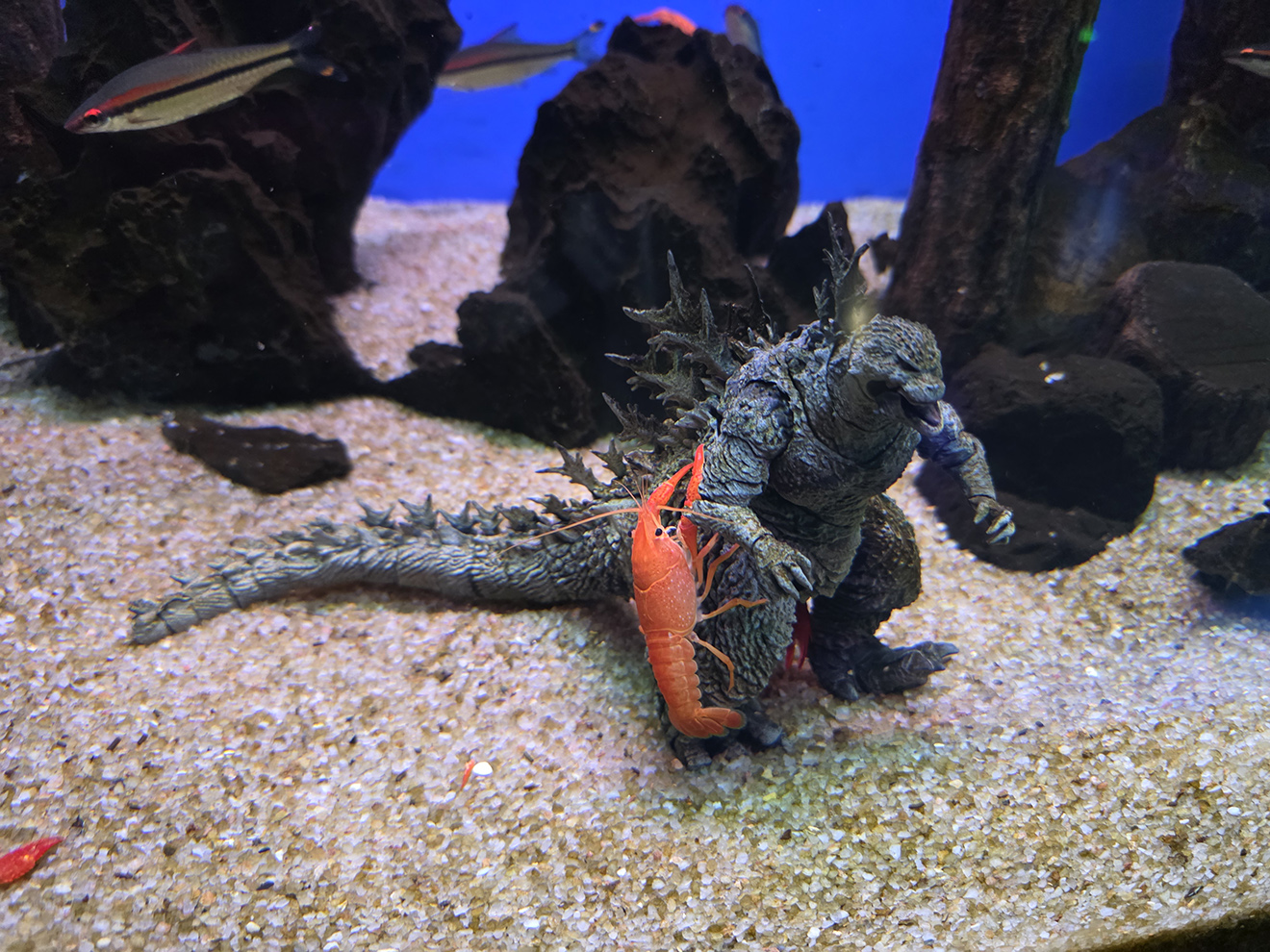
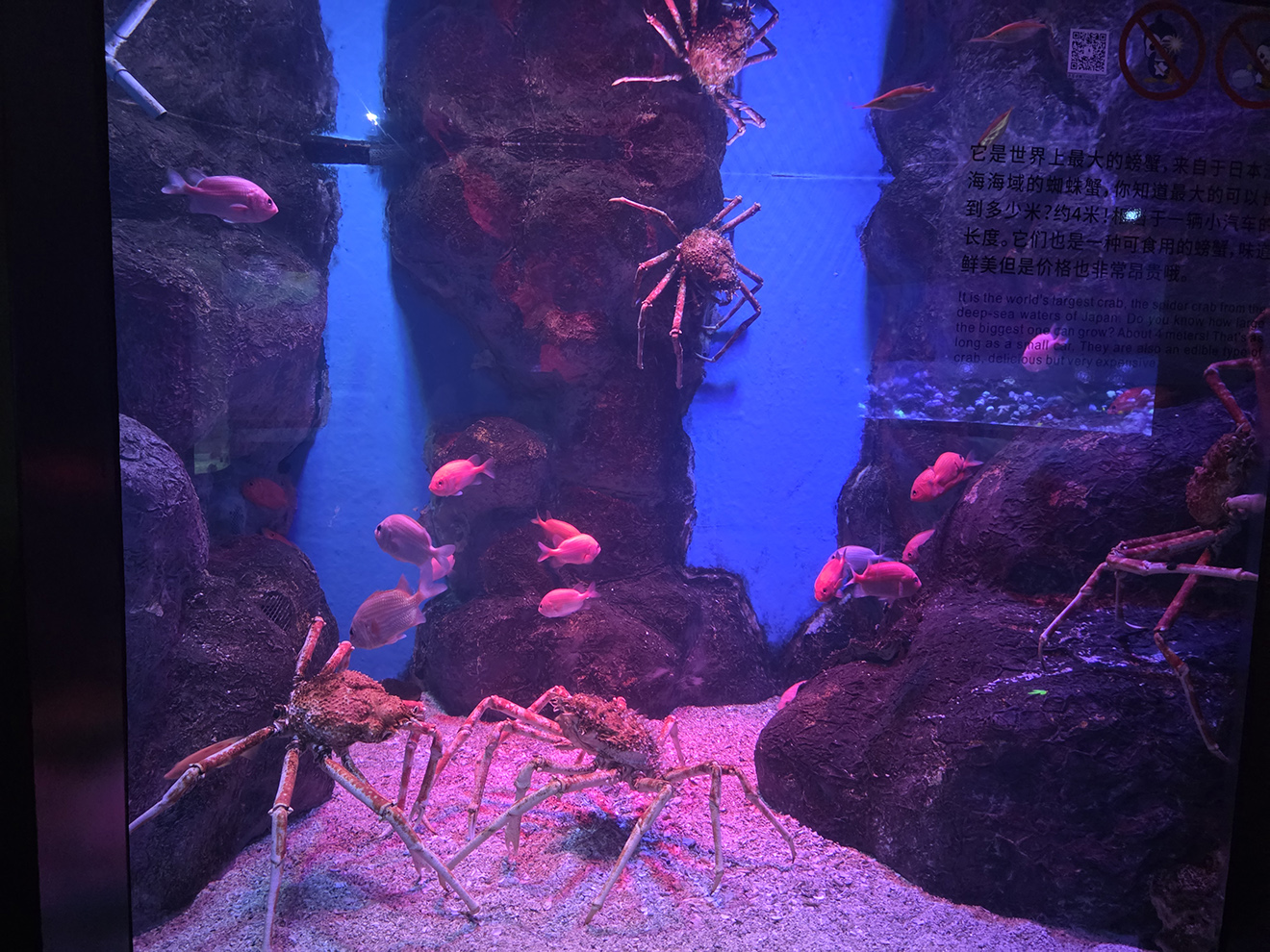
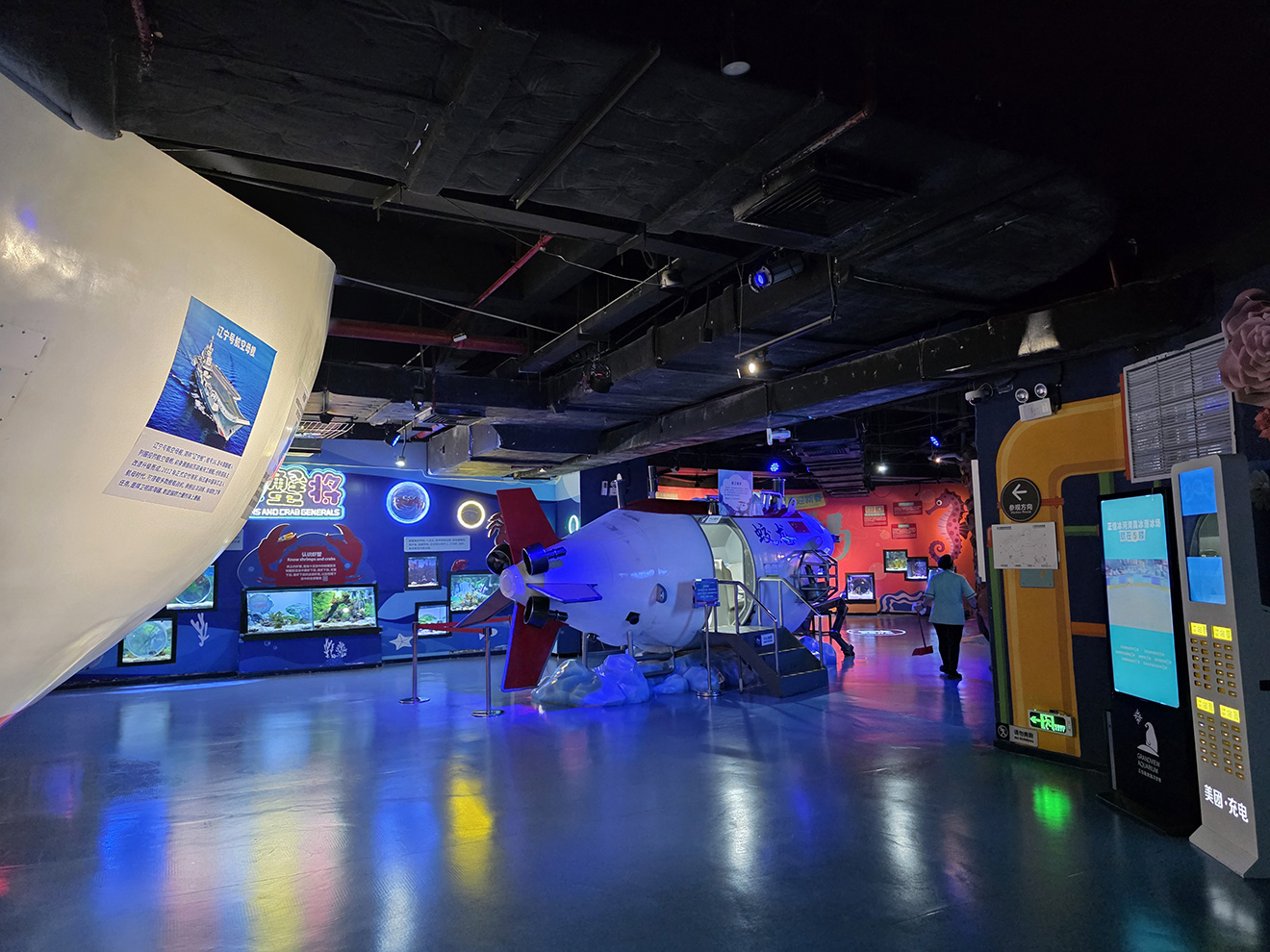
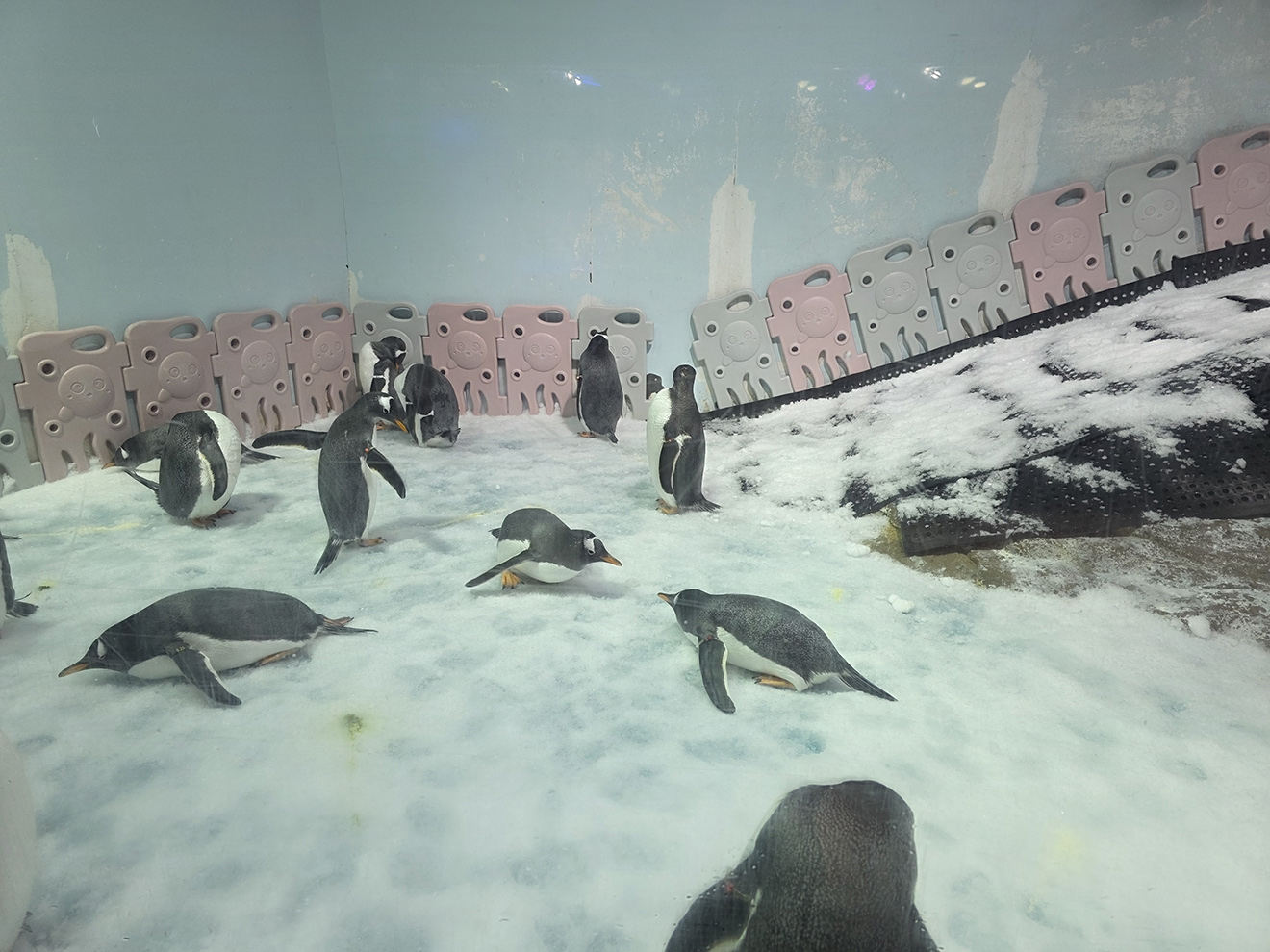
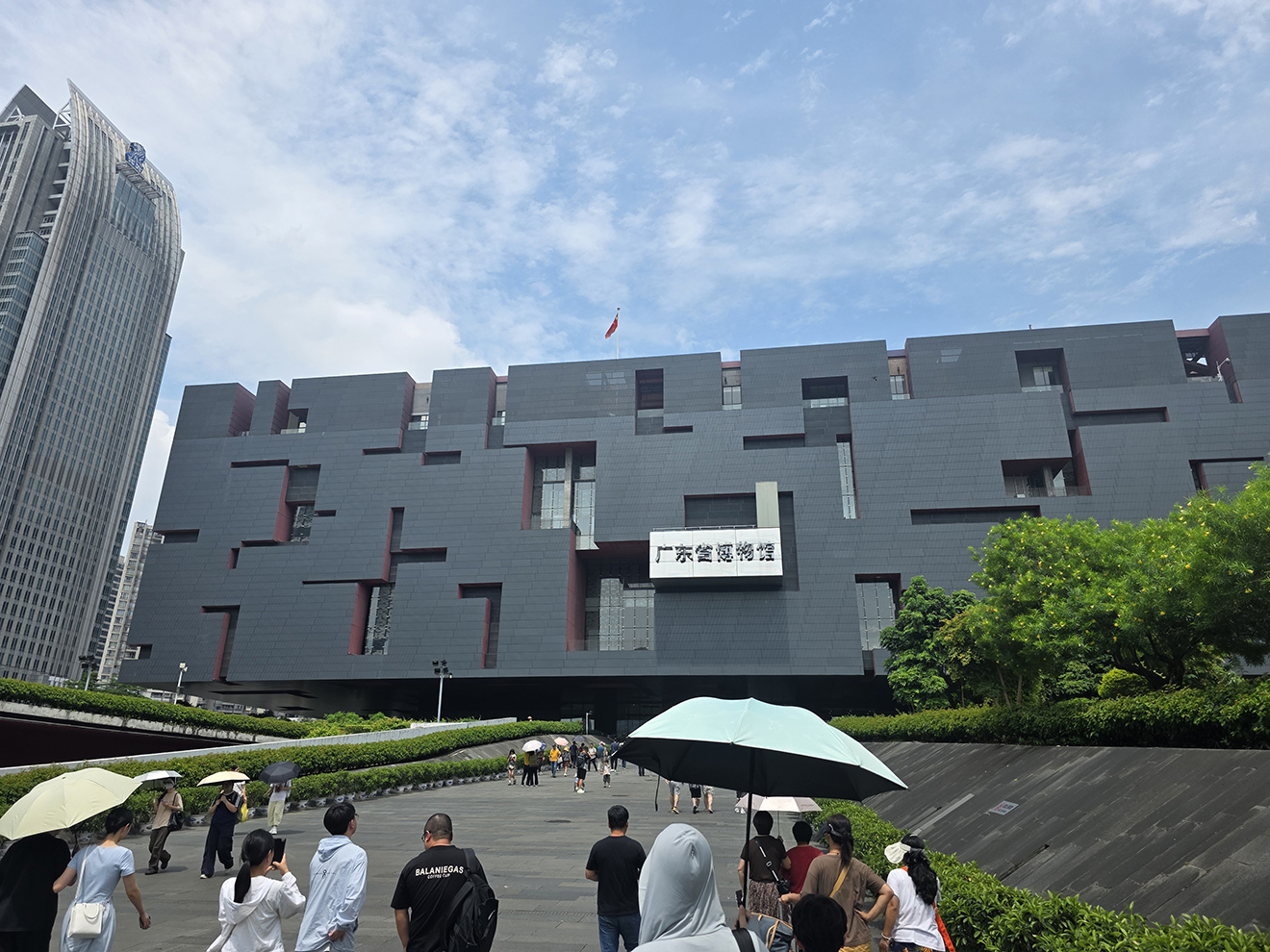
Once we finished, it was time for lunch so we tried a restaurant Connie wanted to visit in the same mall. It was pretty good, but I wouldn't rank it as high as the ones Zack, Matt, and I had gone to the previous days. After that, Connie headed off to her appointment and Melody took the kids and I to the Guangzhou Museum. The museum displays featured a mixture of natural history (no matter where you go, everyone likes dinosaurs) and local history, including sections dedicated to local rocks and minerals, medicinal plants, and wild animals. It was a pretty nice museum, and the displays were well done, though I didn't have time to look at anything in too much detail since I had to keep moving so Matt would stay happy. Thankfully, Melody was able to stay with Zack and answer his questions as they moved at a slower pace.
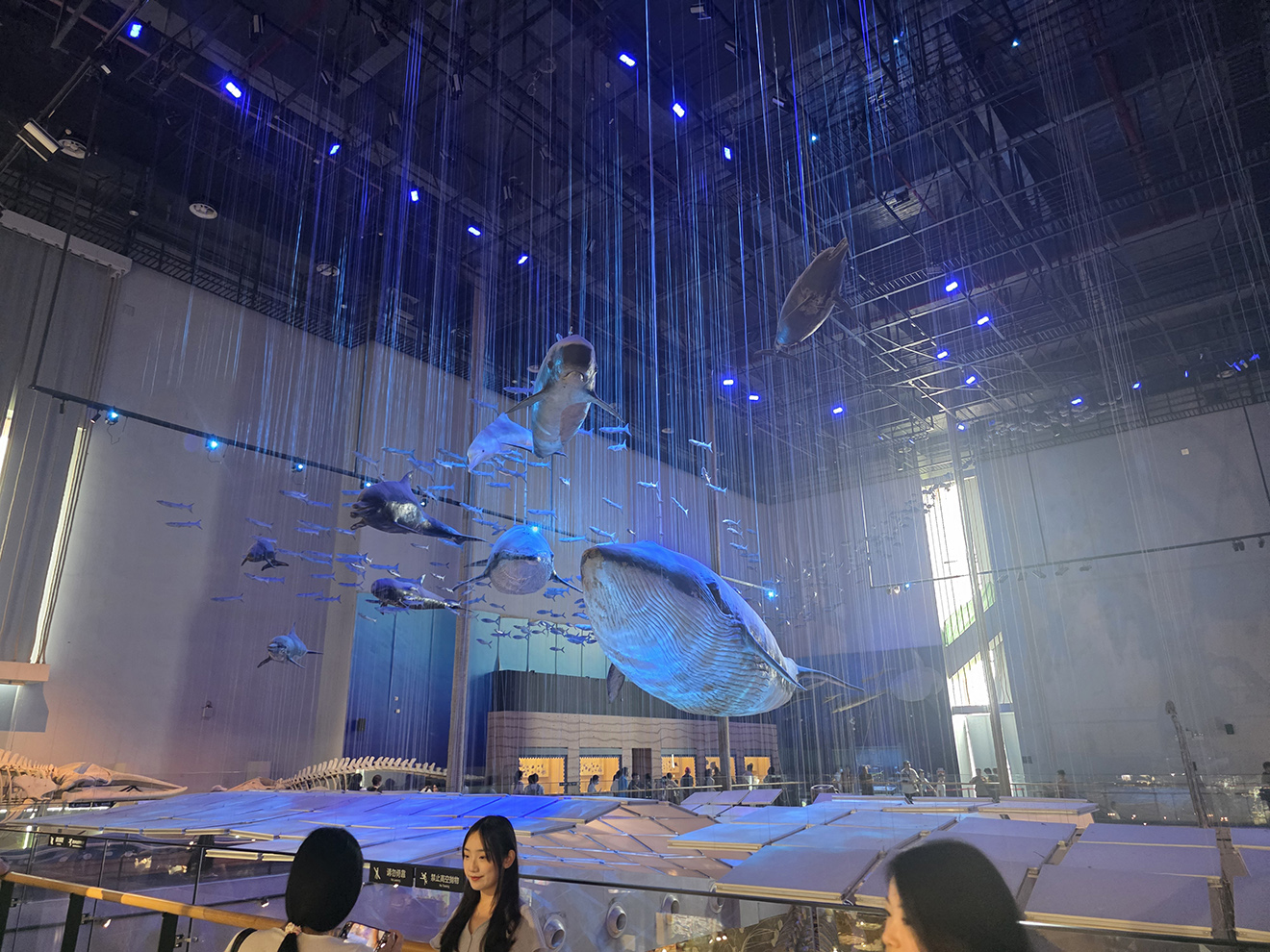
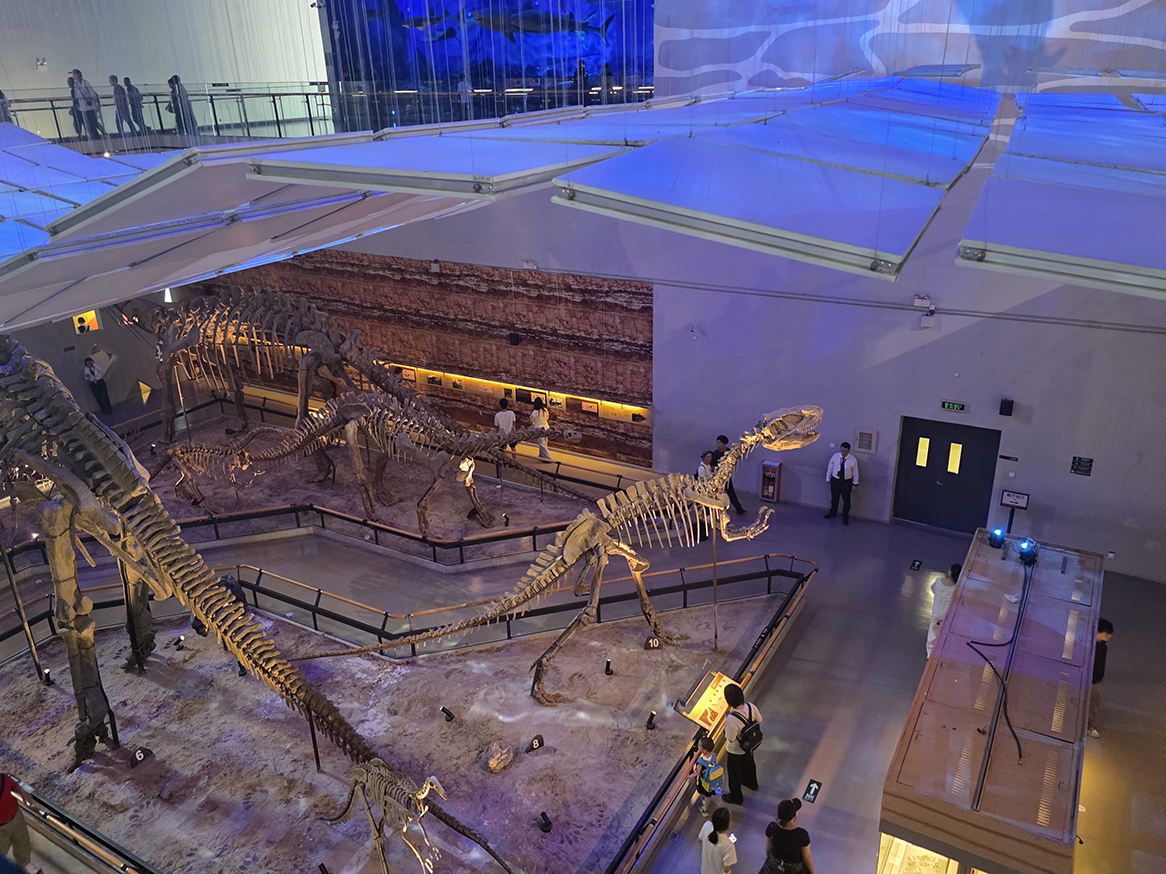
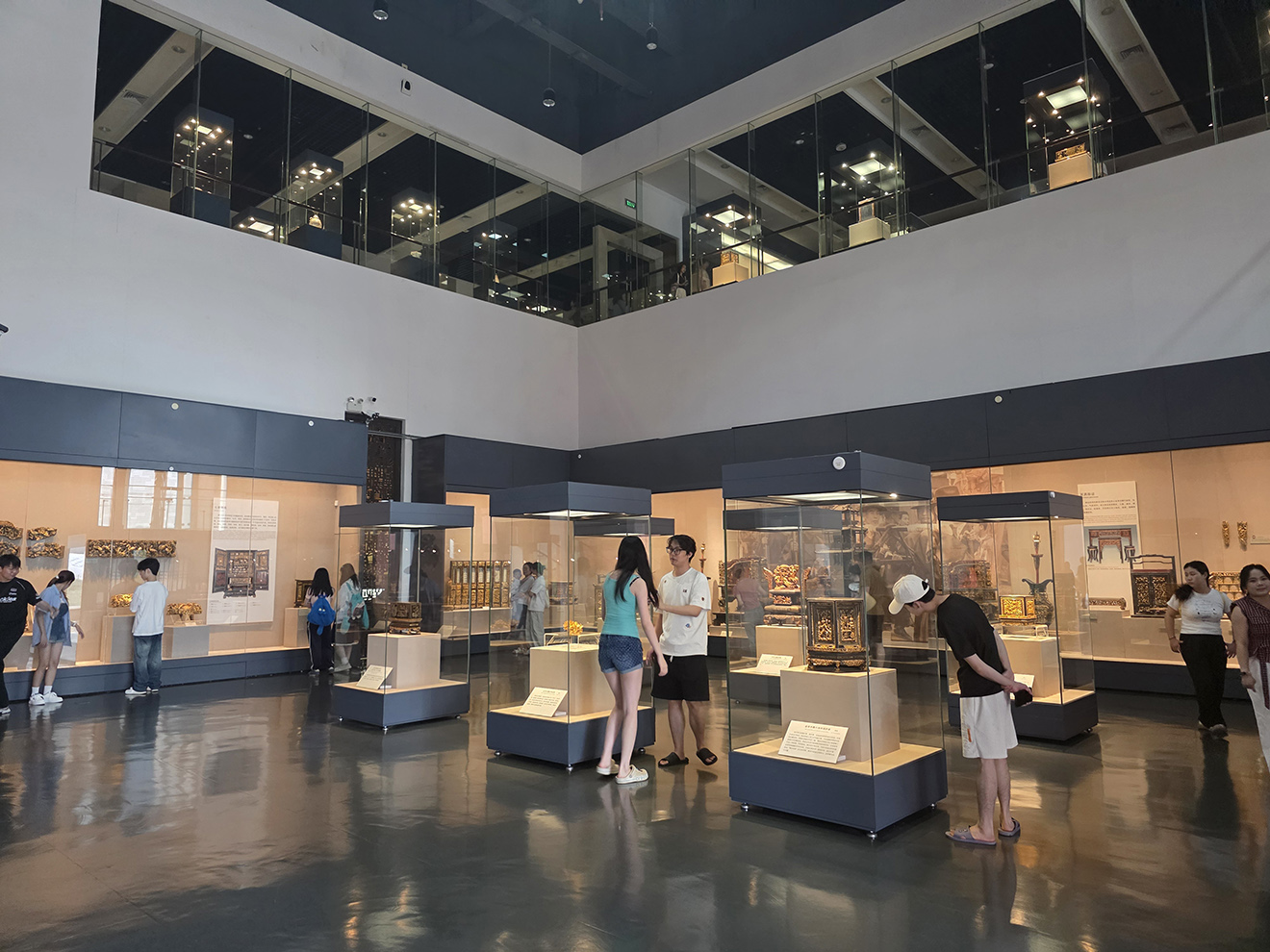
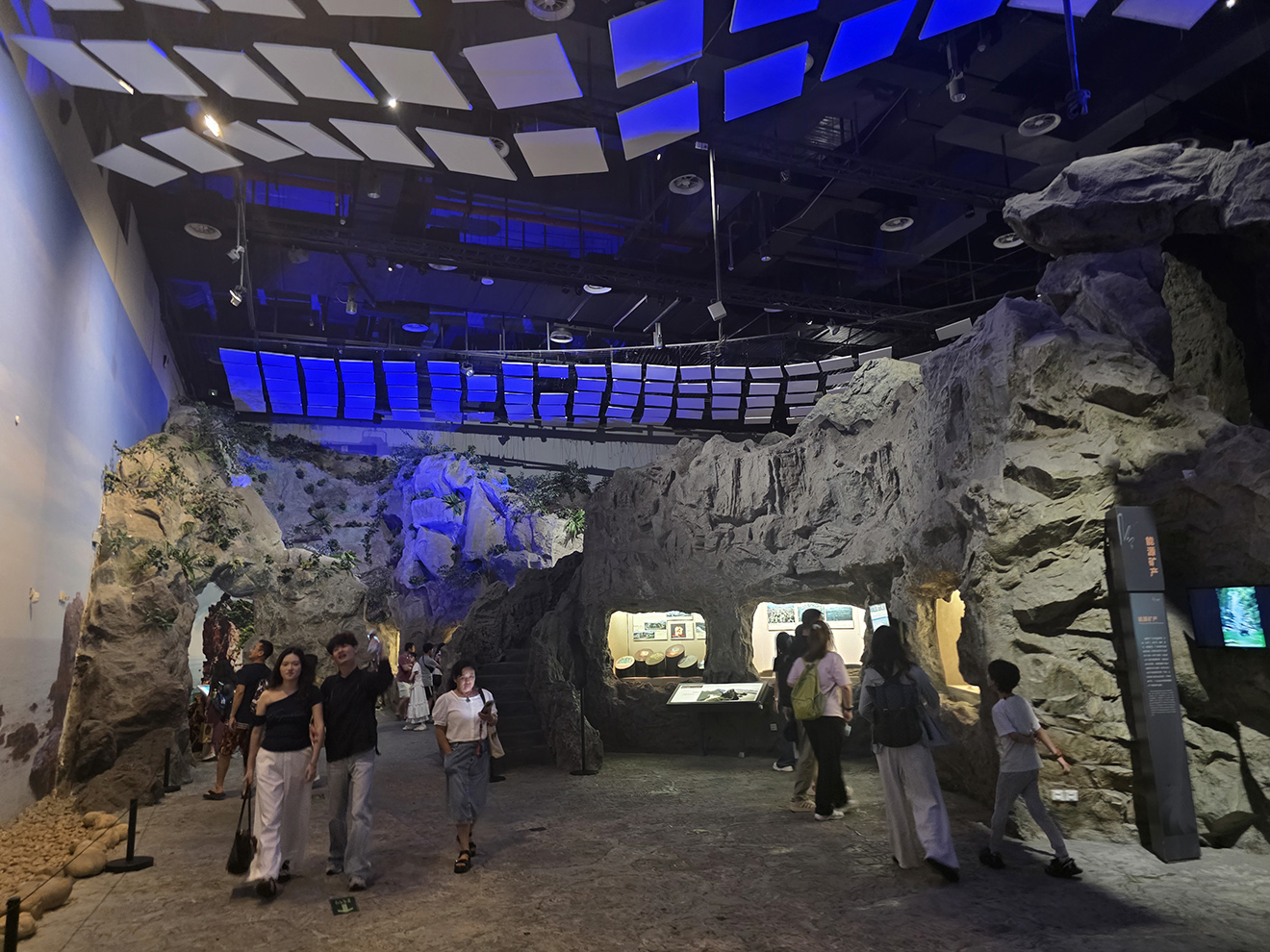
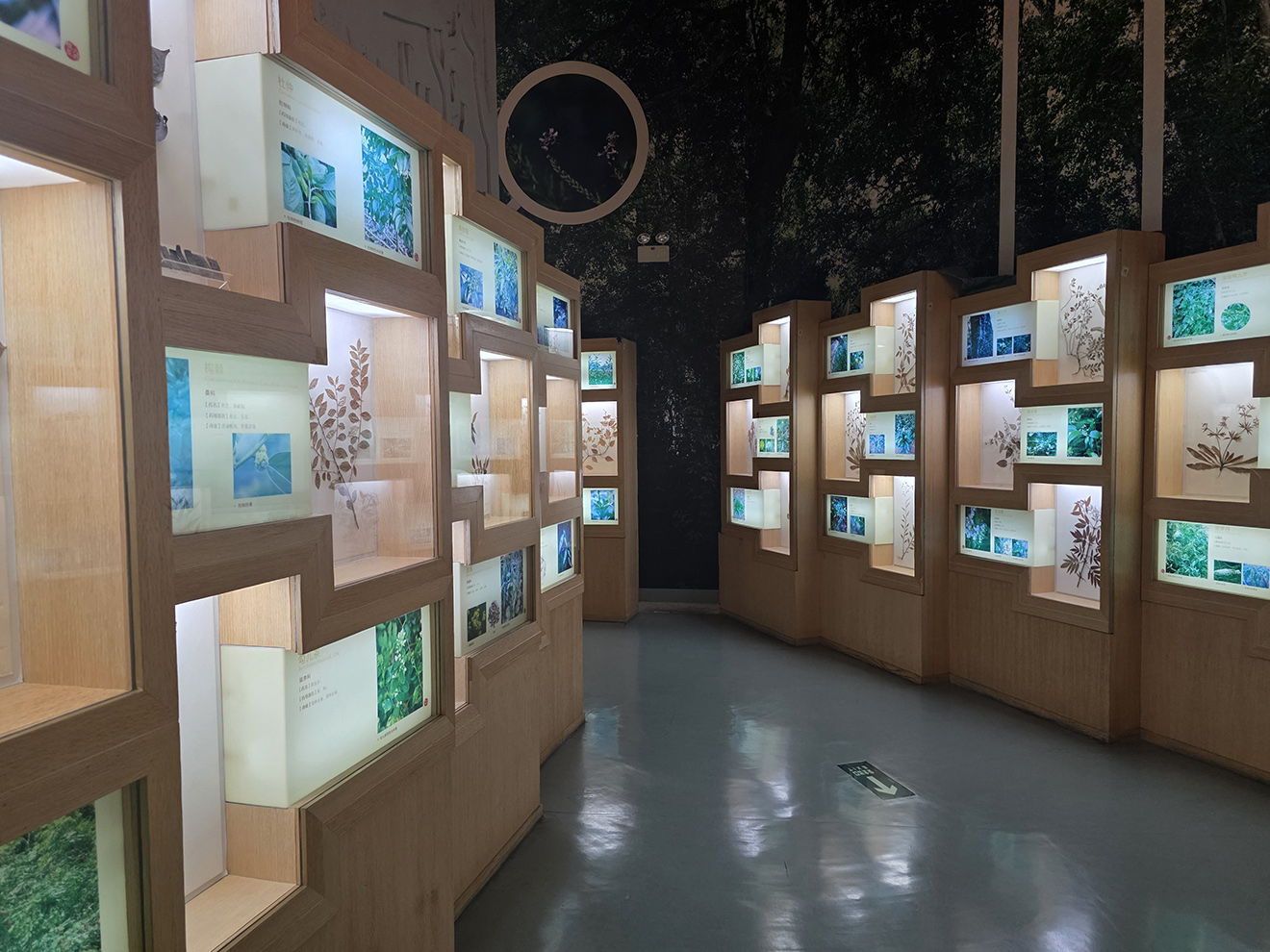
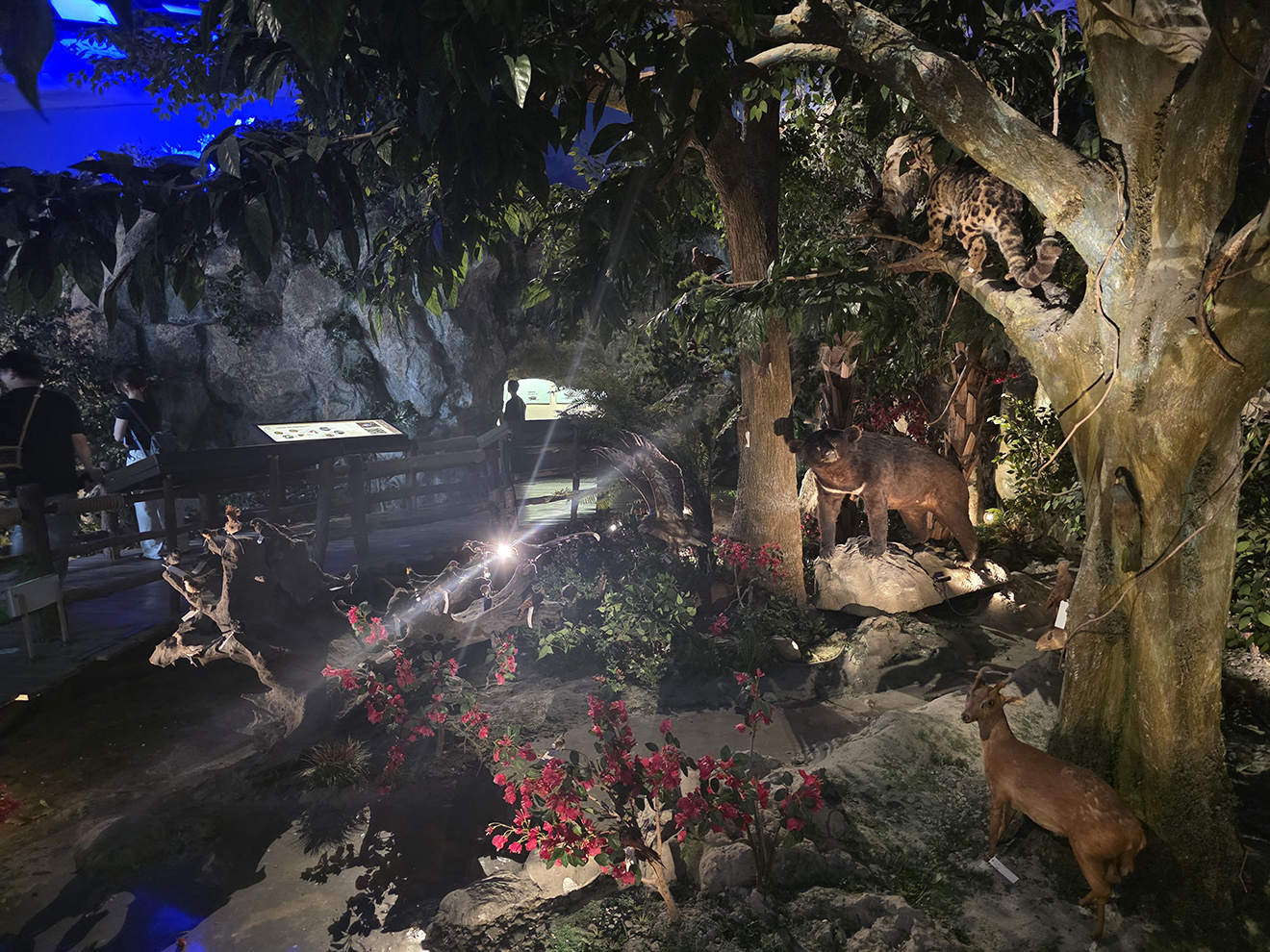
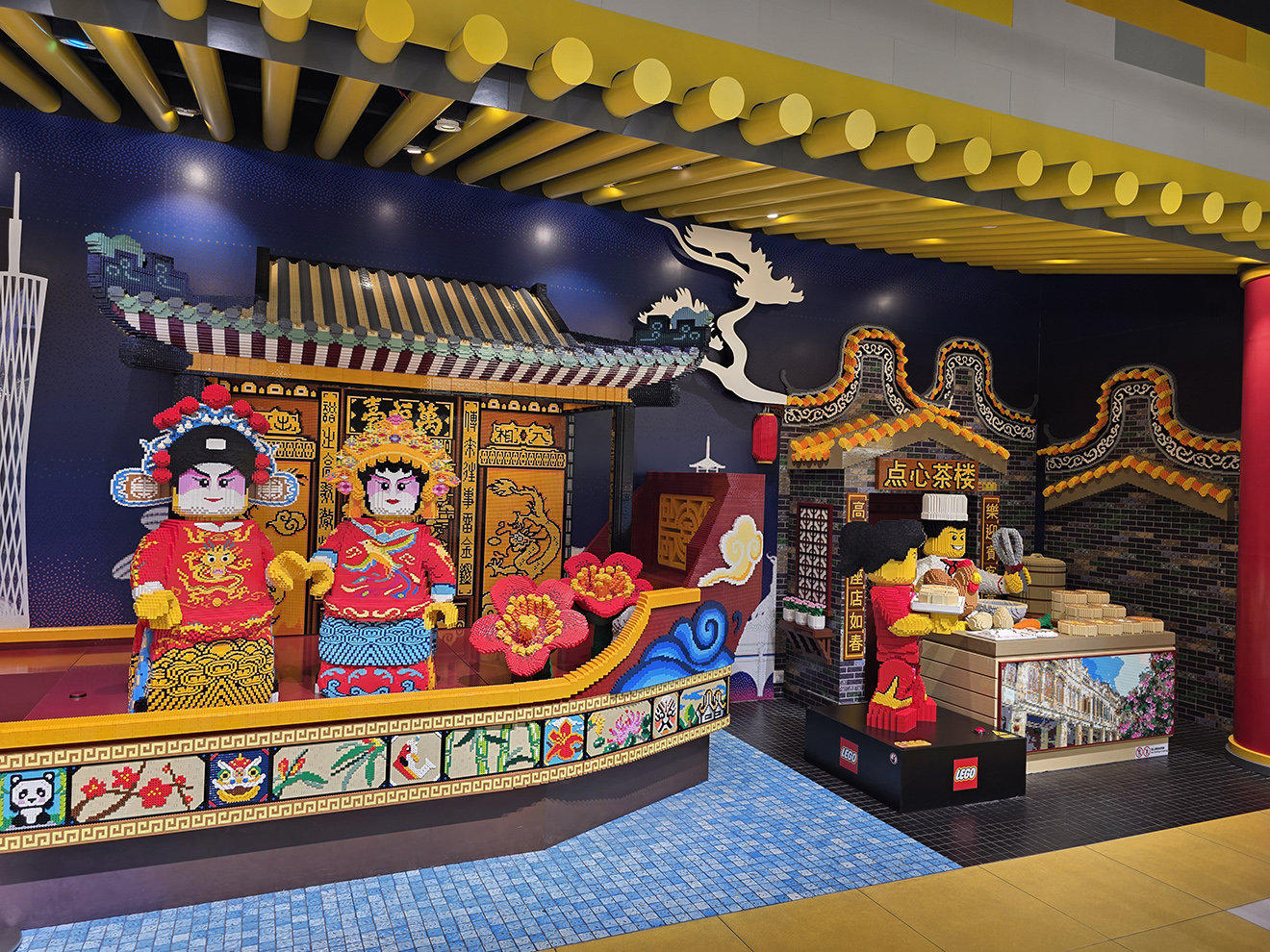
After that it was back to the hotel to meet up with Connie for dinner. There was a Nanjing Da Pai Dang in a mall not too far away, so we headed over there, stopping in a Lego Store along the way to admire the Guangzhou themed displays. Fortunately, Matt was in a somewhat better mood, so we had a pretty nice meal, though we did have to walk back to the hotel in the rain.
Random China Comment: Passports Please
When traveling in foreign countries, it's normal that you need to show your passport to check into a hotel. China takes it a bit further, requiring passports to use the trains (unlike Japan or Europe). Guangzhou though, goes even further than that. Almost every single tourist attraction we visited there required us to show our passports in order to buy tickets. Yes, even the zoo and aquarium. I don't really get why, and I haven't had to do that anywhere else I've gone in China. Maybe it has something to do with how close the city is to Hong Kong? Though that still doesn't really explain anything... Anyway, it's a bit of an inconvenience, but not too big of a deal if you're aware of it. Just make sure to keep your passport on you when you're out and about or you won't be able to do much.
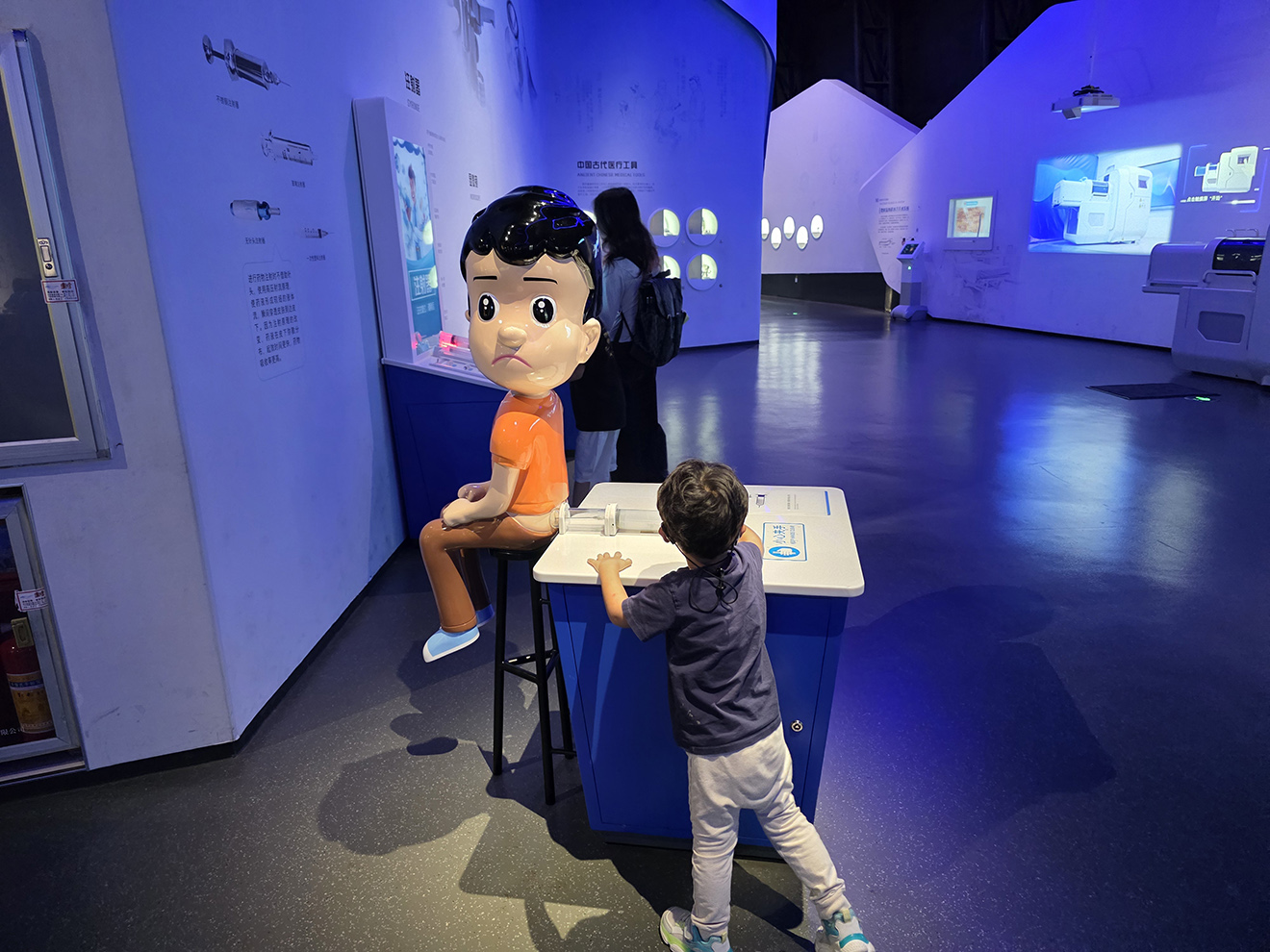
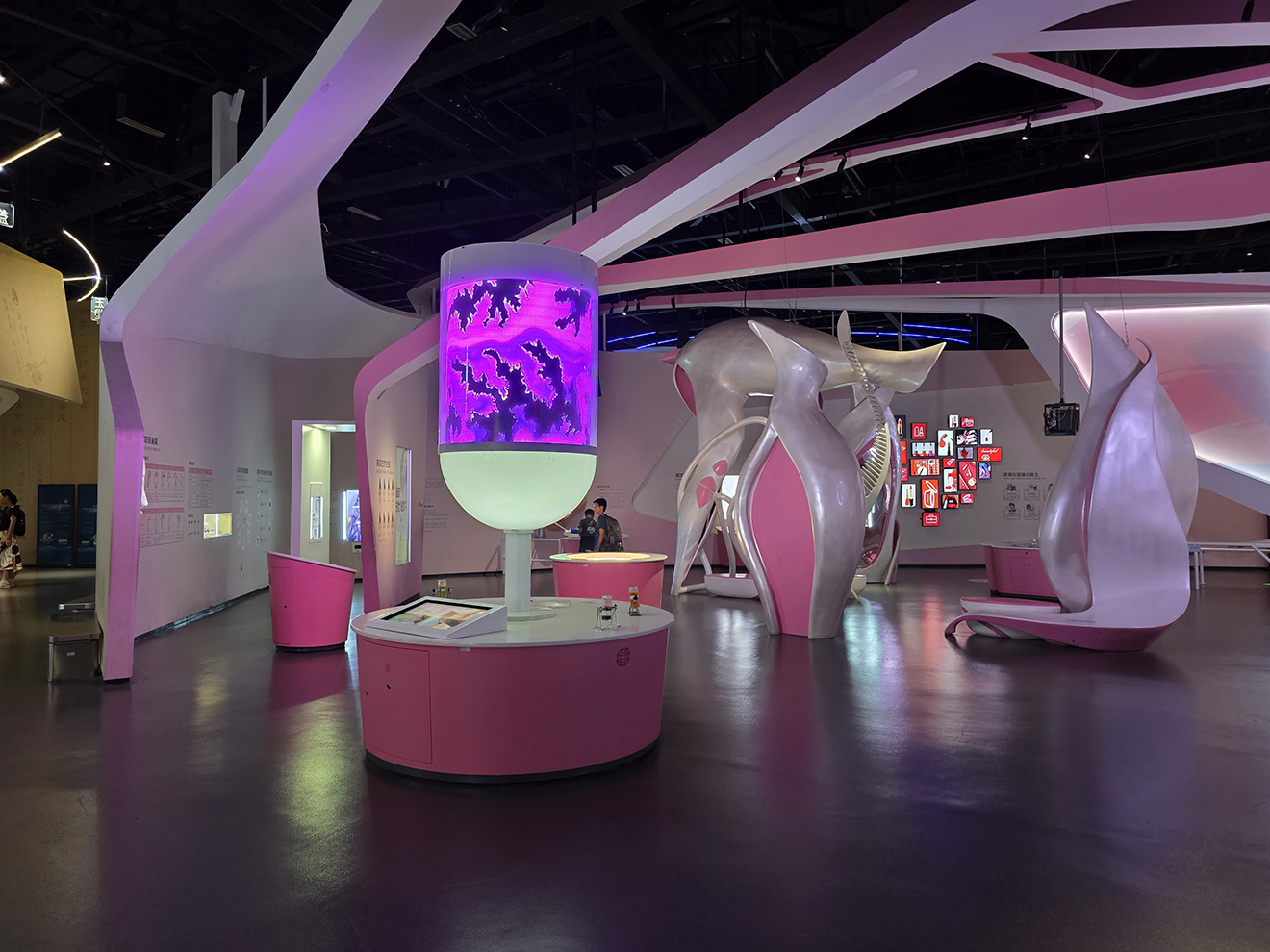
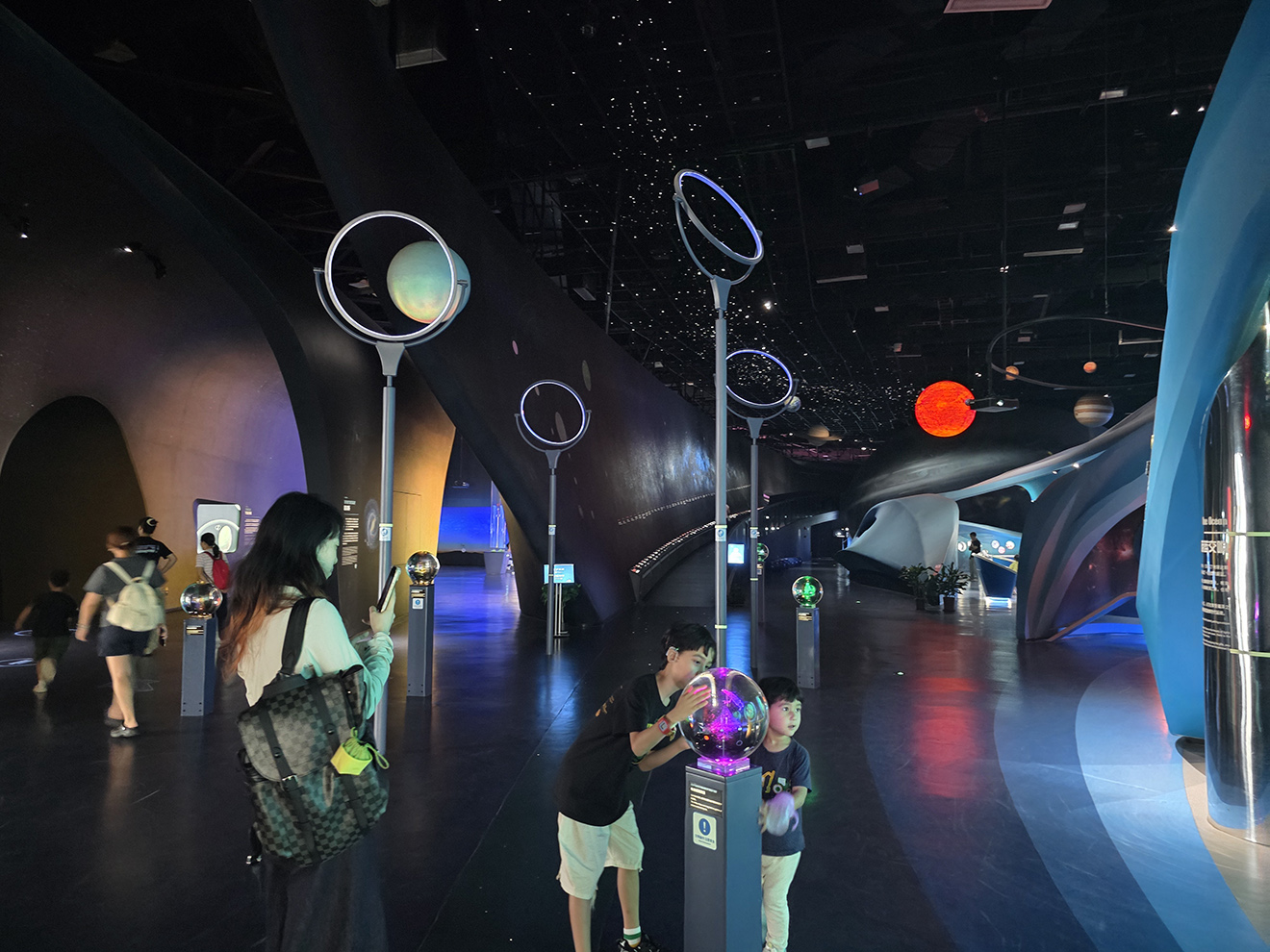
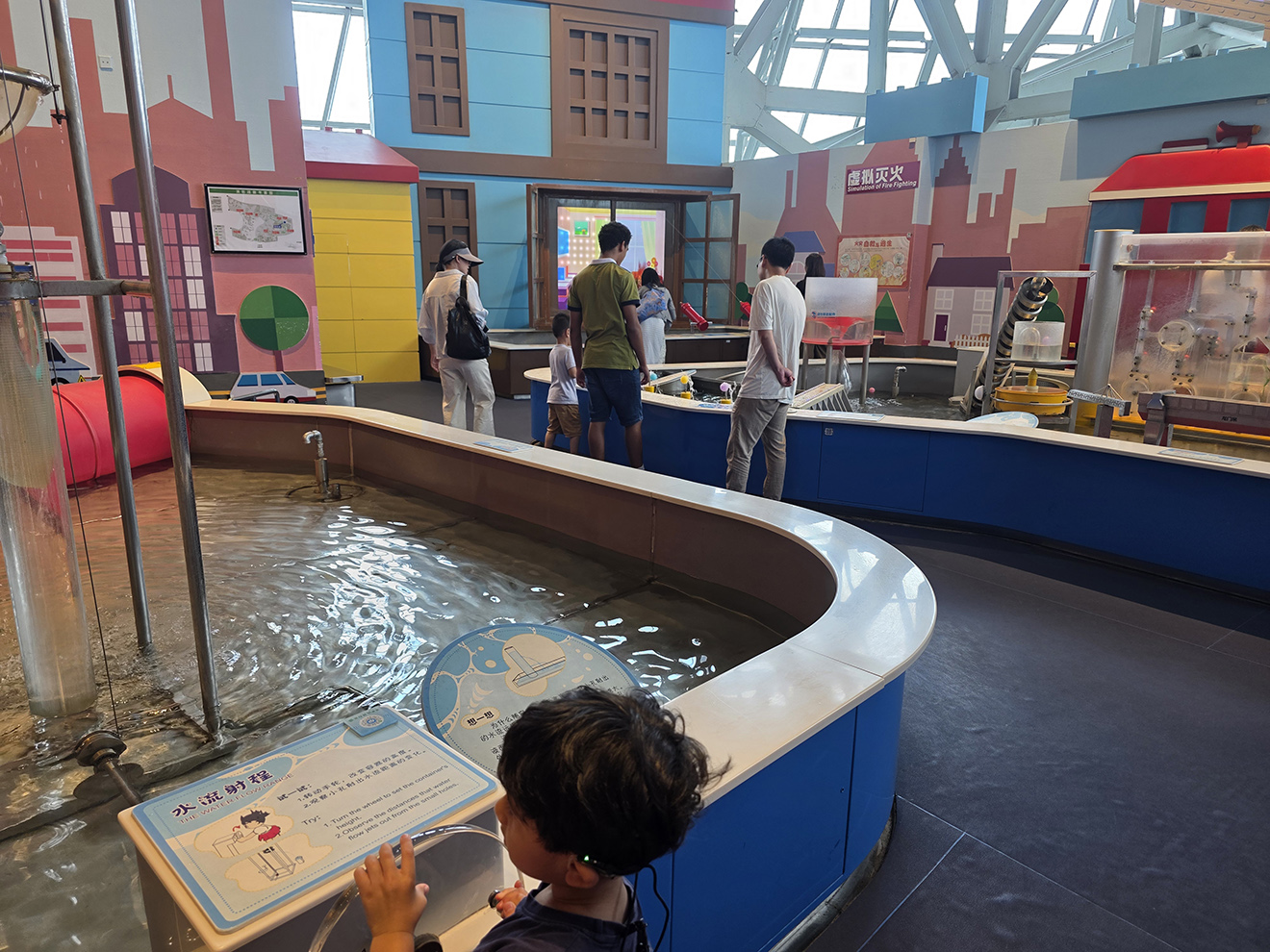
Back at the hotel, we met up with Connie and got dinner at Din Tai Fung again. There were originally plans for go with Melody to a nearby plaza that's supposed be a lot of fun at night, but it started raining pretty hard so that was canceled.
Random China Comment: Chinese Kids' TV
In general, Chinese TV has 15 or 20 stations (all government supervised I believe) with different themes. Honestly, the only one I really saw much of any of on the trip was channel 14, the kids' channel, which Zack and Matt had on frequently when we were in the hotel. Some of the more common programs included a cartoon about go (not at all related to the Japanese series Hikaru no Go, despite focusing on the same classic strategy game), a CG wuxi (Chinese martial arts) drama, a CG soccer show, something to do with a couple of bears and a park ranger fighting a mad scientist, and some sort of supernatural adventure thing involving a couple of teenagers and a red panda. The show I saw the most of by far through was called G.G. Bond. It's a CG show about an anthropomorphic pig (the titular G.G. Bond) and his friends. Apparently, it's been going on for over 20 years and even few seasons they reboot it with the same basic characters but in an alternate universe with a different theme. The main one playing when we were there had them competing in a sport that was an odd mix of Pokemon and dodgeball. There was a very anime-esque feel to it and it honestly seemed fairly entertaining and well done. Other seasons apparently have themes such as car racing, super heroes, and tokusatsu. I don't think most (if any) of the shows I saw were available in English, though some of them seemed like they could potentially do well with the right distributer. Anyway, they kept Zack entertained.
Other than that, it was mostly a matter of packing up and getting ready for the trip back to Maanshan the following day.
Losing my power-bank left me in a rather bad mood and the flight didn't help. It wasn't a bad flight. We had fairly nice seats and Matt slept almost the entire time. But it was delayed for a few hours (which has happened quite a lot when I've flown in China) due to some electrical issues that required them to change planes. Plus, I was stressed out thanks to Matt's tantrums and a bit motion sick so I just tried to rest and not feel too miserable. Fortunately, it was only a couple hours to Nanjing, and from there we had a driver back to Maanshan where we checked into the same hotel we'd been staying in before. Though we wouldn't be there for too long, since the trip was almost over...
Tuesday morning we finished up the last of the packing then hung out at Connie's parents' place through lunch before saying goodbye and then meeting up with the driver one last time for a drive to Shanghai. The drive was a lot better this time around since I wasn't dealing with massive jet-lag like before. Since our flight home the following day didn't leave until late afternoon, I got a hotel in the city so we could do some sightseeing the following morning. Not as fancy as the last couple, but nice enough, especially for a single night. We got dinner at a restaurant Connie wanted to try and then called it a night.
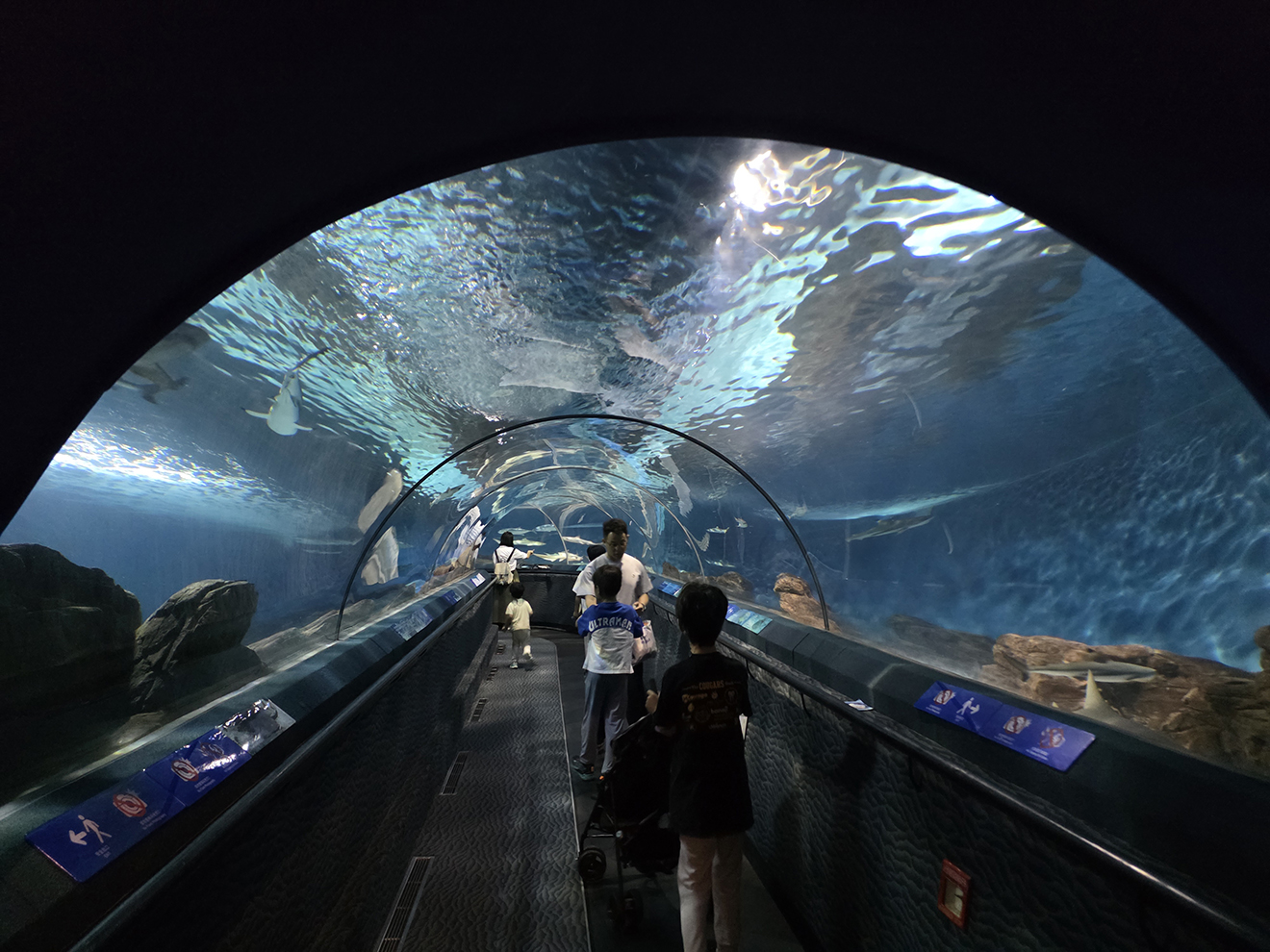
Anyway, I visited the Shanghai Aquarium years back with Connie and was very impressed. Returning again, it is a really nice aquarium. There's themed areas for different parts of the world, along with various feedings to watch, and some very long underwater tunnels. All the displays are extremely well done. One thing I didn't remember though, is that it actually isn't all that big. At least not compared to some of the other aquariums I've been to recently. And while there were some parts that held their attention for a while, for the most part the kids weren't really in the mood to take it slow, so we ended up finishing a bit earlier than Connie and I had expected.
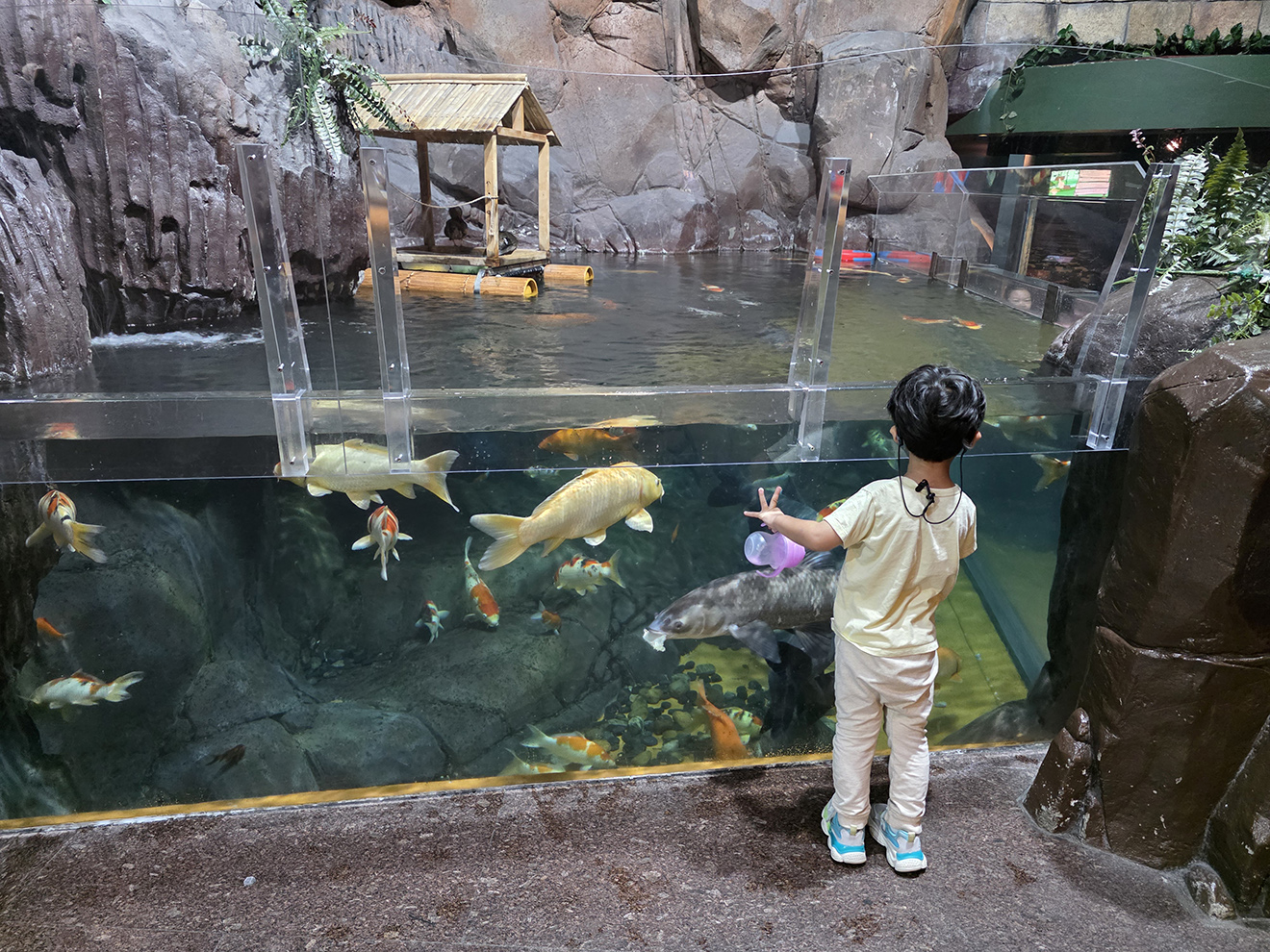
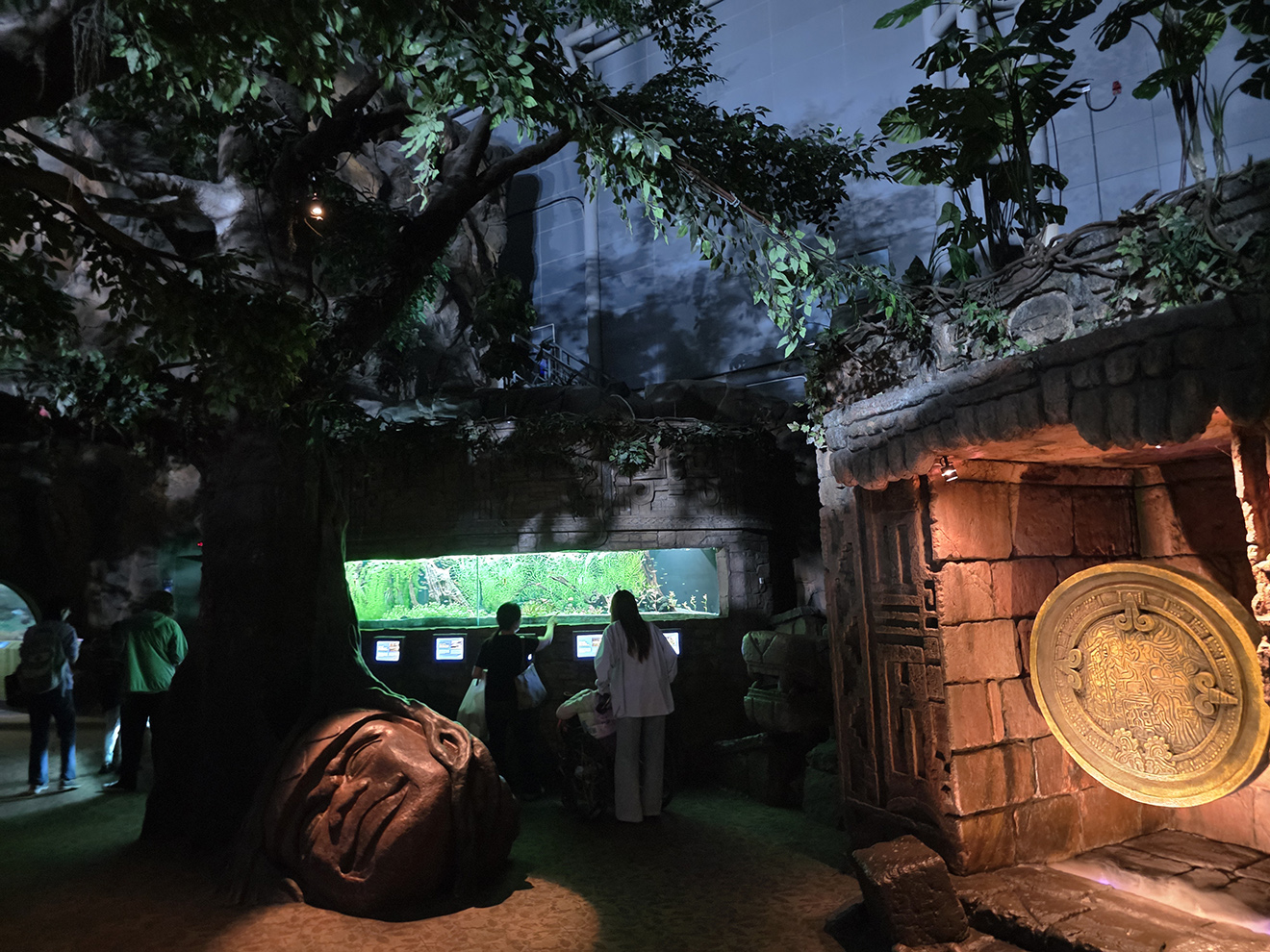
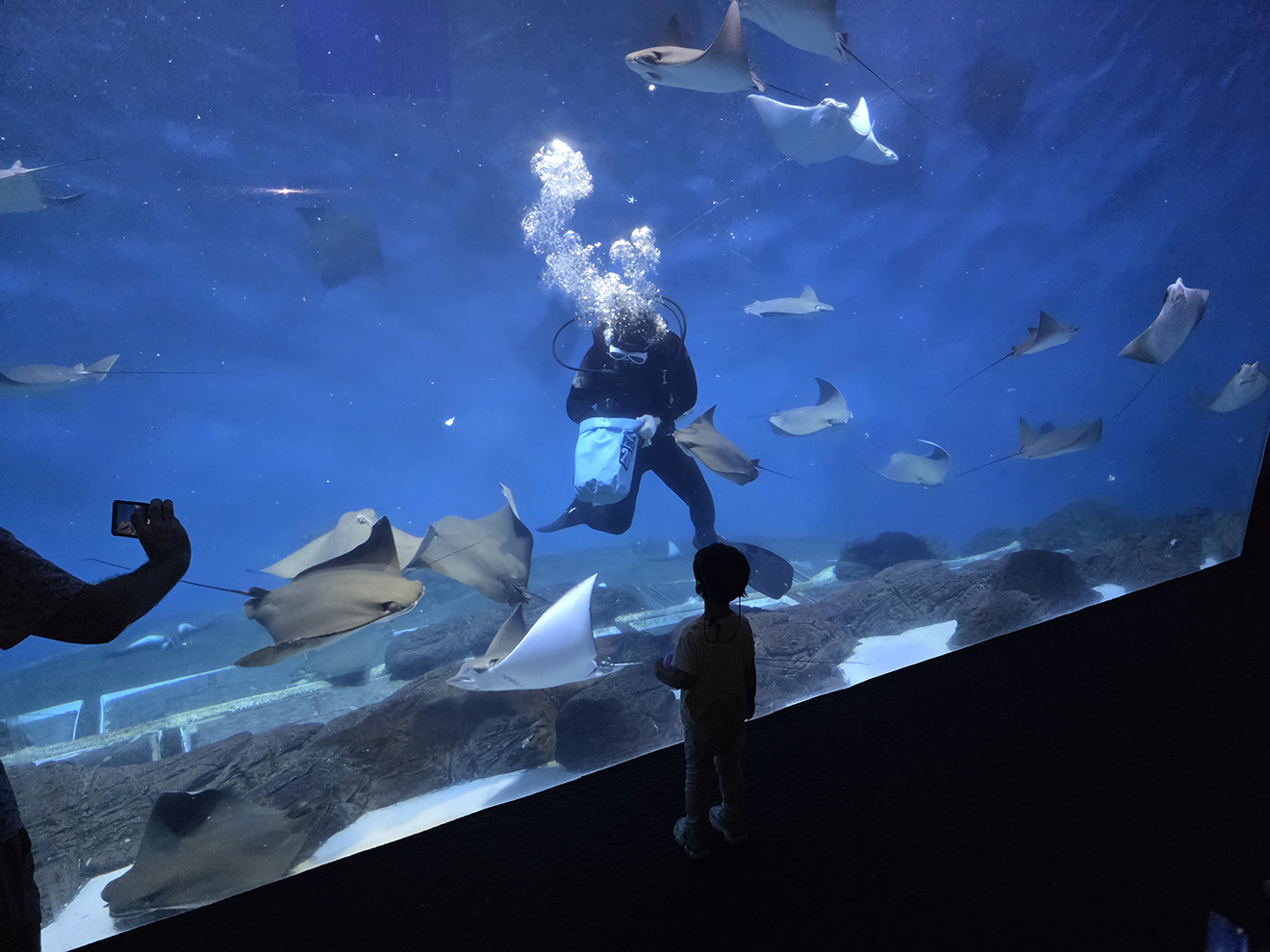
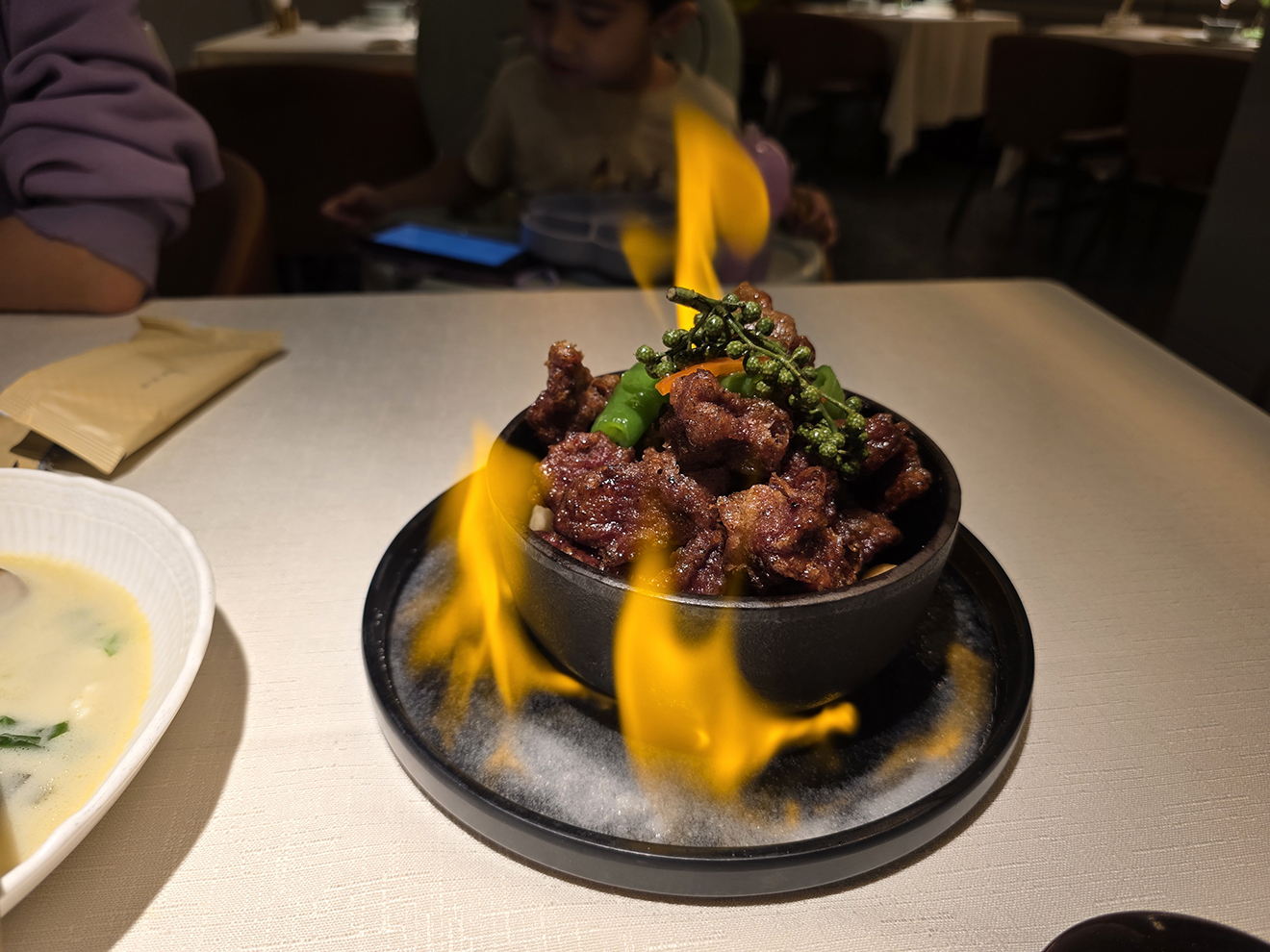
With some more time to kill, we headed to a nearby mall (it would have been a short walk, but the rain was so hard we ended up taking a taxi) and walking around a little before getting our last nice Chinese meal. Afterwards the kids still wanted to play around a bit, and we weren't in a big hurry, so we spent some time in a nice play area I'd spotted while we were looking for a restaurant.
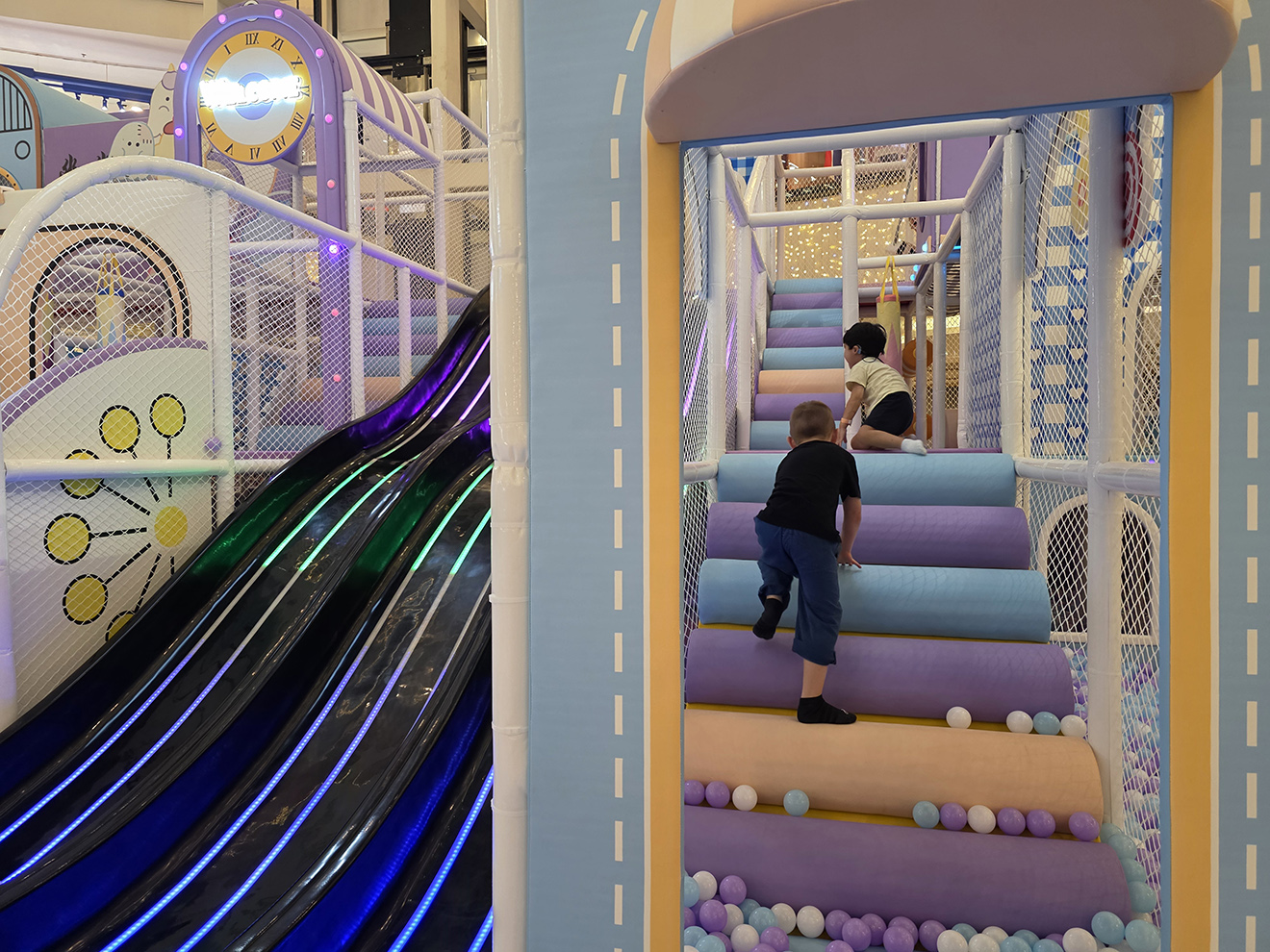
The kids could have stayed longer but, eventually, we needed to get going. Back at the hotel, we got our bags and then took a taxi to the airport. Actually, I'd originally planned to take the mag-lev train (which is why I booked a hotel right near the station) but between the rain and all our bags, it didn't seem worth it, even if it would have been faster. Our flight was on-time, but I do need to say that the Shanghai Airport's shopping and dining options after going through security were rather disappointing. As for the flight itself, it could have been smoother, but it was better than my return flight from Japan and Matt slept for most of it, which allowed me to play some games and relax a bit.
We changed planes in Dallas again, though the connection was a bit tight considering we had to go through customs and such. Especially since American rerouted everyone with connecting flights way across the airport and then made us all wait in line to use a single elevator. But we made it on time...only for the flight to be delayed for a bit. Matt was awake and a bit less cooperative on the last flight but, fortunately, it wasn't too long and we eventually made it home in the early morning on July 2nd without any particular issues or complications.
So, final thoughts... This trip was a bit of an odd one for me. Having to come back home from Japan only to fly to China a few days later was exhausting, especially with the kids. The nice hotels, ride hailing app, and ability to purchase train tickets online, were big improvements over my previous trips, but all the phone based payments systems caused me a lot of headaches when they didn't work right. I did enjoy the sightseeing, though there was also a lot of time where I was stuck sitting around reading ebooks without much to do. And Matt's moodiness was extremely stressful. Next time we take a family China trip, there's a few things I'll want to do differently. Still, over all the trip went fairly well. Hopefully we won't have to wait another nine years for the next one.